From compassion to politics: Rose Nyakona seeks Kisii Woman Representative seat

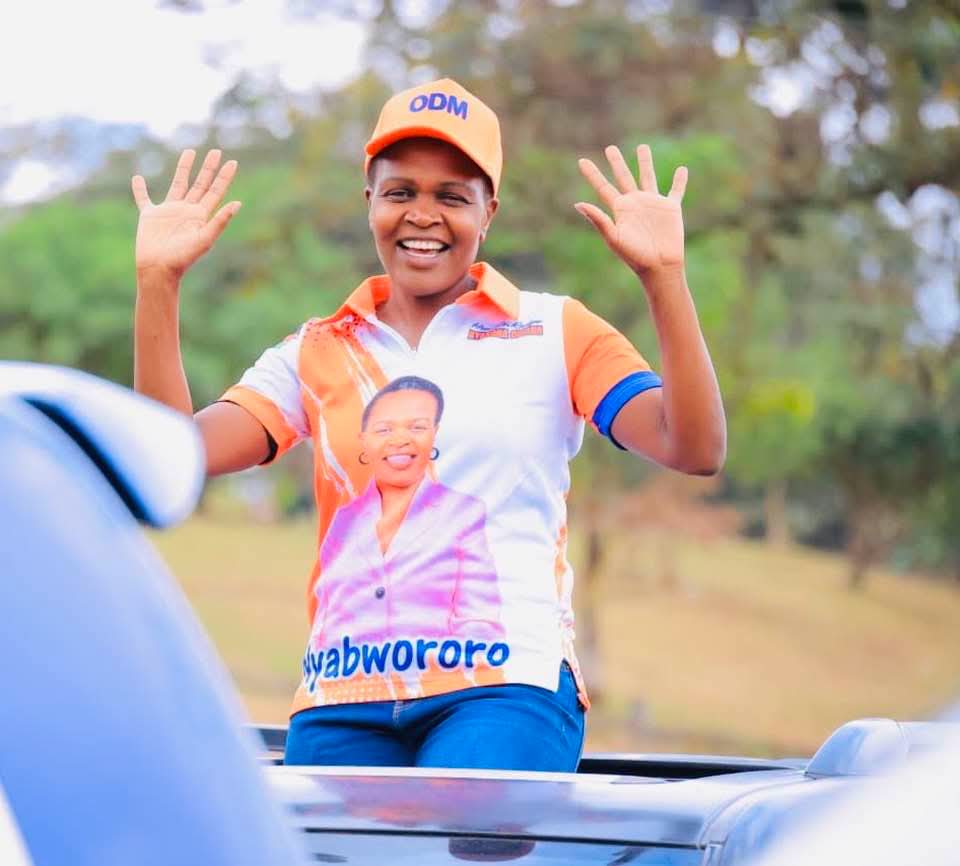
Some encounters leave scars that time cannot erase. Others inspire a lifelong commitment to making a difference.
For Roselyne Nyakona, years spent in healthcare and gender activism have brought her face to face with the harsh realities of women trapped in abusive relationships, girls forced out of school by poverty and exploitation, and families struggling to access essential medical services.
These are not merely statistics or subjects for public discussions. They are lived experiences that have shaped her professional journey and are now informing her entry into elective politics.
The medic and veteran gender activist is seeking to translate her years of advocacy into political action, setting her sights on the Kisii Woman Representative seat in the 2027 General Election.
For Nyakona, the move marks a transition from championing social change outside government to seeking a platform from which she can influence legislation, public policy and resource allocation.
“I have spent years fighting for women, standing with the vulnerable and speaking for people whose voices are often ignored. I have realised that advocacy alone is not enough. Sometimes you must get to the decision-making table to change the things you have spent years protesting against,” she says.
Nyakona holds a Diploma in Clinical Medicine, a Bachelor of Science in Clinical Medicine and a Master of Public Health. Her association with Kisii Teaching and Referral Hospital has given her first-hand exposure to the challenges patients and their families face in accessing healthcare.
She says her medical background has helped her understand that healthcare challenges extend beyond hospitals and treatment rooms to include poverty, inadequate resources and limited access to essential services.
“As a medic, I have seen mothers struggle to access healthcare, families unable to afford treatment and vulnerable people forced to endure pain in silence. Those experiences have shaped my understanding of leadership,” she says.
Beyond medicine, Nyakona has built her advocacy around gender equality and the protection of vulnerable groups, particularly survivors of gender-based violence.
Her work has focused on domestic violence, sexual exploitation and harmful cultural practices, issues she says require stronger institutional responses and sustained community engagement.
In April 2025, she co-authored a research paper titled Innovative Solutions to Gender-Based Violence in Kisii County: A Localized Policy Framework for Prevention and Survivor Support.
The study examined the challenges confronting survivors and proposed interventions including increased funding, improved coordination among institutions and the establishment of safe spaces for victims.
Nyakona now wants to champion rescue centres, counselling services, legal assistance and stronger collaboration between healthcare facilities, police and the courts to ensure survivors receive comprehensive support.
“Silence must never be mistaken for consent. I want survivors to have somewhere to turn, access justice and rebuild their lives without fear or shame,” she says.
But her vision for women goes beyond protection from violence. She believes economic empowerment is equally important in addressing the conditions that expose women to abuse and dependency.
A woman without a reliable source of income may find it difficult to leave an abusive relationship, particularly when she has children to support and nowhere else to live.
Nyakona says women need access to affordable capital, business opportunities, vocational skills and markets to build sustainable livelihoods.
“I want a Kisii where women do not have to depend on someone else’s goodwill to survive. They need access to capital, business opportunities, skills and markets so they can stand on their own feet,” she says.
Her proposed agenda also extends to widows, single mothers and girls whose education is threatened by poverty, teenage pregnancy and early marriage.
She argues that keeping girls in school requires deliberate interventions to address the economic and social circumstances that force many to abandon their education.
“No girl should abandon her education because of poverty or circumstances beyond her control. We must create opportunities that allow girls to remain in school and pursue their dreams,” she says.
Nyakona has also raised concerns about the plight of street children, arguing that interventions targeting vulnerable children should not overlook boys.
In May 2026, during a church service and fundraising event at St Lwanga Kisii Cathedral, she cautioned against concentrating exclusively on the girl-child while ignoring the challenges facing vulnerable boys.
Her position, she says, is that social protection must be inclusive and extend to all children and disadvantaged members of society.
She similarly wants persons with disabilities to enjoy equal opportunities in education, employment and public participation.
“Disability should never mean exclusion. Persons with disabilities deserve dignity, opportunities and meaningful participation in education, employment and public life,” she says.
If elected, Nyakona says her priorities would include maternal healthcare, cancer awareness, reproductive health services, vocational training, youth entrepreneurship and programmes targeting vulnerable households.
She is particularly concerned about unemployment and the limited opportunities available to young people, arguing that skills development must be linked to practical economic opportunities.
“Our young people are not lazy; many are simply locked out of opportunities. We must give them practical pathways to turn their talents into sustainable livelihoods,” she says.
She also wants to see the office of the Woman Representative move beyond the traditional emphasis on bursary distribution and occasional financial assistance.
While acknowledging the importance of education support, Nyakona argues that the office has a broader constitutional and legislative responsibility that should be reflected in its priorities.
“The office must be more than a place where people queue for bursaries and handouts. It must be an active voice in Parliament, fighting for better laws, oversight and policies that improve people’s lives,” she says.
Her advocacy record has also attracted national recognition. The National Heroes Council’s 2025 heroes booklet profiled Nyakona under Kisii County, recognising her contribution to human rights and the advancement of women’s rights.
However, translating years of professional and community activism into an electoral agenda presents a different challenge.
The Kisii Woman Representative seat is currently held by Dorice Donya Aburi, who defeated former officeholder Janet Ong’era in the 2022 General Election.
Nyakona will have to articulate how her experience, research and proposed interventions can translate into tangible outcomes for residents across Kisii County’s nine constituencies.
Her challenge will also be to demonstrate how she intends to use the legislative, oversight and representation responsibilities of the office to address the concerns she has identified.
She acknowledges the scale of the challenges but says her motivation comes from the people whose struggles she has encountered throughout her career.
“I am entering this race with the experience of a medic, the conviction of a gender activist and the compassion of a woman who has listened to people’s pain. I cannot promise to solve every problem overnight, but I can promise to listen, speak up and work for those who need representation,” she says.
For Nyakona, the ambition goes beyond securing an elective position. She says she wants her legacy to be measured by the opportunities created for others and the lives touched through public service.
“I do not want to be remembered as a Woman Representative who occupied an office for five years. I want to be remembered as a woman who opened doors for others, restored hope to vulnerable families and gave a voice to people who felt invisible,” she says.
Her journey from medicine and gender activism into politics is anchored in a conviction that the struggles she has spent years addressing require not only community advocacy but also institutional intervention.
Whether that conviction will translate into an electoral mandate remains to be determined by Kisii voters in the 2027 General Election.