

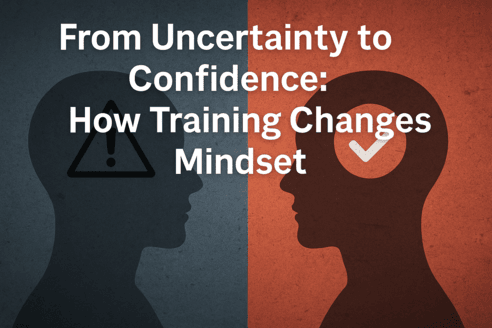
From Uncertainty to Confidence: How Training Changes Mindset

First Aid Certification Edmonton
In a world where unpredictability defines our daily lives, confidence is not just a trait it’s a skill that can be developed. Whether it’s in professional life, personal growth, or emergency response, the power of preparation can turn anxiety into assurance. For example, programs like First Aid Certification Edmonton are not just teaching medical techniques they’re reshaping how individuals respond under pressure. Training, no matter the field, does more than build knowledge; it transforms fear into focus and uncertainty into confidence.
The Psychology of Readiness
Uncertainty often triggers hesitation. We’ve all experienced moments where we freeze unsure what to do or say. But when people are trained, something changes. Training doesn’t just provide answers; it builds the mental framework to make decisions quickly and effectively.
Studies in behavioral psychology show that repetition builds neural confidence. The more familiar we are with a process, the less our brain perceives it as a threat. That’s why soldiers, athletes, and even medical responders drill constantly to turn stress into instinct. For the average person, training in any discipline, from first aid to public speaking, follows the same principle: familiarity breeds confidence.
When we train, we move from reaction to response. The situation doesn’t change but our ability to handle it does.
Learning Builds Control in an Unpredictable World
Modern life is filled with uncertainty. Economic shifts, job changes, health crises these are things no one can fully control. But through preparation, we regain some of that control.
Take, for instance, someone who has taken a first aid or CPR class. If an emergency strikes, that person doesn’t panic. They act. They take charge of the moment instead of letting fear dictate their behavior. The same applies to workplace safety, disaster response, or even mental health awareness. When we train, we create a mental roadmap that guides us through chaos.
This is the essence of empowerment knowing that while you can’t predict what will happen, you can prepare for how you’ll respond.
Confidence Through Competence
There’s a reason confidence and competence are often mentioned together; they’re inseparable. Real confidence isn’t about ego; it’s about knowing you have the tools to act.
In fields like health and safety, this connection becomes life-saving. Someone who’s completed a First Aid Certification program, for example, doesn’t just know how to apply a bandage or use an AED; they understand the importance of composure, timing, and leadership. They’ve internalized the mindset that I can do something, and that belief is transformative.
Training gives people permission to lead. Whether it’s stepping forward in a crisis, taking initiative in a team project, or mentoring others, competence unlocks confidence that radiates far beyond the classroom.
Why Training Matters Beyond Emergencies
It’s easy to associate training with high-stakes moments such as medical incidents, sports competitions, or military operations. But training affects everyday life in subtle and powerful ways.
When you train your mind and body to handle challenges, you begin to approach everything differently. Difficult conversations become manageable. Deadlines feel less intimidating. Even personal goals seem attainable because you’ve built trust in your own ability to adapt.
This shift doesn’t happen overnight. It grows gradually as practice turns into proficiency. The small victories remembering steps, mastering techniques, getting feedback all contribute to a deeper sense of assurance that spills into every area of life.
In short, training isn’t just about skills. It’s about mindset.
From Learner to Leader
The most beautiful part of any learning journey is when the student becomes the teacher. People who train effectively often become advocates for preparedness. They inspire others not through words, but through composure and confidence in critical moments.
Communities thrive when more people take initiative to learn. It creates a culture of readiness neighbors helping neighbors, colleagues supporting colleagues, and families staying calm in emergencies. When preparedness becomes a shared value, confidence becomes collective.
That’s what makes programs like safety training so impactful. They don’t just teach medical responses, they build community resilience. One person’s training can become another person’s survival story.
The Confidence Ripple Effect
Confidence, once gained, doesn’t stay isolated. It influences every interaction, decision, and opportunity. Trained individuals often find that their newfound assurance improves both personal and professional outcomes. They communicate more clearly, manage stress better, and serve as reliable anchors in moments of chaos.
In essence, training isn’t about eliminating fear, it’s about mastering it. Uncertainty never disappears, but with preparation, it loses its power. The transformation from doubt to determination is what defines growth.
Final Thoughts: Preparedness Is Power
Training whether it’s in life-saving first aid, leadership development, or personal growth is one of the most empowering investments anyone can make. It redefines how we see challenges and ourselves.
The road from uncertainty to confidence begins with one simple step: choosing to be ready. So whether you’re signing up for a First Aid class or learning a new skill at work, remember this preparedness is not just about what you learn, but who you become in the process.
Because in every moment that matters, confidence is the real first aid.