

Fuel levy firestorm and riots at the Kisii Assembly: Governor Arati’s headache as he crafts re-election strategy

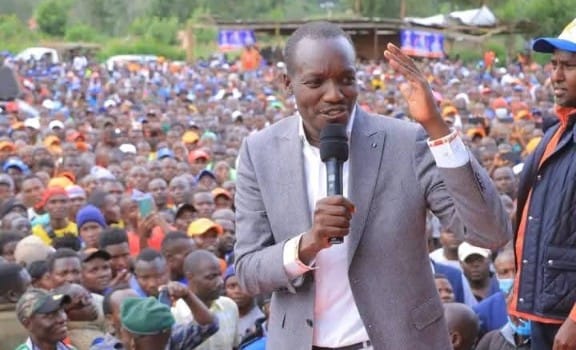
Kisii Governor Simba Arati is a man walking on clutches.
And as he quietly assembles the machinery for a second-term bid, familiar controversies are resurfacing to test his political footing in Kisii County.
The latest storm centers on explosive allegations of biased fuel levy allocations and deepening claims of administrative lethargy—potent ammunition that critics are eagerly loading to derail his re-election momentum.
At the centre of the raging debate is the county’s utilisation of fuel levy allocations meant to maintain and upgrade rural road networks.
Adding a fresh twist is the growing number of ward representatives who have turned the alleged biased allocations into political fodder, using them to flip the tables against ODM deputy party leaders in their wards.
As many as 18 Wards had been left out according to Masimba MCA Bouse Mairura.
Fuel levy money reaches counties mainly as conditional grants, consistent with Article 202(2) which allows transfers from national to county governments.
These grants are usually earmarked specifically for road maintenance and are appropriated annually through the Division of Revenue Act.
The allocations are often based on recommendations from the Commission on Revenue Allocation (CRA)
In Kisii, the affected Ward representatives are up in arms. accusing the governor of being openly biased.
They say the funds had been unevenly distributed with some regions receiving preferential treatment while others struggle with impassable roads and stalled projects.
According to the latest fiscal schedule, Bobasi and its wards received a staggering allocation of Sh21 .2 million overshadowing other constituencies with some receiving as low as Sh1 million.
Governor Arati hails from Bobasi, the constituency the Ward Reps are contesting for “disproportionate allocation of the fund” as others languish.
South Mugirango, received Sh11 million against Nyaribari Masaba and Nyaribari Chache which received meagre portions of Sh3 million and Sh5 million respectively.
Others like Kitutu Chache North and Kitutu Chache South received Sh3.7 and Sh5.4 m. respectively.
Bonchari got a paltry Sh1.8 m as share in the allocations and only one Ward benefited.
Bomachoge Chache and Bomachoge Borabu received Sh12 million and Sh6.5 m respectively.
Arati has since rejected the accusations describing them as cheap gossip from his detractors.
“It is true that I have heard people claim that Simba favored certain regions for political mileage, but I am not a Ward Representative and do not sit in the assembly to vote on those allocations,” the governor said on New Year’s Eve at his Motonto home during a meeting with local artists and journalists.
On Tuesday , the affected MCAs largely argued that the current pattern of allocations mirror political loyalties rather than objective infrastructure needs.
Mairura, a known critic of Arati’s style of governance did not receive a penny for vast Ward and neither is Nyatieko and Bassi Boitangare ward that are led by firebrand critics of the administration.
“Wards like mine graders haven’t been seen for months, yet others receive repeated interventions,” said Mairura.
More others like Ibeno were also left out of the allocations.
Ibeno Ward is led by Stephen Arika, a pro-Fred Matiangi die hard.
Matiangi is the Presidential hopeful who Arati had since fallen out with in the struggle for local political patronage.
Though Bassi Boitangare is located in Bobasi, it was given a wide berth during the appropriations
Other Ward Representatives reportedly chafed by the administration’s action include Amos Mokaya of Nyatieko Ward, Christopher Onsaga of Nyamasibi, and Onchong’a Nyagaka of Sensi.
“This isn’t mere poor planning by the governor—it reeks of political reward and punishment, targeting Wards that dare to speak out against his leadership,” declared Mairura, who is openly eyeing the Nyaribari Masaba MP seat.
Obare termed the disparity unacceptable and discriminatory .
“The fuel levy is a public resource meant to serve all wards equitably,” the MCA said, adding residents across the affected wards are increasingly frustrated by poor road conditions which hinder access to markets, schools, and health facilities.
He further questioned the criteria used by the county government in allocating the funds, alleging that political favoritism may have influenced the process.
Nyatieko MCA Amos Mokaya, on his part, described the allocations as unsettling.
“Our people pay taxes like everyone else. They deserve services, not punishment for political differences,” he said by phone.
As if taking cue from their MCAs, some residents have also raised objections to the allocations.
In Sensi for instance, some groups decried for being left out.
They claimed that despite the ward contributing significantly to county revenue, it has received minimal benefits from the Roads Maintenance Levy Fund (RMLF), which is intended to support the construction and maintenance of county roads.
“Our roads are impassable, yet we hear millions have been allocated for road works across the county,” said Mr. Jared Omwenga, a local trader.
“We are not against development elsewhere, but we are demanding equity and transparency in how these funds are shared.”
There were similar concerns from other affected Wards.
The debate over fuel levy allocations continues to stir political tensions, with the critics accusing the county leadership of favoritism while Arati maintains that the process was impartial.
One MCA in support of the Governor said fuel levy allocations are guided by technical assessments conducted by the Department of Roads and Public Works, factoring in road conditions, traffic volumes, and seasonal vulnerability.
“All these claims of bias are politically motivated,” the MCA said, requesting anonymity.
Beyond the fuel levy row, questions about the governor’s energy and visibility have also begun to surface.
Critics say Arati’s leadership style has shifted from the fiery, hands-on approach that defined his first months in office to what they describe as a slower, less decisive administration.
The timing of this controversy is politically significant.
With the next general election approaching, Arati is expected to rely heavily on his grassroots appeal and history as a combative political survivor.
Insiders say his re-election strategy will emphasise tangible development outcomes while framing critics as beneficiaries of the old order resistant to reform.
Yet the challenge for the governor may lie in perception as much as performance.
Political observers note that Arati’s path to re-election will depend on how effectively he neutralises these narratives in the coming months.
For now, the governor still remains a formidable figure in Kisii politics—but as campaign season edges closer, the controversies dogging his administration underscore a familiar truth: incumbency offers both advantage and exposure.

