

Gachagua Raises Questions Over IEBC Election System Tender, Links South Korean Firm to 2027 Poll

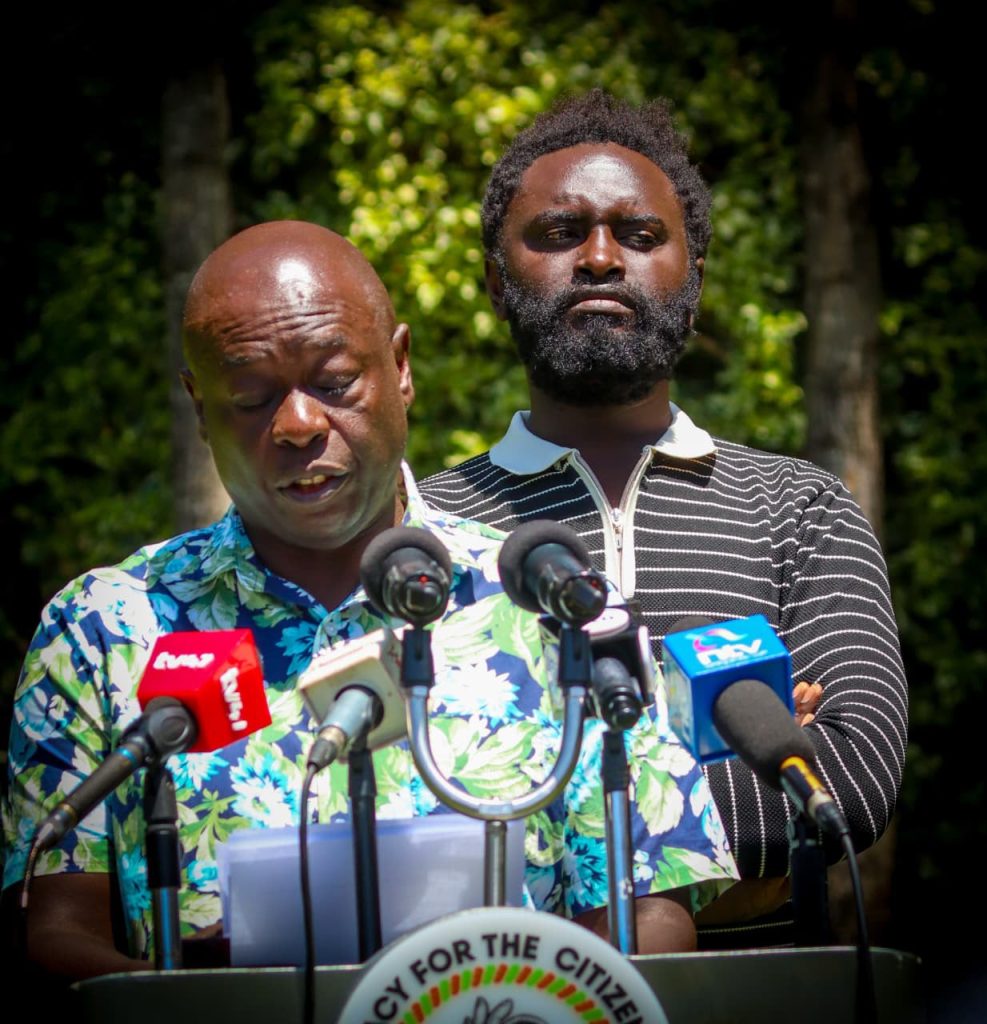
Former Deputy President and Democracy for Citizens Party (DCP) leader Rigathi Gachagua has raised concerns over the procurement of Kenya’s Integrated Election Management System (IEMS), alleging that the tender process has been designed to favour South Korean company Miru Systems Co. Ltd.
Gachagua made the allegations in a statement issued before leaving Kenya for an eight-week engagement in the United States.
He claimed that the outcome of the tender for the supply, installation, testing, commissioning, support and maintenance of the IEMS had already been predetermined in favour of Miru Systems, even though the procurement process was still ongoing.
The Independent Electoral and Boundaries Commission (IEBC) advertised the tender on August 11, 2026, under reference number IEBC/OIT/01/2026-2027. According to Gachagua, the tender is scheduled to close on September 1, 2026, at 10am.
“What Kenyans do not know is that the tender process and result has already been pre-conceived and is awaiting rubber stamping to MIRU SYSTEMS CO. LTD of South Korea,” Gachagua alleged.
The former Deputy President further alleged that changes within the IEBC procurement department were linked to the tender.
He claimed that the commission had removed its procurement manager and replaced the official with an individual he described as a “puppet”.
Gachagua also made allegations of corruption against IEBC officials, claiming that the commission’s Chairperson Erastus Edung Ethekon and Vice Chairperson Fahima Araphat Abdallah had received commissions to facilitate the procurement process.
The allegations have not been independently substantiated.
Questions over Miru Systems
Gachagua questioned the suitability of Miru Systems to provide election technology for Kenya’s 2027 General Election.
He claimed that the South Korean company had faced controversies involving election technology in several countries, including the Democratic Republic of Congo, the Philippines and Iraq’s Kurdistan Region.
Gachagua cited the company’s involvement in the Democratic Republic of Congo’s electoral processes, alleging delays in the delivery of biometric voter registration equipment and subsequent concerns over election technology.
He also referred to reported equipment malfunctions during the DRC’s 2023 elections and concerns raised over voting technology used in other jurisdictions.
“It is beyond discussions that Kenya would even imagine having such a vendor for our 2027 General elections,” Gachagua said.
However, the claims concerning Miru Systems’ record and the alleged predetermined outcome of Kenya’s tender would require verification from the IEBC, Miru Systems and other relevant authorities.
Gachagua questions IEBC tender process
Gachagua challenged the IEBC to explain how the technical specifications for the IEMS tender were developed.
He asked the electoral commission to publish documents showing the individuals and committees involved in preparing the specifications, including internal minutes, technical working papers, market surveys and approval records.
He also questioned whether the commission had conducted sufficient market analysis to establish how many companies could meet the tender requirements.
Gachagua further questioned the requirement for bidders to provide a Sh30 million tender security, arguing that the tender document should provide sufficient information on the procurement’s commercial scope, estimated value and budgetary basis.
He said the IEBC should demonstrate that the procurement complies with Article 227 of the Constitution and relevant provisions of the Public Procurement and Asset Disposal Act.
Article 227 requires public procurement to be conducted in a system that is fair, equitable, transparent, competitive and cost-effective.
Gachagua also alleged that IEBC officials and senior government officials had held meetings with representatives of Miru Systems.
He specifically mentioned IEBC Chairperson Ethekon, Principal Secretary for Interior Raymond Omollo and Principal Secretary for Immigration Belio Kipsang.
According to Gachagua, the meetings were related to the integration of the company’s technology with Kenya’s voter registration database.
The former Deputy President did not provide documentary evidence supporting the allegations.
He also claimed that the proposed system could be used to interfere with Kenya’s voter register ahead of the 2027 elections.
Gachagua raises voter register concerns
Gachagua alleged that the proposed transition from the existing election technology to a new system could create vulnerabilities in the voter registration database.
He claimed that the alleged plan could result in voter suppression in several parts of the country.
He named Western Kenya, Nyanza, parts of the Mt Kenya region, Lower Eastern, Nairobi, Taveta, Lamu and sections of the Rift Valley, including Nakuru, Laikipia, Kajiado, Narok and Trans Nzoia.
Gachagua did not provide evidence showing that voters in the named regions are targeted for removal from the register.
He urged development partners and foreign missions accredited to Kenya to pay attention to what he described as a threat to the country’s electoral democracy.
“This Company should be banned and never allowed to manage any election or supply its equipment and technology,” he said.
Gachagua also linked the IEMS procurement to the delayed Elections Amendment Bill 2024.
He claimed that the legislation contains provisions on election technology, including a requirement that suppliers of the election management system grant the IEBC intellectual property rights and ownership of the system.
He said the Senate had passed the Bill but it remained pending in the National Assembly.
Gachagua questioned why the legislation had not been enacted ahead of the 2027 General Election.
Gachagua links De La Rue to election preparations
The former Deputy President also raised questions over changes in the ownership of De La Rue Kenya Limited, alleging that the development was connected to preparations for the 2027 elections.
De La Rue Kenya is involved in security printing and has the capacity to produce election-related materials.
Gachagua alleged that President William Ruto’s alleged investment in the company formed part of a broader plan to influence the 2027 election.
He did not provide evidence to substantiate the claim.
Gachagua has repeatedly accused the Ruto administration of preparing to manipulate the 2027 election, allegations the government and its supporters have rejected.
Gachagua said changing Kenya’s election management technology less than a year before the 2027 General Election could create risks for the electoral process.
“Vulnerable and defective electoral voting technology threatens electoral transparency and the credibility of an electoral process,” he said.
He argued that any major transition in election technology should be subjected to adequate testing, public scrutiny and safeguards to prevent disruptions during the election.
Gachagua further alleged that the proposed transition from the existing Smartmatic KIEMS infrastructure to Miru technology could create an opportunity for interference with voter data.
He claimed that any changes made close to the election could leave insufficient time to identify and correct errors in the voter register.
The allegations come at a time when the IEBC is preparing for the 2027 General Election, with technology, voter registration and electoral reforms expected to remain key issues in the preparations.

