

Germany in Talks to Back UK’s Trident Nuclear Deterrent

Germany in Talks to Back UK's Trident Nuclear Deterrent
Germany is in talks to invest in Britain’s nuclear deterrent, The Telegraph understands. Berlin is considering offering financial support for Trident as it spearheads efforts to reinforce Europe’s nuclear umbrella.
The discussions between Paris, Berlin and London have accelerated in recent months amid fears the Trump administration will withdraw its military from Europe. European nations are rapidly trying to bolster their defences against the looming threat from Russia. Fears about European security have been heightened after CIA Director John Ratcliffe made an unannounced visit to Moscow for talks with Russian military intelligence counterparts, coinciding with a US intelligence report warning that Russia might soon attempt to attack a Nato ally to test the alliance’s resolve.
As part of Germany’s push to reduce Europe’s reliance on the US, Friedrich Merz’s administration has turned its attention to enhancing nuclear capabilities.
A well-placed source said Germany wanted to better integrate itself into the existing British and French nuclear deterrents rather than pursue its own bomb because of the nation’s wartime guilt. Berlin’s preference is to deepen ties with existing nuclear powers Britain and France instead of pursuing its own arsenal, which would upend the European Union’s political and legal framework.
“We have a very strong interest that the existing nuclear powers in Europe extend their capabilities,” the source said.
Military planners in Berlin believe they could contribute conventional forces to support the functioning of the British deterrent.Proposals under review reportedly include:
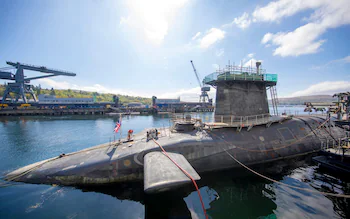
- Deploying German-operated Patriot ground-based air-defence batteries to key locations, such as the submarine base in Faslane, Scotland, home to Britain’s Trident fleet.
- Contributing to future UK nuclear capabilities and supporting Britain’s ballistic-missile submarine programs.
- Assisting Britain in building the next generation of submarines, missiles or uranium enrichment for future warheads. A German manufacturer has previously built submarines for Israel’s secretive nuclear deterrent.
A British defence source questioned whether German industry had the relevant experience to build and maintain Britain’s nuclear submarine fleet. However, the source acknowledged that conventional forces protecting bases such as Scotland’s Faslane could prove a useful offer from Berlin, adding: “The ability to contribute to the defence of Faslane is more credible, likely and appropriate.”
Germany is holding similar talks with France. The two countries have held joint exercises to simulate how atomic weapons could be used to protect Europe. There are also grand plans for German forces to take part in France’s flagship “Poker” nuclear drills in the autumn for the first time.
Britain already commits its arsenal of around 200 nuclear warheads to Nato for the defence of the alliance.[But while the UK has full autonomy over firing its weapons, it cannot build, maintain or modernise them without American cooperation.
Britain’s new Astraea warhead is being developed alongside the American W93 warhead programme as part of a £63bn overhaul of the UK’s nuclear deterrent. This has become a concern in Berlin at a time when it is seeking to promote continental independence from Washington, and has led to the idea that German funding for Britain’s nuclear deterrent could be one solution.
Another reason cited in discussions in Berlin for promoting more European collaboration on nuclear weapons was to prevent a fresh wave of proliferation. Putin’s invasion of Ukraine and Mr Trump’s eagerness to withdraw forces from Europe have prompted discussions in Poland and the Nordic countries about building their own nuclear bombs. By promoting the effectiveness of British and French deterrents, German officials and politicians believe they can prevent further atomic powers from emerging on the Continent.
A German security source said nuclear policy remained a tense and secretive issue in Berlin, even inside the upper levels of the government. “It’s Germany so of course the nuclear topic is going to be very sensitive, and many people tried to avoid it as best they could,” the source said, alluding to German wartime guilt and the previous Olaf Scholz-led government, which opposed Berlin acquiring its own warheads.
Via The Telegraph

