

Gottfried von Cramm Siblings: Meet the Siblings Squad Behind the German Tennis Player

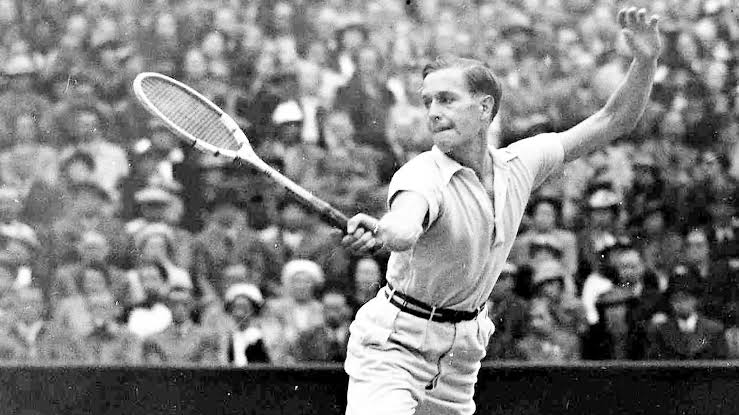
Gottfried Alexander Maximilian Walter Kurt Freiherr von Cramm was a prominent German tennis player and aristocrat, widely known as the Tennis Baron.
Born on 7 July 1909 at Schloss Nettlingen in Lower Saxony, Germany, he belonged to the ancient House of Cramm, a noble family of the Uradel with roots in the region dating back centuries.
He grew up primarily at Schloss Brüggen, which his mother inherited, in a prosperous Protestant noble household.
Von Cramm became one of the leading amateur tennis players of the 1930s. He died on 8 or 9 November 1976 in a car accident near Cairo, Egypt, while on a business trip.
Siblings
Gottfried was the third of seven sons born to Baron Burghard von Cramm (1874–1936), a legally trained landowner and former student at Oxford, and his wife Countess Jutta von Steinberg (1888–1972).
On occasion, five or six of the von Cramm brothers competed in the same events. The eldest brother, Aschwin, inherited the family title after their father’s death in 1936.
Other brothers included Adalbert Freiherr von Cramm and Berno.
A younger brother, Wilhelm-Ernst Freiherr von Cramm (1917–1996), served as a highly decorated German officer during the Second World War, receiving the Knight’s Cross of the Iron Cross among other honors.
He later became a leader of the German Party, a conservative political group in the postwar period.
Career
Von Cramm began playing tennis around the age of ten or eleven after recovering from a childhood accident that cost him the tip of a finger on his right hand.
He joined the LTTC Rot-Weiß club in Berlin, abandoned law studies to focus on the sport, and rose quickly.
In 1932, he joined the German Davis Cup team and won the first of consecutive German national championships.
Also Read: Philipp Kohlschreiber Siblings: Meet Sandra and Gerlinde
He claimed the French Championships, now known as the French Open, singles title in 1934 – the first German man to win a Grand Slam singles crown – and again in 1936.
He reached the Wimbledon singles final three years in succession, in 1935, 1936, and 1937, losing to Fred Perry twice and then to Don Budge.
He was also runner-up at the U.S. Championships in 1937.
Von Cramm won major doubles titles, including the French and U.S. doubles championships in 1937 and the Wimbledon mixed doubles title in 1933.
He was ranked as high as world No. 1 in 1937 and No. 2 in 1934 and 1936.
He compiled an outstanding Davis Cup record for Germany, with dozens of victories across more than a hundred matches over two decades.
His career was interrupted in 1938 when he was imprisoned by the Nazi regime on charges related to a past homosexual relationship.
After serving several months, he was released amid international pressure.
During the Second World War, he served on the Eastern Front, suffered frostbite, and received the Iron Cross.
After 1945, he helped rebuild German tennis, including the Rot-Weiß club. He returned to competition and won further German titles in the late 1940s.
He captained or played for the West German Davis Cup team into the early 1950s before retiring. In later years, he worked as a cotton importer and managed family estates.
Accolades
Von Cramm’s achievements include two French Championships singles titles in 1934 and 1936. He also reached three consecutive Wimbledon singles finals and one U.S. Championships singles final.
His doubles achievements included major titles at the French and U.S. Championships as well as Wimbledon mixed doubles.
He was ranked world No. 1 in 1937. He was named German Sportsman of the Year in 1947 and 1948.
He received the Silver Laurel Leaf, Germany’s highest sports honor. He was also awarded the Iron Cross for his wartime service.
In 1977, he became the first German inducted into the International Tennis Hall of Fame.
Additional recognition includes induction into the Hall of Fame of German Sports and streets and paths named in his honor in several German cities.
He is remembered not only for his results but also for his sportsmanship, particularly in the celebrated 1937 Davis Cup match against Don Budge.

