

Gov’t to include student leaders in county security committees

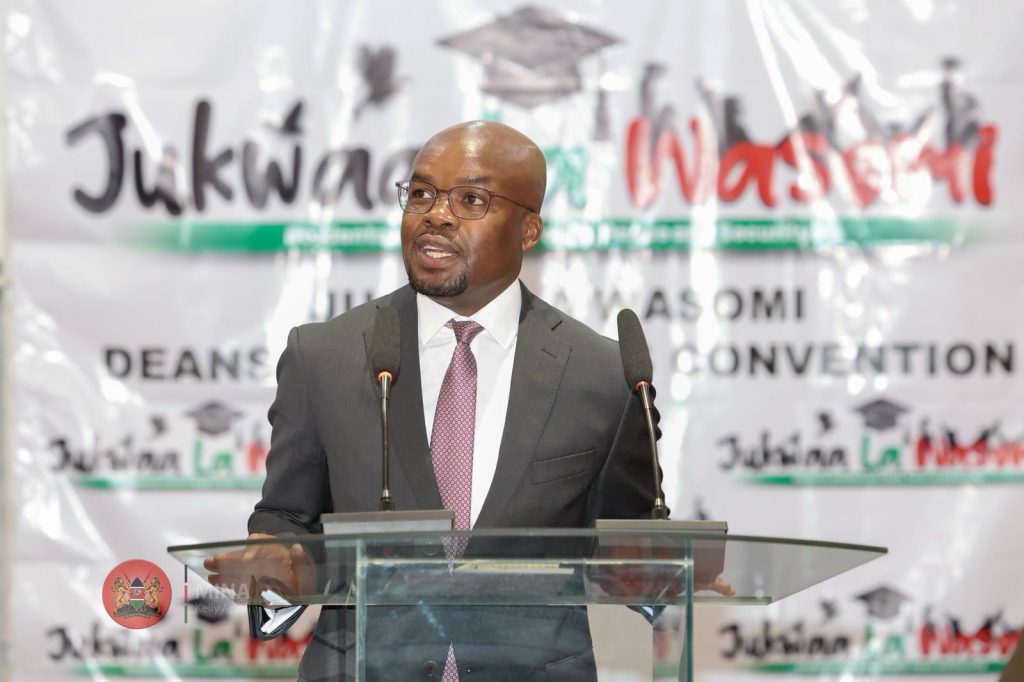
The Government is considering proposals to include student leaders, deans of students, and campus chief security officers in county and sub-county security and intelligence committees.
This is to ensure that the concerns of students are heard and addressed at the earliest opportunity.
The move, according to the Principal Secretary for Internal Security and National Administration, Dr. Raymond Omollo, is part of the government’s broader plan to strengthen student participation in security structures and ensure that learning institutions remain safe spaces for all.
“We must embrace our student leaders in these structures so that we are able to pick up information or issues in good time and intervene before problems escalate,” he said, and urged institutions to partner with the National Counter Terrorism Centre (NCTC) to facilitate regular countering violent extremism (CVE) dialogues.
“Our goal is to create an ecosystem where learning thrives free from fear, manipulation, or harm. Security begins with awareness, partnership, and shared responsibility – and our students must be part of that equation.
“This is part of our broader effort to foster stronger partnerships between student leaders and security agencies, and to create awareness on the role of the youth in promoting peace,” said the PS.
Speaking when he chaired the Jukwaa La Wasomi series held at the University of Nairobi, Dr. Omollo noted that the Ministry has partnered with the Universities and Colleges Students’ Peace Association of Kenya (UCSPAK) to strengthen engagement between students and security agencies across the country.
“We continue to organize bountiful meetings between student leaders and county security committees so that we can enhance youth peace and security both at the county level and nationally.”
The convention, which brought together deans of students, university administrators, and representatives from institutions of higher learning, marking the culmination of a series of successful forums that demonstrated the need to hold dedicated and targeted conversations with students in higher learning institutions.
The participants proposed installing CCTV systems and streetlights around campuses, fencing institutional premises, issuing student IDs early, and involving student leaders in county-level intelligence and security discussions.
A majority of them also called for stronger coordination among stakeholders, key among them universities, security agencies, and communities to mitigate these risks and foster safer learning environments. The Nyumba Kumi model will also be reinforced to include students living off-campus, while orientation programs will integrate safety and security briefings.
Among the other issues discussed were drug and substance abuse, insecurity within and around campuses, gender-based violence, radicalization, mental health, academic integrity, and unemployment.
Dr. Omollo underscored the urgency of addressing gender-based violence, describing its prevalence as alarming.
At approximately 36 percent, the PS said this is quite significant.
“To think that such cases are being experienced within our institutions of higher learning is a wake-up call. It is a clear indication that something has gone terribly amiss. We must therefore find sustainable and collective solutions to address this challenge and restore safety, dignity, and trust in our learning environments.”
The forum also emphasized preventive measures against drug and substance abuse, calling for a standardized national approach by NACADA, increased professional counseling services, collaboration with parents and community leaders, and the regulation of alcohol and drug-related advertisements targeting young audiences.
Dr. Omollo further highlighted the government’s plans to step up the NYOTA Program, a new nationwide youth empowerment initiative targeting young people aged 18 to 29 who may not have progressed beyond secondary education.
“Across all the 47 counties, we are rolling out what we are calling the NYOTA Program, which is targeting young people between the ages of 18 and 29 years. These are youths who may not have pursued education beyond Form Four, yet they represent a significant portion of our population,” he explained.
The program seeks to reach 70 young people in each of the 1,450 wards across the country, offering them a cash grant of KSh 50,000 to venture into entrepreneurship and income-generating activities. Beyond financial support, the program recognizes prior learning, particularly technical skills acquired informally.