

Grounded Aircraft Cut Kenya Airways Seat Capacity by Up to 18%

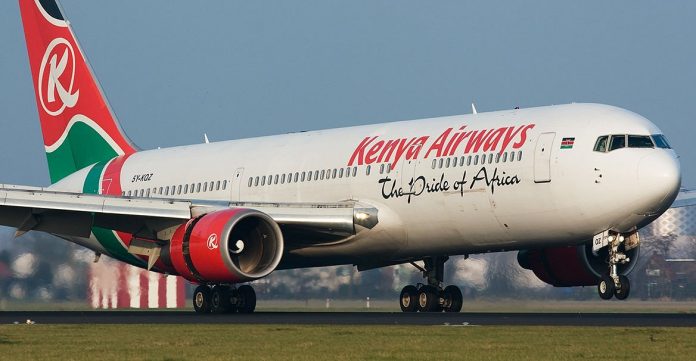
Kenya Airways records shocking Sh12 billion loss in the first half-year results
National carrier Kenya Airways has revealed that grounded aircraft are reducing its available seat capacity by between 15 and 18 per cent as the airline works to restore fleet operations and stabilize flight schedules.
Speaking during the airline’s 50th Annual General Meeting, Kenya Airways Chief Executive Officer George Kamal said the impact of the grounded aircraft is being felt mainly through reduced seat availability across the network, although the situation is expected to improve as more planes return to service.
Kamal said the airline has already made significant progress in restoring its fleet, having returned several aircraft to operation over the past few months.
“In December, we brought three aircraft back into service in December and January, and recently we returned one Boeing 787 to operation. The impact of the remaining grounded aircraft is about 15 to 18 per cent in terms of the number of seats offered in the market,” he said.
He added that another aircraft is expected to return to service soon, leaving only one aircraft grounded and further easing capacity constraints.
According to the CEO, the capacity shortfall is expected to narrow to between 6 and 8 per cent once a key wide-body aircraft is fully reinstated.
Despite the recovery efforts, Kenya Airways has slowed down its fleet expansion plans amid growing geopolitical uncertainty and rising fuel prices, which have increased operational risks and prompted a review of investment priorities.
As part of the revised strategy, the airline has postponed some aircraft deliveries to 2027, opting for a more cautious approach as it navigates a challenging global aviation environment.
Nevertheless, Kamal reaffirmed Kenya Airways’ long-term growth ambitions, noting that the carrier remains committed to expanding its fleet to approximately 60 aircraft by 2030 and up to 100 aircraft by 2035 through a combination of owned and leased planes.
He also cautioned that fuel hedging has become increasingly difficult due to volatility in global oil markets, limiting the airline’s ability to aggressively lock in future fuel prices.
On route management, Kamal said the airline continues to review its network based on seasonal demand, passenger trends and fuel costs, with some routes likely to be consolidated to improve efficiency rather than permanently suspended.
Kenya Airways said the strategy is intended to strengthen operational resilience, protect profitability and position the airline for sustainable growth despite ongoing challenges in the global aviation industry.

