

Gusii leaders split over Ikonge SGR Station ahead of Ruto visit

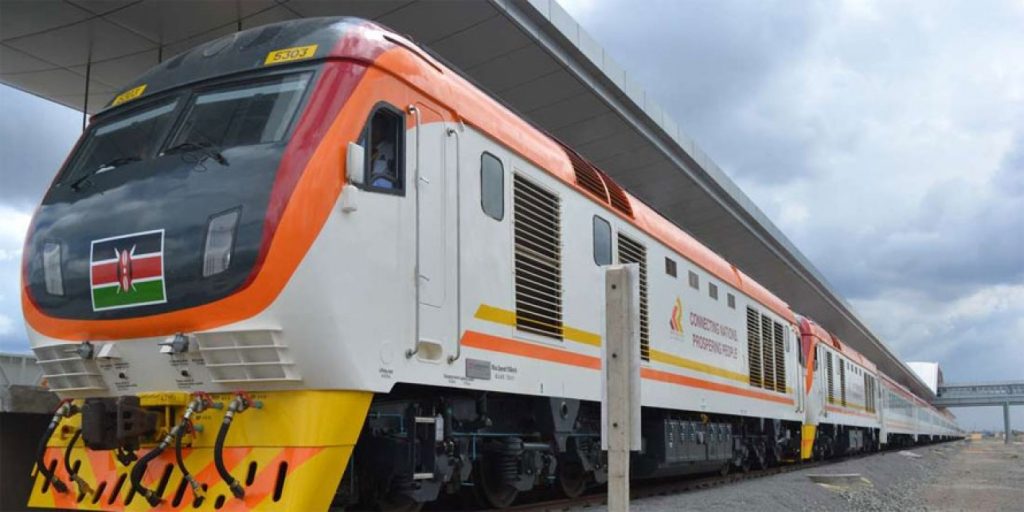
As the clock ticks down to the anticipated visit by President William Ruto, the fight for inclusion in the Standard Gauge Railway (SGR) has escalated into a high-stakes political contest in the Gusii region—laying bare divisions among leaders and raising broader questions about equity, influence, and development.
At the center of the storm is Ikonge, a modest but strategically located town in Nyamira County that has suddenly become a symbol of regional inclusion—or exclusion—in one of Kenya’s most ambitious infrastructure projects.
For weeks, anxiety has been building across Gusii following reports that the latest SGR route design does not feature Ikonge.
The omission has sparked sharp reactions, particularly from Richard Onyonka, who now wants the President to personally explain the apparent shift.
“We will not accept silence on a matter that touches the economic future of our people. If Ikonge was in the plan, what changed—and who made that decision?” Onyonka posed during a media interview.
He framed the issue as both a development concern and a matter of political accountability:
“This is not just about a railway station. It is about whether the voice of the Gusii people counts in national decisions.”
Concerns have also been amplified by local leaders and 2027 aspirants, including David Arasa (West Mugirango) and Johnson Ayuka (Rigoma Ward), who have strongly criticized the proposed routing.
They questioned the criteria used to determine the railway’s path, arguing that excluding Gusii undermines the region’s economic potential and denies residents the benefits of modern transport infrastructure.
Arasa emphasized the region’s role in agriculture and commerce, warning that missing out on the SGR could slow development and disadvantage farmers and traders who rely on efficient access to markets.
Ayuka echoed the concerns, noting that residents have long awaited transformative infrastructure capable of creating jobs and stimulating growth.
Kenya Social Congress Party chair Atati Kengere urged unity among Gusii leaders, stressing that equitable development must remain a national priority.
However, not all leaders agree with the claims of exclusion.
A faction aligned with the ruling party has dismissed the concerns, insisting that Ikonge remains under consideration.
Among them are North Mugirango MP Joash Nyamoko and South Mugirango MP Sylvanus Osoro, who say technical processes are still ongoing.
Osoro cautioned against politicizing the matter:
“We must allow engineers to do their work. Infrastructure of this magnitude cannot be designed on speculation or pressure—it must be guided by facts.”
“Ikonge has not been removed. Let us not create unnecessary panic. Once feasibility studies are complete, the truth will be clear to everyone.”
In what observers see as a strategic move, Osoro hinted that President Ruto could visit Ikonge alongside engineers during his planned tour of the region on March 29, 2026.
Amid the growing debate, Principal Secretary Stephen Isaboke has sought to calm tensions.
“There is no brief, formal or otherwise, that the Gusii region will be bypassed,” Isaboke said during an alumni event at Sameta Boys in Kisii.
He emphasized the national scope of the project:
“This railway is not for one town or one county—it is a national project meant to open up the entire Nyanza and Western corridor.”
Beyond Ikonge: A Bigger Vision
For Onyonka and like-minded leaders, the debate extends beyond a single station.
The senator has revived proposals to extend the railway to Isebania and link it with Tanzania’s network through Mwanza—an idea he says could transform Gusii into a regional trade hub.
“If we connect Kisii to Isebania and link to Mwanza, we are not just building a railway—we are building an economic lifeline for East Africa,” he said.
He also challenged regional leadership to think bigger, urging Presidents Ruto and Yoweri Museveni to champion deeper regional integration.
“This is the moment for bold leadership. Let Kenya, Uganda, Rwanda, and Congo sit at the same table and design a railway network that serves generations.”
Whether Ikonge ultimately makes it into the final SGR design remains uncertain.
What is clear, however, is that the railway has become more than just a transport project—it is now a political litmus test.
For the people of Gusii, the stakes are high.
“If this railway passes us by, it will not just be tracks we have lost—it will be opportunities, jobs, and our place in the future economy,” said a trader in Nyamira town.
As the region awaits the President’s word, one thing is certain—the battle for Ikonge is as much about politics as it is about rails.

