

Hank Williams Jr. Siblings: Get to Know Jett and Lycrecia Williams


Singer Hank Williams Jr. PHOTO/Getty Images
Hank Williams Jr., born Randall Hank Williams on May 26, 1949, in Shreveport, Louisiana, is an American singer-songwriter and musician.
Known professionally as Hank Williams Jr. or by his nickname “Bocephus,” a moniker given by his father after a Grand Ole Opry comedian’s ventriloquist dummy, he carved out his own identity by blending country with rock, blues, and Southern influences.
His journey from a child prodigy singing his father’s songs to a trailblazing artist in his own right is a testament to his resilience and talent.
Beyond his musical contributions, Hank Jr.’s personal life, including his relationships with his siblings, adds depth to his story within the storied Williams family.
Siblings
Hank has two siblings, both half-sisters, who share the complex legacy of their father, Hank Williams Sr. The first is Jett Williams, born Antha Belle Jett on January 6, 1953, five days after Hank Sr.’s untimely death at age 29.
Jett was the daughter of Hank Sr. and Bobbie Jett, a woman he had a relationship with during his final years.
Adopted at age three by a couple in Mobile, Alabama, Jett grew up unaware of her biological father until her 30s.
Her discovery of her heritage led to a prolonged legal battle to claim her share of Hank Sr.’s estate, a fight that pitted her against Hank Jr. and other family members.
In 1985, the Alabama Supreme Court recognized Jett as Hank Sr.’s daughter, granting her a portion of his royalties.
Despite the contentious legal history, Jett and Hank Jr. eventually developed a professional relationship, though personal closeness remained elusive.
Jett pursued her own music career, releasing albums like That Reminds Me of Hank and penning an autobiography, Ain’t Nothin’ as Sweet as My Baby.
The second sibling is Lycrecia Williams, Hank Jr.’s half-sister from his mother Audrey Williams’ previous marriage.
Less is known about Lycrecia’s public life compared to Jett, as she did not pursue a career in the spotlight to the same extent.
Career
Hank Jr.’s career began under the shadow of his father’s monumental influence.
At age eight, guided by his mother, Audrey, he performed Hank Sr.’s hits as part of the Audrey Williams Musical Caravan of Stars, making his stage debut singing songs like “Lovesick Blues.”
Also Read: Matthew Daddario Siblings: Meet Alexandra and Catherine Daddario

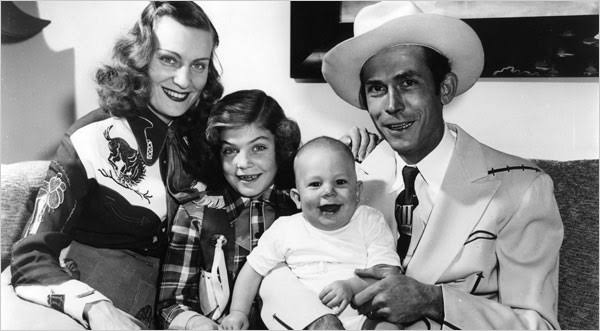
By 11, he appeared on the Grand Ole Opry, and at 14, he recorded his first single, a cover of his father’s “Long Gone Lonesome Blues,” which reached number five on the country charts.
His early albums, such as Hank Williams Jr. Sings the Songs of Hank Williams (1964), leaned heavily on his father’s catalog, positioning him as a legacy act.
However, Hank Jr. grew restless with this role, yearning to forge his own path.
In the early 1970s, he struggled with drug and alcohol abuse, culminating in a suicide attempt in 1974, as he grappled with the pressure of living up to his father’s name.
A turning point came in 1975 when Hank Jr. moved to Alabama to redefine his sound.
Collaborating with Southern rock and outlaw country artists like Waylon Jennings and Charlie Daniels, he released Hank Williams Jr. and Friends, an album that fused country with rock and blues, marking his artistic emancipation.
That same year, a near-fatal fall while mountain climbing in Montana left him with severe facial and skull injuries, requiring extensive surgeries and a two-year recovery.
Emerging with a new look—beard, cowboy hat, and sunglasses to conceal his scars—Hank Jr. embraced a bold, rebellious persona.
The late 1970s and 1980s saw him dominate country music with hits like “Family Tradition,” “Whiskey Bent and Hell Bound,” “A Country Boy Can Survive,” and “All My Rowdy Friends Are Coming Over Tonight,” the latter becoming the theme for Monday Night Football for over two decades.
His 1989 duet with his father’s vocals, “There’s a Tear in My Beer,” used innovative technology to blend their voices, earning critical acclaim.
Accolades
In 2020, Hank Jr. was inducted into the Country Music Hall of Fame, an honor that celebrated his role in expanding the genre’s boundaries.
He also earned four Emmy Awards for composing the Monday Night Football theme, a testament to his cultural impact beyond country music.
In 2007, he was inducted into the Nashville Songwriters Hall of Fame, acknowledging his songwriting prowess on tracks that resonate with themes of rebellion, family, and Southern pride.
Albums like Family Tradition (1979), Whiskey Bent and Hell Bound (1979), and Born to Boogie (1987) achieved multi-platinum status, with numerous singles reaching number one or two on the country charts.
Despite controversies, such as the 2011 removal of his Monday Night Football theme due to a controversial political comment, Hank Jr.’s enduring popularity and influence remain undeniable.

