

Harold Wilson Siblings: Getting to Know Edith Marjorie Wilson

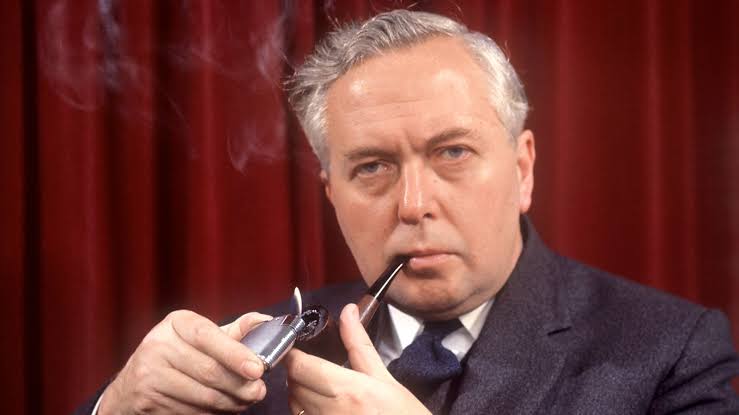
Harold Wilson PHOTO/BBC
James Harold Wilson, later Baron Wilson of Rievaulx, was a British Labour Party politician who served as Prime Minister of the United Kingdom from 1964 to 1970 and again from 1974 to 1976.
Born on 11 March 1916 in Cowlersley, near Huddersfield in the West Riding of Yorkshire, he was the son of James Herbert Wilson, an industrial chemist, and Ethel Seddon, a former schoolteacher.
Wilson grew up in a politically aware lower-middle-class family and showed early academic promise.
He attended Royds Hall Grammar School and later Wirral Grammar School for Boys before winning a scholarship to Jesus College, Oxford, where he studied philosophy, politics and economics and graduated with first-class honours.
During the Second World War he worked in the civil service, including as Director of Economics and Statistics at the Ministry of Fuel and Power.
Elected as a Member of Parliament in 1945, he rose rapidly through Labour ranks, becoming the youngest Cabinet minister of the twentieth century at the age of 31.
He led the Labour Party from 1963 to 1976 and remains the only Labour leader to form a government after four general elections.
Wilson died on 24 May 1995 in London at the age of 79.
Siblings
Harold was the younger of two children.
His sibling was an older sister, Edith Marjorie Wilson, known as Marjorie, who was born on 12 March 1909 in Manchester.
She was nearly seven years older than her brother.
Marjorie worked as a schoolteacher and later moved to Cornwall, where she lived with their mother after the family relocated.
She took on significant family responsibilities, looking after their father for a period and thereby allowing Harold greater freedom to pursue his political career.
Marjorie received the MBE in 1972. She died in Truro, Cornwall, on 8 March 1998.
Also Read: Angela Rayner Siblings: Get to Know Tracey and Darren Bowen
Career
Wilson entered Parliament in 1945 as the Labour MP for Ormskirk and later represented Huyton from 1950 until his retirement in 1983.
In Clement Attlee’s postwar government he served as Parliamentary Secretary to the Ministry of Works and then as Secretary for Overseas Trade before becoming President of the Board of Trade in 1947.
He resigned from the Cabinet in 1951 in protest at the introduction of National Health Service charges.
In opposition he held the roles of Shadow Chancellor and Shadow Foreign Secretary.
After the sudden death of Hugh Gaitskell in 1963 he was elected Leader of the Labour Party.
He led Labour to a narrow victory in the October 1964 general election and became Prime Minister.
A further election in 1966 strengthened his majority.
His governments introduced major social reforms, including the suspension of the death penalty, the legalisation of abortion and the decriminalisation of homosexual acts between consenting adults, alongside measures on education, housing and race relations.
Economic difficulties and the devaluation of the pound in 1967 marked the period.
After defeat in 1970 he returned to office in 1974, first as head of a minority government and then with a small majority following a second election that year.
He unexpectedly resigned as Prime Minister in April 1976, citing health concerns, and was succeeded by James Callaghan.
Wilson remained in the Commons until 1983.
Accolades
For his wartime civil service work Wilson was appointed an Officer of the Order of the British Empire in the 1945 New Year Honours.
He became a Privy Counsellor in 1947. After resigning the premiership he was appointed a Knight Companion of the Order of the Garter in 1976.
In 1983 he was created a life peer as Baron Wilson of Rievaulx, of Kirklees in the County of West Yorkshire, and took his seat in the House of Lords.
He was also elected a Fellow of the Royal Society and held other academic distinctions reflecting his early scholarly career.

