

High Court Upholds Impeachment of Gachagua

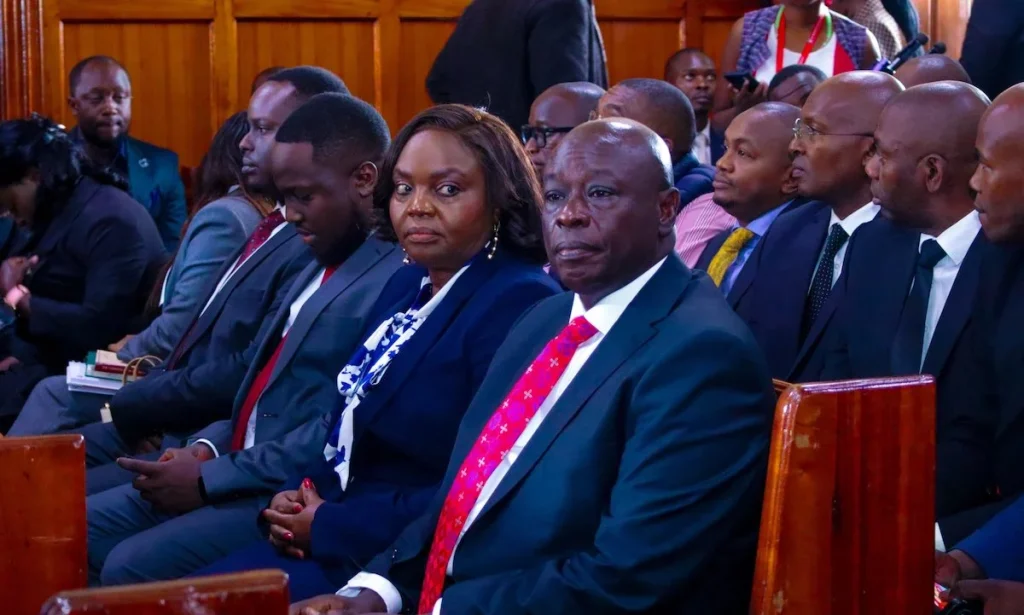
The High Court has upheld the impeachment of former Deputy President Rigathi Gachagua, ruling that the removal process met the constitutional threshold but raising concerns over aspects of fair hearing during Senate proceedings.
In a judgment delivered on Monday, June 8, 2026, the court found that while Parliament acted within its constitutional mandate in removing a Deputy President from office, certain procedural steps during the Senate hearings did not fully comply with fair trial guarantees under the Constitution.
The bench noted that Senate proceedings continued despite requests for adjournment on medical grounds, concluding that the refusal to grant a pause amounted to a violation of Gachagua’s right to a fair hearing.
However, the court emphasized that Parliament has broad constitutional authority to impeach state officers, provided due process is followed, including allowing adequate participation by the affected party.
The judges first confirmed that the court had jurisdiction to hear and determine the petition before addressing the substantive issues raised.
On claims of bias against the Speaker of the National Assembly, the court dismissed the allegations, saying they were not supported by sufficient evidence.
The court also upheld the public participation process that preceded the impeachment, noting that Parliament had issued notices through newspaper advertisements in both English and Kiswahili, giving citizens an opportunity to present their views.
“We are satisfied that the public participation conducted during the impeachment process met the constitutional threshold,” the bench stated.
On the appointment and approval of Deputy President Kithure Kindiki, the court ruled that the parliamentary process was conducted transparently and that public participation was not constitutionally required for the approval of his nomination.
The bench also declined to declare Standing Order 64 unconstitutional, stating that the issue was not the seven-day timeline itself but how parliamentary proceedings were conducted. It held that the timeline was constitutional, while noting that Parliament remains free to amend its procedures where necessary.
On the legal framework governing the removal of a Deputy President, the court observed that Article 150 of the Constitution lacks a detailed statutory framework, creating gaps that may affect procedural clarity and public confidence.
The judges urged Parliament to urgently enact legislation to provide a clear framework for future impeachment processes under Article 150.
However, the court stressed that the absence of such legislation did not invalidate the impeachment process against Gachagua, noting that Parliament relied on Articles 144 and 145 of the Constitution to guide proceedings.
On timelines, the court found that while Standing Order 78(2) provides a 10-day period for investigations by a special committee, there is no specific constitutional timeline for plenary impeachment proceedings in the Senate.
It ruled that the Senate’s adoption of a 10-day timeline was a procedural decision and did not amount to a constitutional violation.