

How “Baby Oyo” Could Take Back the Tooro Throne in 20 Years

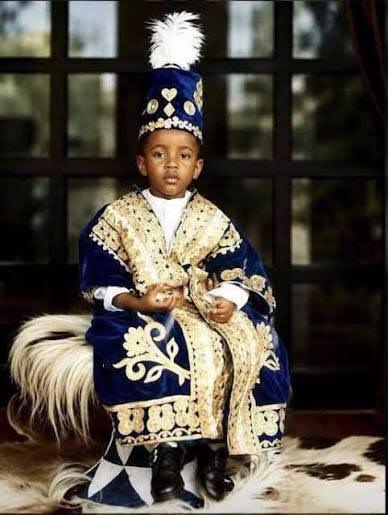
Photo potrait of the young late King Oyo
In 2026, a child known only as “Baby Oyo” was a rumor. A redacted birth certificate. A whisper in Fort Portal. The alleged son of a beloved king, hidden away in America while his cousin took the throne. The palace denied him. The clan rejected him. The world moved on.
But the world has a long memory. And so does a kingdom.
Twenty years from now, in 2046, that child will be a man. He will have a name, a face, and a story. And if the winds blow the right way, he will walk back into Tooro not as a rumor, but as a reckoning.
Here is how it could happen.
2026–2036: The Quiet Years
For a decade, nothing happens. That is the point. Baby Oyo grows up in the United States, far from the cameras and the courtrooms. He goes to school. He plays basketball. He learns to drive. His mother—whoever she is—keeps him away from the headlines. The queen mother and Princess Ruth continue their legal fight, but it fades from public view. The new king, Edward Rukidi Nyabongo I, settles into the role. He builds schools. He attends ceremonies. He is competent, but he is not Oyo. The kingdom’s love for the boy king never dies; it just goes quiet.
Meanwhile, the child learns. Not just algebra and history, but the truth. He learns that his father was a king who planted ten million trees and held a kingdom together for thirty-one years. He learns that his grandmother and aunt fought for him. He learns that there is a will with his name on it. He learns that back home, people still whisper about the baby who was robbed.
By the time he turns eighteen, the whispers have become a low hum. He starts reading Ugandan news. He follows Tooro social media. He sees the comments under every photo of King Edward: “Where is Baby Oyo?” “The real heir is in America.” “Oyo’s son will come back.” The internet never forgets.
2036–2041: The Return
He doesn’t announce himself with a press conference. That would be too easy. Instead, he comes quietly. A visit to Kampala under a different name. A meeting with his grandmother, the queen mother, now elderly but still sharp. A private ceremony at a small shrine outside Fort Portal. The elders who once rejected him are older now, some dead, some replaced. The political calculus has shifted. The government that backed Edward in 2026 has new priorities. The kingdom is restless. The economy is tight. People are tired of fundraising drives and distant kings.
Then comes the photograph. A young man standing beside the queen mother at Karuziika Palace. He has Oyo’s jaw. Oyo’s eyes. Oyo’s quiet smile. The caption is three words: “He came home.”
The country explodes.
Edward’s palace issues a statement. It is careful, diplomatic, and utterly tone-deaf. They call the young man “a private citizen” and remind the public that the succession was settled in 2026. But the damage is done. The story writes itself: the hidden prince returns. The son the palace tried to erase. The boy who was born a king’s son and might yet wear the crown.
2041–2046: The Groundswell
Baby Oyo—now known by his real name, Prince Jacksonville Jacob Oyo—does not demand the throne. That is his genius. He simply lives in Tooro. He attends ceremonies. He visits villages. He plants trees, just like his father. He speaks Runyoro, badly at first, then better. He listens more than he talks. He is not a politician. He is a symbol.
And symbols are stronger than kings.
This is where the math becomes impossible to ignore. King Edward has been on the throne for two decades. He married Queen Rebecca Amoding in 2018, and she hails from the Teso community—outside Tooro’s traditional cultural boundaries. Under Tooro custom, a future heir must be born to a mother from one of the kingdom’s recognised clans. The Babiito Clan has confirmed that any children the King and Queen have will not automatically fall in the line of succession because of their mother’s background. As of his coronation, the couple had no children. Even if they have a son tomorrow, he would be, at best, a teenager by 2046—and his claim would be contested from birth.
Baby Oyo, by contrast, is already a man. He is the biological son of the late King, the child named in a contested will, the heir the palace spent twenty years pretending didn’t exist. When the elders look at the two bloodlines, the choice becomes simple: a grown son of the beloved boy king, or an aging monarch whose own children cannot inherit without a constitutional crisis. The crowd does not need to be convinced. The math does it for them.
Edward, meanwhile, has grown tired. He has been king for twenty years. He has made mistakes. The fundraising scandals of his early reign are remembered. The contested succession never fully healed. He is not hated, but he is not loved. He is a placeholder. And in a kingdom that once had a boy king who captured the world’s heart, a placeholder is not enough.
The turning point comes in 2045, when a group of clan elders—younger, more open to change—publicly call for a “traditional review” of the 2026 succession. They cite the 2022 will. They cite the child who was never given a chance. They cite the mood of the people. The palace tries to shut it down, but the genie is out of the bottle. The queen mother, now in her seventies, gives a rare interview. She says one sentence: “My son left a will. Read it.”
The court case that follows is not about law. It is about legitimacy. And legitimacy, in Tooro, has always been about story.
2046: The Crowning
It doesn’t happen with a coup. It happens with a ceremony. A quiet one, at first. A gathering of elders, clan leaders, and a few thousand ordinary people at Karuziika Palace. Prince Jacksonville is presented to the kingdom as the rightful heir. The will is read aloud. The queen mother places a traditional crown on his head. He is twenty-six years old. He is not a toddler. He is not a rumor. He is a king.
Edward does not resist. He is offered a role as an advisor, a respected elder. He accepts. The kingdom cannot afford a war. And in the end, he knows the truth: the crowd was never his. It was always waiting for the boy.
So Baby Oyo takes the throne. Not by force. Not by law. But by the slow, unstoppable force of a story that refused to die. King Oyo was born a king and died as one. His son, hidden for so long, finally comes home to finish what his father started.
And the kingdom? The kingdom weeps, and cheers, and remembers.
Because some stories don’t end. They just wait for the next chapter.
But let’s be clear: this is a fairytale. A dreamland story. A “what if” spun from whispers and hope, not from facts on the ground. The real Tooro throne is occupied. The real succession was settled. The real Baby Oyo is a child whose future is unwritten. This was just a story—the kind you tell around a fire when the night is long and the kingdom is restless. Don’t mistake it for prophecy. It’s just a dream.

