

How To Draw 3D

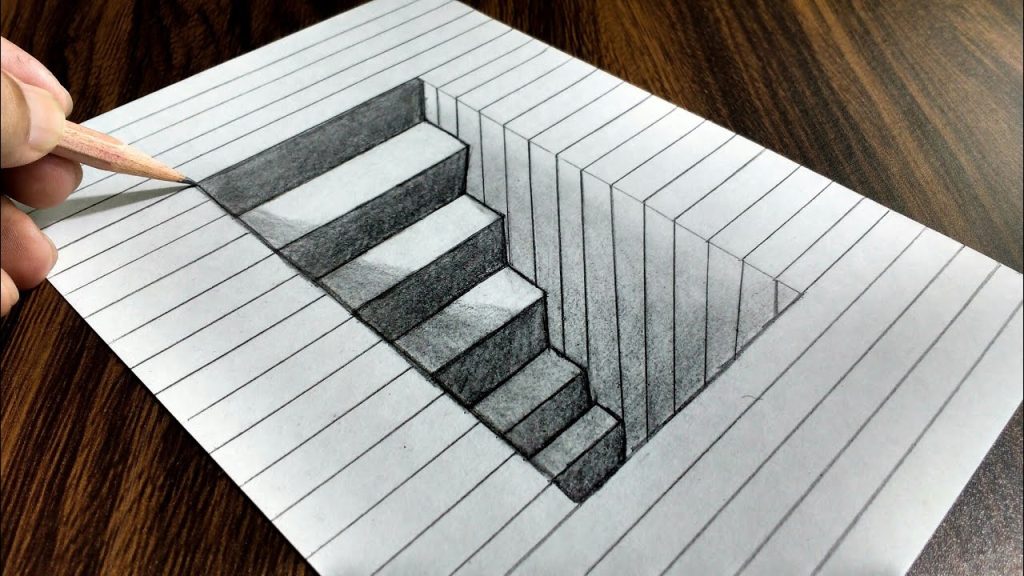
Drawing in 3D gives your artwork depth, realism and a sense of life that flat sketches cannot create. It involves learning how objects look in space, how light interacts with surfaces and how perspective guides the viewer’s eye. Anyone can learn 3D drawing with practice, and once you understand the basic principles, your sketches become more dynamic and believable. The process is simple when broken down into clear stages, from understanding perspective to adding shading that brings your artwork to life.
- Understanding Basic Perspective
Every 3D drawing starts with perspective. This is the method artists use to show depth on a flat surface. Most beginners start with one-point or two-point perspective because they are easy to apply. One-point perspective uses a single vanishing point on the horizon line, where all lines that move away from you seem to meet. Two-point perspective uses two vanishing points, giving more realistic angles. Practising simple shapes like boxes or roads using these vanishing points trains your eyes and hands to see objects in space rather than on a flat plane.
- Starting with Simple 3D Shapes
All complex objects can be broken down into basic forms such as cubes, cylinders, cones and spheres. Beginning with these shapes makes drawing less intimidating. For example, a head can be simplified into a sphere, a building into a rectangular block and a bottle into a cylinder. Sketching lightly allows you to adjust proportions as you go. When you understand how these forms sit in space and how they relate to one another, drawing more detailed objects becomes far easier.
- Adding Depth with Line Weight
Line weight refers to the thickness of your lines. Using heavier, darker lines for the parts of the object closest to the viewer and lighter, thinner lines for the areas farther away creates a strong sense of depth. This simple technique instantly makes a sketch look three-dimensional. Gradually varying the pressure of your pencil adds character and guides the viewer’s eye. Combining proper perspective with effective line weight helps your drawings stand out and feel more realistic.
- Creating Shadows and Highlights
Shading is one of the most important parts of 3D drawing. It shows where the light hits your object and where shadows fall. Identifying a single light source makes shading easier and more consistent. The areas closest to the light remain bright, while the farther sides gradually darken. Soft transitions create smooth, rounded shapes, and sharp shadows highlight edges and angles. Adding highlights with an eraser or leaving areas blank gives your drawing dimension and makes the form pop from the page.
- Refining and Adding Detail
Once the structure, lines and shading are in place, the final step is refining the drawing. This includes cleaning up messy lines, sharpening edges and adding fine details such as texture, patterns or reflections. Observing real objects helps you understand how surfaces behave in light, how edges curve and how materials differ. Stepping back from your drawing occasionally gives you a fresh view and helps you spot areas that need adjustment. Over time, these habits make your 3D artwork more accurate and expressive.
Also Read: How To Delete Incognito History