How to Wash Meat Before Cooking

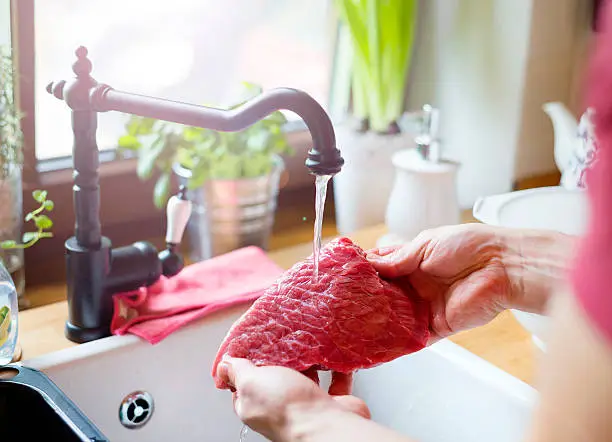
Knowing how to wash meat before cooking is important when preparing beef, chicken, goat meat, pork, or other types of meat at home. Meat may contain blood, bone fragments, dirt, or other unwanted substances from handling and transportation. However, washing raw meat under running water is not recommended because splashing can spread harmful bacteria to the sink, kitchen surfaces, utensils, and nearby food. The safest way to prepare meat is to remove visible unwanted material, handle it hygienically, and cook it thoroughly.
-
Inspect the Meat Before Cleaning
Place the meat on a clean chopping board or in a clean basin and inspect it carefully. Look for visible dirt, bone fragments, unwanted fat, damaged sections, or other debris that may need to be removed. Checking the meat before cooking helps you identify areas that need trimming and ensures that it is ready for preparation.
-
Remove Unwanted Parts
Use a clean knife to trim off unwanted fat, tough connective tissue, bone fragments, or visibly dirty sections. If the meat has large pieces of debris, remove them carefully without spreading them across the meat or kitchen surfaces. Avoid using your bare hands unnecessarily, especially when handling several different foods.
-
Avoid Washing Meat Under Running Water
Although many people rinse meat under a tap, this practice can spread bacteria through water droplets and splashes. Bacteria from raw meat can contaminate the sink, countertops, utensils, dish towels, and other foods. Instead of rinsing meat under running water, remove visible dirt and debris using clean utensils or paper towels, then proceed with preparation.
-
Use Vinegar or Lemon Only for Flavour, Not Disinfection
Some people use vinegar, lemon juice, or salt when preparing meat because they prefer the taste or traditional cleaning method. However, these ingredients do not reliably eliminate harmful bacteria from raw meat. If you choose to use lemon juice or vinegar for flavour, do not treat it as a substitute for proper food handling and thorough cooking.
-
Handle Chicken and Other Meat Separately
Keep raw chicken, beef, goat meat, and pork separate from vegetables, fruits, and ready-to-eat foods. Use separate chopping boards and knives whenever possible. If you must reuse utensils, wash them thoroughly with hot, soapy water before using them on other ingredients. This helps prevent cross-contamination during food preparation.
-
Wash Your Hands and Cleaning Equipment
After handling raw meat, wash your hands thoroughly with soap and clean running water for at least 20 seconds. Clean the chopping board, knife, basin, countertop, and any surfaces that came into contact with the meat using hot, soapy water. Pay particular attention to the sink and surrounding areas if raw meat was placed there.
-
Cook the Meat Thoroughly
Once the meat is prepared, cook it thoroughly using your preferred method, such as boiling, frying, roasting, grilling, or stewing. Proper cooking is the most reliable way to kill harmful bacteria that may be present in raw meat. Avoid eating meat that is still undercooked, particularly poultry and minced meat.
-
Store Meat Properly Before Cooking
If you are not cooking the meat immediately, place it in a clean, covered container and store it in the refrigerator. Keep raw meat on the lowest shelf to prevent juices from dripping onto other foods. If you intend to use it later, freeze it promptly rather than leaving it at room temperature for extended periods.
Also Read: How to Wash Your Hands Properly