


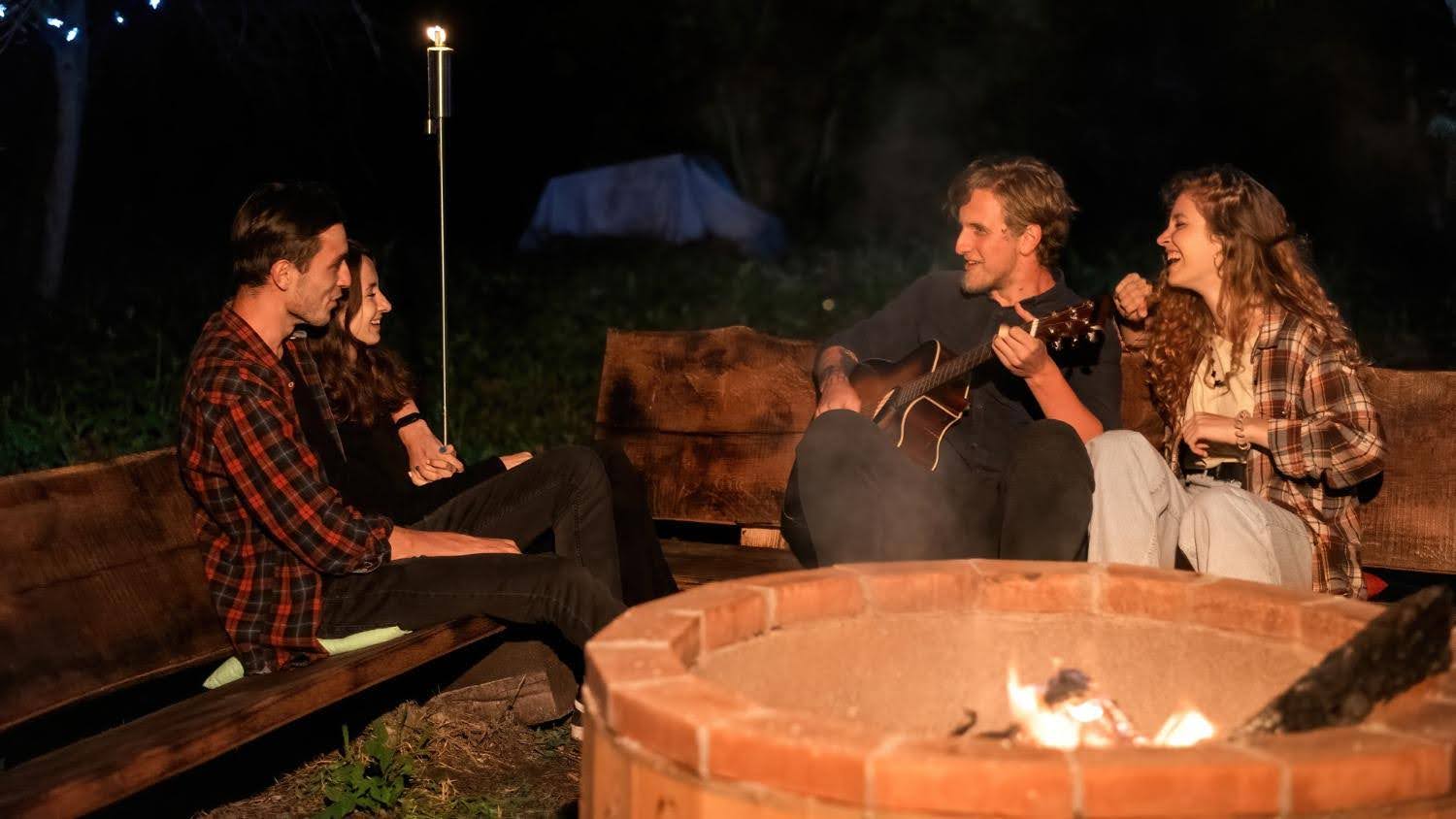
Some outdoor moments stay with us long after they end, not because of what we did, but because of how the space felt. As daylight fades and activity slows, subtle elements begin to define the experience. Warmth becomes noticeable as temperatures drop, light shifts from functional to atmospheric, and stillness settles in once movement gives way to presence.
These transitions often happen quietly, shaped by small, intentional choices in how an outdoor setting is prepared. It might be the way seating is arranged, the timing of when the lights come on, or the soft glow of a fire that anchors the space, sometimes centered around familiar names like The Great Fire Company as part of an environment designed for lingering rather than passing through.
Outdoor evenings are rarely about spectacle. They are about conditions that invite people to stay a little longer than planned.
Warmth Creates Permission to Linger
Warmth is one of the most underestimated factors in outdoor comfort. During the day, movement and sunlight do much of the work. In the evening, warmth becomes a deciding factor in whether an outdoor space remains usable or quietly empties.
When people feel physically comfortable, conversations stretch naturally. Meals slow down. Silence feels intentional rather than awkward. Warmth does not need to be excessive or dramatic to be effective. Often, it simply removes the subtle discomfort that would otherwise pull people back indoors.
In this way, warmth creates permission. It allows an outdoor evening to unfold at its own pace instead of being cut short by cold.
Light Shapes Mood More Than Visibility
Outdoor lighting is often treated as a practical necessity, but its emotional impact is far greater than its functional role. Bright, overhead lighting signals activity and movement. Softer, lower light encourages rest and attention.
Research highlighted by the National Sleep Foundation shows that lower, warmer light in the evening helps signal the body to slow down, supporting relaxation and calmer social interaction. This same principle applies outdoors, where softer lighting naturally encourages people to linger rather than rush.
As evening settles in, light becomes a cue. It tells the body that the pace can slow. Shadows soften edges, and the world feels slightly smaller and more contained.
Stillness Is an Active Ingredient
Stillness is not the absence of sound or motion. It is the absence of urgency. Outdoor evenings that feel meaningful often share this quality. Phones are set down. Conversations drift. Gaps between words feel natural.
This stillness allows people to notice things they might otherwise ignore. The sound of wind through trees. The rhythm of breath. The warmth of sitting without needing to move. These moments are not planned, but they are enabled by an environment that does not demand constant engagement.
In outdoor settings, stillness often arrives when there is nothing left to do but be present.
The Transition From Day to Night Matters
Outdoor evenings are shaped as much by transition as by the final state. The shift from daylight to darkness marks a psychological boundary. Tasks end. Expectations change. Energy recalibrates.
Spaces that acknowledge this transition tend to feel more intentional. Rather than abruptly switching from activity to rest, they allow a gradual slowing. Seating replaces standing. Light softens rather than disappears. Warmth becomes more noticeable as the air cools.
This gradual transition helps people settle into the evening rather than feeling pushed into it.
Fire as a Quiet Focal Point
Fire has long played a role in evening gatherings, not because it demands attention, but because it gives the eye somewhere to rest. Its movement is slow and repetitive. Its light is warm rather than sharp. Its presence signals pause.
In outdoor settings, fire often becomes a background element rather than a centerpiece. It supports conversation without interrupting it. People orient themselves around it naturally, adjusting posture and distance without conscious thought.
This subtle guidance is part of what makes fire so effective in shaping evening experiences.
Outdoor Evenings Encourage Connection
The combination of warmth, light, and stillness changes how people interact. Conversations deepen not because topics change, but because the environment removes distractions. Without the pressure to move on or fill silence, people listen more closely.
Outdoor evenings also tend to flatten hierarchy. Seated together, sharing the same conditions, distinctions fade. Everyone is equally exposed to the air, the light, and the quiet. This shared experience strengthens connection.
It is no coincidence that some of the most meaningful conversations happen outdoors after dark.
Designing for Presence, Not Activity
Outdoor spaces are often designed around daytime use. Grilling areas, open layouts, and clear sightlines support movement and interaction. Evening use requires a different approach.
Designing for presence means prioritizing comfort over circulation. It means creating pockets of intimacy rather than wide-open expanses. It means accepting that not every area needs to be fully lit or actively used.
When outdoor spaces are designed with evening presence in mind, they become destinations rather than transitions.
The Role of Routine in Memorable Evenings
Memorable outdoor evenings are often rooted in simple routines. Lighting the same area at the same time. Sitting in familiar places. Letting the evening unfold without agenda.
These routines create familiarity, which in turn creates ease. People know what to expect, and that predictability makes it easier to relax. Over time, these evenings become markers of rhythm rather than exceptions.
Routine does not diminish meaning. It allows meaning to accumulate.
Why Simplicity Works Best
The most effective outdoor evenings are rarely overdesigned. Too many elements competing for attention disrupt the sense of calm. Simplicity allows warmth, light, and stillness to do their work without interference.
This does not mean minimalism for its own sake. It means intentional restraint. Choosing fewer elements and allowing them space to matter.
In outdoor settings, less often creates more room for experience.
Evenings That Stay With Us
When people think back on memorable outdoor moments, they often remember how they felt rather than what happened. The feeling of warmth settling in. The softening of light. The quiet that made space for connection.
These moments are shaped by conditions, not events. By paying attention to warmth, light, and stillness, outdoor evenings can become more than time spent outside. They become experiences that linger, quietly and comfortably, long after the night ends.
Email your news TIPS to Editor@Kahawatungu.com — this is our only official communication channel
