

Howard Dean Net Worth

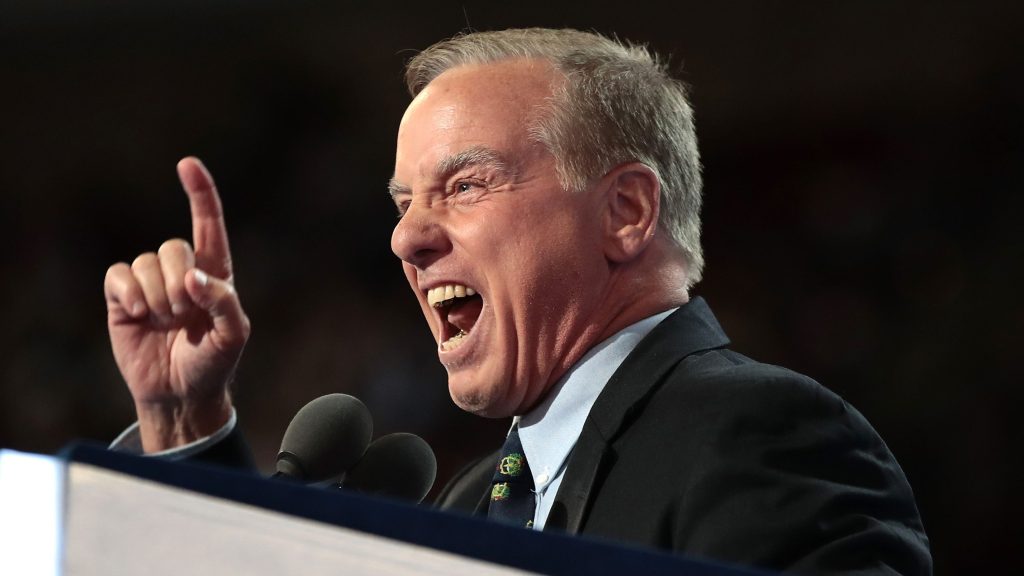
Howard Dean is an American physician, politician and political commentator with an estimated net worth of $6 million. He built his wealth through a combination of medical practice, public service, investments and political consulting.
Dean is best known for serving as the 79th governor of Vermont from 1991 to 2003. He also sought the Democratic Party’s presidential nomination in 2004 and later chaired the Democratic National Committee (DNC) from 2005 to 2009.
Although his presidential campaign ended before the party selected its nominee, Dean gained national recognition for his grassroots fundraising strategy and use of the internet to mobilise supporters. His financial disclosures during the 2004 campaign also provided an insight into his personal wealth.
| Howard Dean Net Worth | $6 Million |
| Date of Birth | November 17, 1948 |
| Place of Birth | East Hampton, New York |
Early Life
Howard Brush Dean III was born on November 17, 1948, in East Hampton, New York. He grew up in a financially comfortable family and was the eldest of four brothers.
His father, Howard Brush Dean Jr., worked in the financial industry, while his mother, Andrée Belden Dean, was an art appraiser.
Dean attended the Browning School in Manhattan before transferring to St. George’s School in Rhode Island. He also spent a year at Felsted School in England in 1966.
He later enrolled at Yale University, where he graduated in 1971 with a bachelor’s degree in political science. Dean then attended the Albert Einstein College of Medicine at Yeshiva University, earning his medical degree in 1978.
After completing medical school, he undertook his residency at the University of Vermont. He subsequently practised internal medicine in Shelburne, Vermont.
His medical background became an important part of his political identity, particularly during his campaigns, when he frequently discussed healthcare access and public health policy.
Entry Into Politics
Dean became involved in politics in 1980 when he helped organise a grassroots campaign opposing a proposed condominium development on Lake Champlain in Vermont.
The campaign introduced him to local political organising. He also volunteered for President Jimmy Carter’s re-election campaign and served as a delegate to the 1980 Democratic National Convention.
In 1981, Dean became chairman of the Chittenden County Democratic Committee. He later ran for the Vermont House of Representatives and won election in 1982.
He served in the state legislature from 1983 to 1986, where he became assistant minority leader.
In 1986, Dean was elected lieutenant governor of Vermont. He held the position until 1991 while continuing to practise medicine.
His work in the legislature and as lieutenant governor helped him build relationships across the state and prepared him for higher political office.
Governor of Vermont
Dean became governor of Vermont on August 14, 1991, following the sudden death of Governor Richard A. Snelling.
He subsequently won election to a full term in 1992 and was re-elected in 1994, 1996, 1998 and 2000. He served until January 2003, becoming one of Vermont’s longest-serving governors.
During his time in office, Dean focused on balancing the state’s budget, managing public spending and expanding access to healthcare.
One of his notable initiatives was the expansion of the Dr. Dynasaur programme, which provided health coverage for children and pregnant women in Vermont.
Dean also served as chairman of the National Governors Association from 1994 to 1995. His work in state government increased his national profile and helped establish him as a potential Democratic presidential candidate.
His earnings during this period included his salary as governor. Financial records reported that he received $85,235 in salary during 2002, alongside additional deferred income.

2004 Presidential Campaign
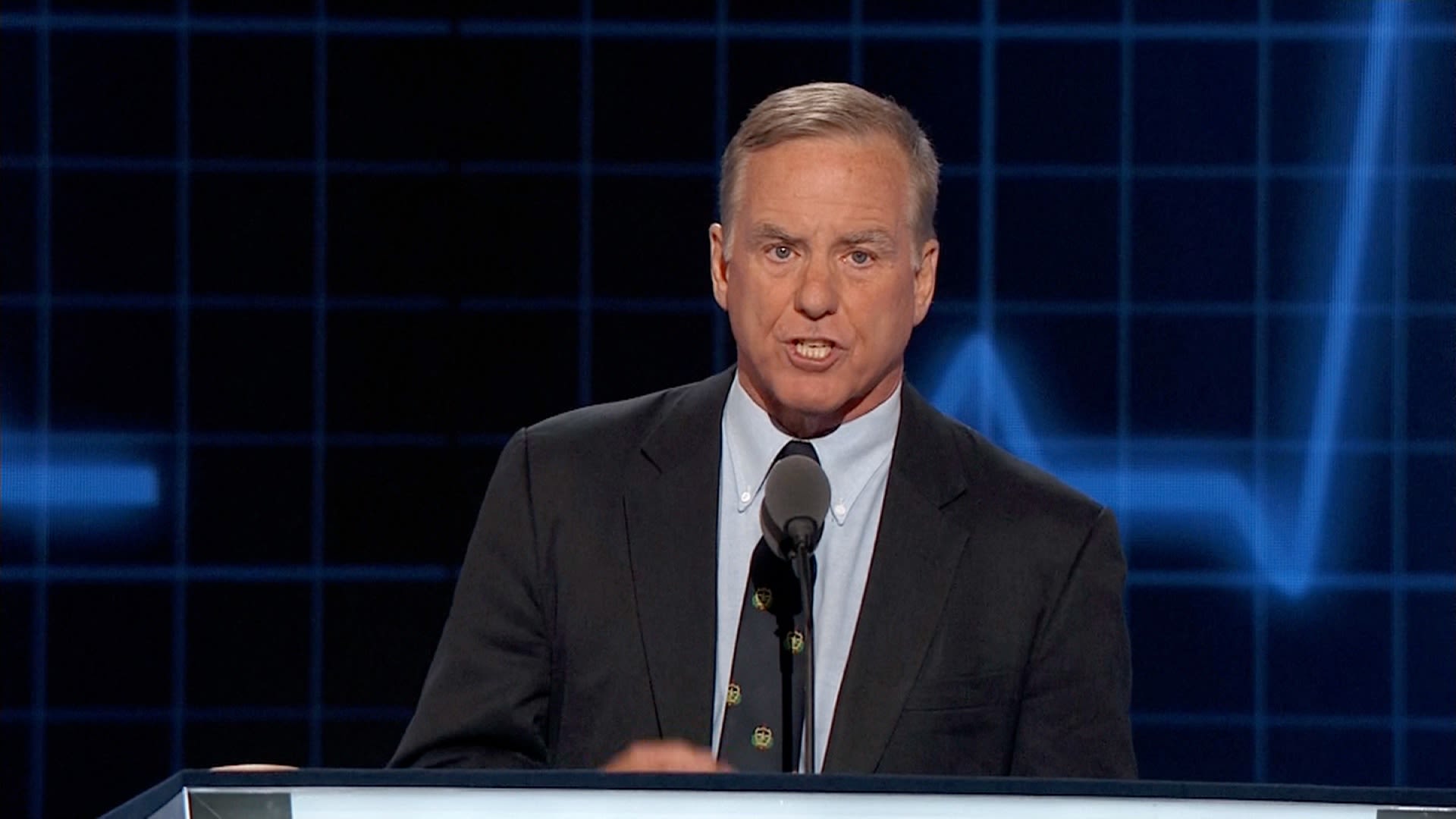
In 2002, Dean emerged as one of the potential Democratic candidates for the 2004 presidential election. He officially announced his candidacy in 2003.
His campaign gained momentum as he positioned himself as an alternative to established Democratic politicians. He focused on healthcare, fiscal responsibility, opposition to special-interest influence and grassroots political participation.
Dean also opposed the planned US invasion of Iraq, a position that attracted support among Democratic voters who disagreed with the Bush administration’s foreign policy.
His campaign became known for its use of the internet to raise money and organise supporters. Through online fundraising and grassroots mobilisation, Dean attracted contributions from large numbers of individual donors.
By the third quarter of 2003, his campaign had raised $14.8 million, making him one of the leading Democratic candidates in fundraising.
He also received endorsements from several labour organisations and former Vice President Al Gore.
However, Dean’s campaign suffered a setback after he finished third in the Iowa Democratic caucuses in January 2004. His speech following the result, which included a loud celebratory shout, attracted extensive media coverage and became widely known as the “Dean scream.”
His campaign struggled in subsequent contests, and he eventually withdrew from the race. He later endorsed John Kerry, who went on to become the Democratic presidential nominee.
Chairman of the Democratic National Committee
After the 2004 election, Dean entered the race to become chairman of the Democratic National Committee. He won the position in February 2005 after his main opponents withdrew.
He served as DNC chairman from 2005 to 2009, leading the party through the 2006 midterm elections and the 2008 presidential election.
One of his most important initiatives was the 50-State Strategy. The programme aimed to strengthen the Democratic Party’s presence across all states, including areas where Republicans traditionally enjoyed strong support.
The strategy focused on building local party organisations, recruiting candidates and investing in campaign infrastructure beyond major election battlegrounds.
Democrats made significant gains in the 2006 midterm elections, winning control of both chambers of Congress. In 2008, Barack Obama also secured victories in several states that had traditionally supported Republican presidential candidates.
Dean’s approach to political organisation and technology was widely discussed during this period. He left the DNC chairmanship in January 2009 after completing his term.
Work After the Democratic National Committee
After leaving the DNC, Dean moved into the private sector and continued working in political commentary and public policy.
He became a contributor to television news networks and participated in discussions on American politics, elections and public affairs.
Dean also held academic positions. He served as a Senior Presidential Fellow at Hofstra University and a Senior Fellow at Yale University’s Jackson Institute for Global Affairs. He also worked as a visiting professor at Williams College.
His private-sector work included political consulting and advising. In December 2018, he joined the international advisory board of Tilray, a cannabis company that was seeking to expand its operations internationally.
The appointment brought together former government officials and business leaders to advise the company on its international growth strategy.
Personal Life
Howard Dean married Judith Steinberg in 1981. The two met while studying medicine and later established a family medical practice in Shelburne, Vermont.
They have two children, Anne and Paul.
Dean was raised in the Episcopal Church but later joined a Congregational church after disagreements with the local Episcopal diocese. He has described himself as more spiritual than religious.
His wife is Jewish, and the couple raised their children in a secular household. Both children have identified as Jewish.
Dean has generally kept his family life away from the centre of his political activities, although his marriage and medical background were occasionally discussed during his presidential campaigns.
Also Read: John Edwards Net Worth

