


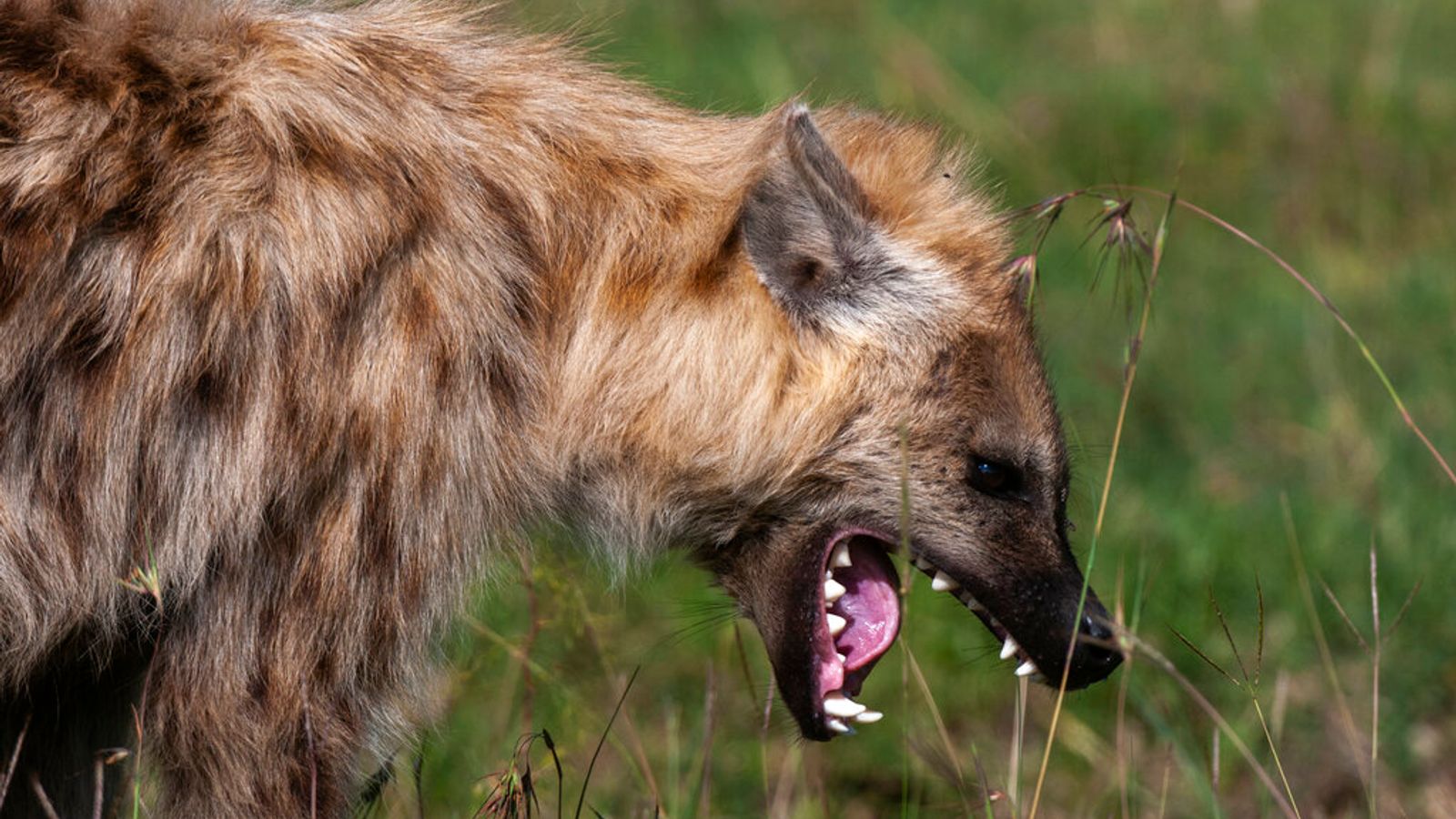
A 45-year-old man was found dead after he had been killed by a clan of hyenas in a village in Leheley, Wajir County.
Police and Kenya Wildlife Service officials named him as Ibrahim Ahmed Korre. The discovery was made in Laqbogol village on January 5 where the remains of the man were found decomposed in a thicket.
Both arms were badly severed while the muscles had been torn out, witnesses said. The torso was missing and most parts of the limbs had been eaten out. The body parts were moved to the mortuary pending an autopsy and other procedures.
Police and KWS visited the scene and informed the family to lodge a formal complaint on the death. Such attacks are common in the area amid a campaign to address the human-wildlife conflict menace.
Elsewhere in Naishi, Njoro, Nakuru County, a 30-year-old man died after being attacked by a rhino.
The deceased was attacked as he walked from Ronda to Naishi game and died on January 2 while being attended to at the Nakuru PGH.
The body of Paul Muthee was moved to the mortuary pending an autopsy.
His family was informed to file a claim.
These are the latest such incidents to happen in increasing cases of human-wildlife conflict. There are efforts to address the issue.
In May 2025, Kenya introduced the third phase of its Human–Wildlife Conflict Compensation Programme, an initiative aimed at addressing these incidents and supporting affected families.
During its launch at Meru National Park, President William Ruto unveiled the innovative Wildlife Conservation Card, a new tool designed to help fund conservation efforts.
“Compensation is justice, but prevention is progress,” Ruto said, emphasizing the need for long-term solutions that benefit both people and wildlife.
“Through the Conservation Card, fencing, and community‑led tourism, we are turning conflict into opportunity,” he added.
Developed in partnership with KCB Bank, the Wildlife Conservation Card is available in three tiers—Platinum (Elephant), Gold (Lion), and Silver (Cheetah).
A portion of every transaction made with the card (Sh10, Sh5, and Sh3, respectively) goes directly to the Wildlife Conservation Trust Fund.
The initiative aims to enable Kenyans and international supporters to contribute to wildlife conservation while fostering economic benefits for local communities.
With this new approach, Kenya hopes to build a future where humans and wildlife can coexist more safely and sustainably.
Email your news TIPS to Editor@Kahawatungu.com — this is our only official communication channel
