

Inside Kenya’s Booming Sneaker Resale Hustle: How Tech-Savvy Youth Are Turning Kicks Into Cash

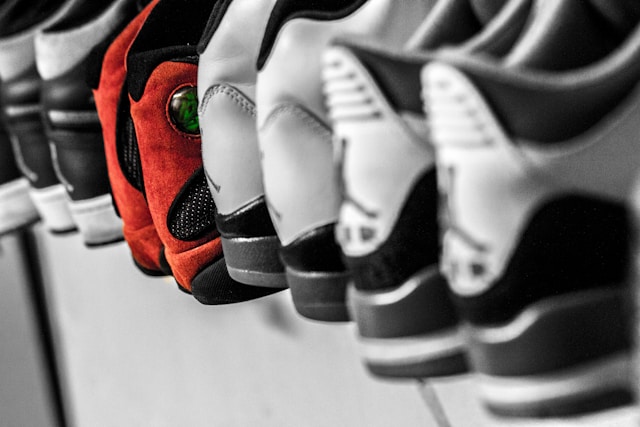
Sneaker Resale Hustle
The sneaker game in Kenya has changed. What was once a simple matter of walking into a shop along Moi Avenue or scrolling through Instagram pages for the latest Air Jordans has evolved into a full-blown digital economy, one where young Kenyans are earning serious money buying and reselling limited-edition sneakers sourced from international markets.
From Nairobi’s Gikomba-adjacent thrift culture to the high-end sneaker boutiques popping up in Westlands and Kilimani, footwear has become both a fashion statement and an investment vehicle. And for a growing number of hustlers, the real money is not in wearing the shoes. It is in flipping them.
The Global Sneaker Economy Comes to East Africa
Globally, the sneaker resale market is estimated to be worth tens of billions of dollars, driven by limited releases from brands like Nike, Adidas, and New Balance. A pair of shoes that retails for the equivalent of Sh20,000 on release day can resell for three or four times that amount within hours, provided you actually manage to buy it before it sells out.
That last part is the catch, and it is where Kenyan resellers have had to become as much technologists as they are fashion enthusiasts.
Limited-edition drops from platforms like Nike SNKRS, Adidas Confirmed, and retailers such as Foot Locker sell out in seconds. The demand is global, the supply is deliberately scarce, and the competition includes automated buyers from every corner of the planet. For a reseller sitting in Nairobi, Mombasa, or Eldoret, simply refreshing a webpage and hoping for the best is no longer a viable strategy.
Why Location Has Become the Biggest Barrier
Kenyan sneaker resellers face a challenge their counterparts in New York or London do not: geography. Many of the biggest sneaker retailers restrict purchases by region, block traffic from IP addresses outside their target markets, or limit customers to one pair per household. Some release calendars are staggered so that the most hyped shoes never officially launch in the East African market at all.
This is where the more technically inclined resellers have found their edge. To compete on a level playing field, they rely on tools that make their online traffic appear to originate from the markets where the shoes are actually released. Residential and ISP proxies, which route a buyer’s connection through real IP addresses in the United States, Europe, or Asia, have become standard kit for anyone serious about copping limited releases. Specialised services such as sneaker proxies are built precisely for this purpose, allowing resellers to access regional drops, avoid instant bans, and run multiple checkout attempts without being flagged as a single user hammering the site.
For a Nairobi-based reseller, that can be the difference between securing five pairs of a hyped Travis Scott collaboration and walking away with nothing.
From Side Hustle to Serious Business
Talk to anyone in the local sneaker community and a familiar story emerges. It usually starts small: a university student buys a pair of Yeezys through a mitumba connection or an abroad-based relative, posts them on Instagram, and sells them at a profit within a day. Encouraged, they reinvest. Within a year, some are moving dozens of pairs a month.
The economics are compelling in a country where formal youth employment remains scarce. A reseller who consistently secures limited releases can clear margins of 50 to 100 percent per pair. The most organised operations now run like proper import businesses, complete with shipping consolidators in the US and UK, customs clearance agents at JKIA, and M-Pesa-driven payment plans for local buyers who cannot pay the full amount upfront.
Social media does the marketing. WhatsApp groups, Instagram pages, and TikTok accounts dedicated to “kicks” have tens of thousands of followers, and trust is built through referrals, video proof of authenticity, and meet-ups in malls where buyers can inspect the goods before money changes hands.
The Authenticity Problem
Of course, where there is money, there are counterfeits. Kenya’s market has long been flooded with convincing fakes, and the resale boom has only raised the stakes. A buyer paying Sh45,000 for a pair of limited-edition Jordans wants certainty that they are genuine.
Serious resellers have responded by building reputations around authentication. Some use international legit-check services, others rely on detailed knowledge of stitching, box labels, and QR codes. The rule of thumb in the community is simple: if the price looks too good to be true, it almost certainly is. A shoe that resells for Sh80,000 in London will not be going for Sh8,000 in Nairobi.
What It Takes to Start
For young Kenyans looking at the sneaker resale game as a potential income stream, veterans of the scene offer consistent advice:
Start with knowledge, not money. Follow release calendars, learn which silhouettes hold value, and understand that most general-release sneakers will never appreciate. Hype is specific, not universal.
Master the tools. Successful copping at scale involves proxies, bot software, multiple payment profiles, and accounts on international retail platforms. The learning curve is real, but so is the payoff.
Factor in the full cost. Shipping, import duty, and VAT can add 40 percent or more to a shoe’s landed cost in Kenya. Profit calculations that ignore the Kenya Revenue Authority will end in losses.
Build trust deliberately. In a market wary of cons, a clean track record is your most valuable asset. One scandal can end a resale business overnight.
A Sign of a Bigger Shift
The sneaker resale boom is, in many ways, a story bigger than shoes. It reflects a generation of Kenyans who refuse to be locked out of global commerce by geography, who treat the internet not just as entertainment but as infrastructure, and who are willing to learn technical skills, from proxy configuration to cross-border logistics, in pursuit of opportunity.
Whether the hype economy around sneakers lasts forever is anyone’s guess. Markets built on scarcity and social media trends can cool as quickly as they heat up. But the skills being built along the way, in e-commerce, digital marketing, logistics, and online arbitrage, will outlast any single pair of Jordans.
For now, though, the drops keep coming, the group chats keep buzzing, and somewhere in Nairobi tonight, a reseller is setting an alarm for 3 a.m., proxies configured and payment details saved, waiting for a release happening half a world away.

