

Involve Women In Control Of Arms And Disarmament For Effectiveness, Official Says

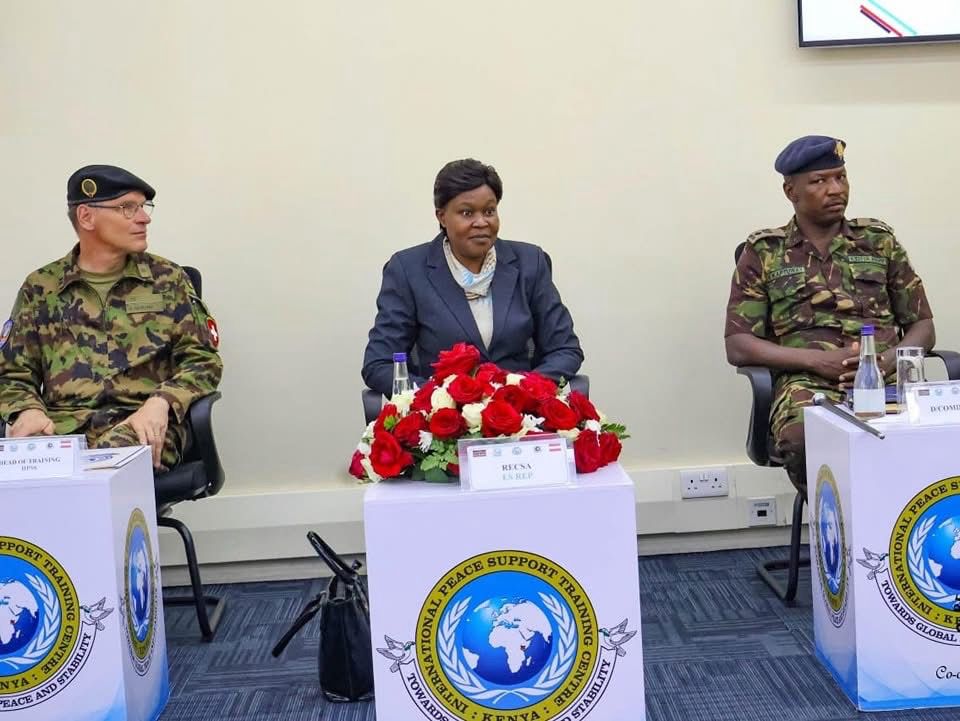
Arms control and disarmament efforts to ensure sustainable peace can only be effective with the full participation of women.
The Director of Administration and Finance at the Regional Centre on Small Arms (RECSA) Eunice Dobby said integrating a gender perspective into such efforts is necessary since armed violence and weapons affect women and men differently, and a gender lens can help address the root causes of conflict and ensure that disarmament efforts are inclusive and effective.
Dobby said that sustainable peace was not possible without the full participation of women, adding that the training was a launchpad for expertise, equity, and stronger security networks.
“The training broke gender barriers, equipped participants with world-class ammunition management skills, and strengthened regional cooperation. These women now return to their countries as champions for inclusive security and gender-responsive disarmament,” she said.
Dobby spoke during the closing ceremony of the 2025 Regional Training on Women in Ammunition Management at the International Peace Support Training Centre (IPSTC) in Embakasi on Friday.
The training brought together female professionals from the RECSA Member States—Kenya, Uganda, Ethiopia, Rwanda, Seychelles, and Tanzania, representing the police, military, and wildlife agencies.
It was facilitated by expert instructors from Kenya, Uganda, Macedonia, and Austria, and the focus was on the importance of a gender perspective in arms control and peace building efforts.
A total of 17 senior female officers participated in the transformative course.
The Internal Security Principal Secretary Dr Raymond Omollo, who is also the Chairperson of the Technical Advisory Committee of the RECSA has said the training equipped the officers with practical skills to properly manage weapons and ammunition in line with international standards and best practices.
“The widespread availability and illicit proliferation of small arms and light weapons (SALW) serve as key drivers and enablers of armed conflicts, violent extremism, and the expansion of terrorism, among other sources of violence and insecurity,” the PS said.
RECSA has warned that armed conflict and the use of weapons have distinct impacts on women and men, girls and boys, which are often overlooked in traditional disarmament approaches.
Equally, armed violence, including the use of weapons, can exacerbate gender-based violence and discrimination.
The Treaty on the Prohibition of Nuclear Weapons (TPNW) emphasizes that nuclear weapons use affects men and women differently and calls for equal representation in disarmament negotiations.
Kenya has also enhanced regional cooperation to combat the proliferation of small arms and light weapons, which are the preferred tools for crimes such as drug and human trafficking, terrorism as well as inter-communal conflicts.
The collective efforts and mutual support are intended to reduce the accessibility and availability of illicit arms and curbing their devastating impact in the society.
As part of the strategies to prevent such weapons and ammunition from falling into the wrong hands in the region, a total of 500 officers drawn from the military, police and wildlife services from ten countries have been trained on physical security and stockpile management.
The training equips the officers with the knowledge and skills necessary to enhance the security, accountability, and proper management of weapons and ammunition stockpiles, reducing risks associated with their storage and handling.
The countries also seek to enhance border controls, strengthen their legal frameworks and promote responsible arms transfers and also to reduce the accessibility and availability of such illicit arms.
The regional Physical Security and Stockpile Management (PSSM) training was attended by officers from Kenya, Uganda, Tanzania, Ethiopia, Sudan, Rwanda, Burundi, Eritrea, and South Sudan.
Similar trainings were also held in March and October last year in Embakasi.