

IPOA Chairperson Nominee Pledges to ‘Speak Truth to Power’ if Approved

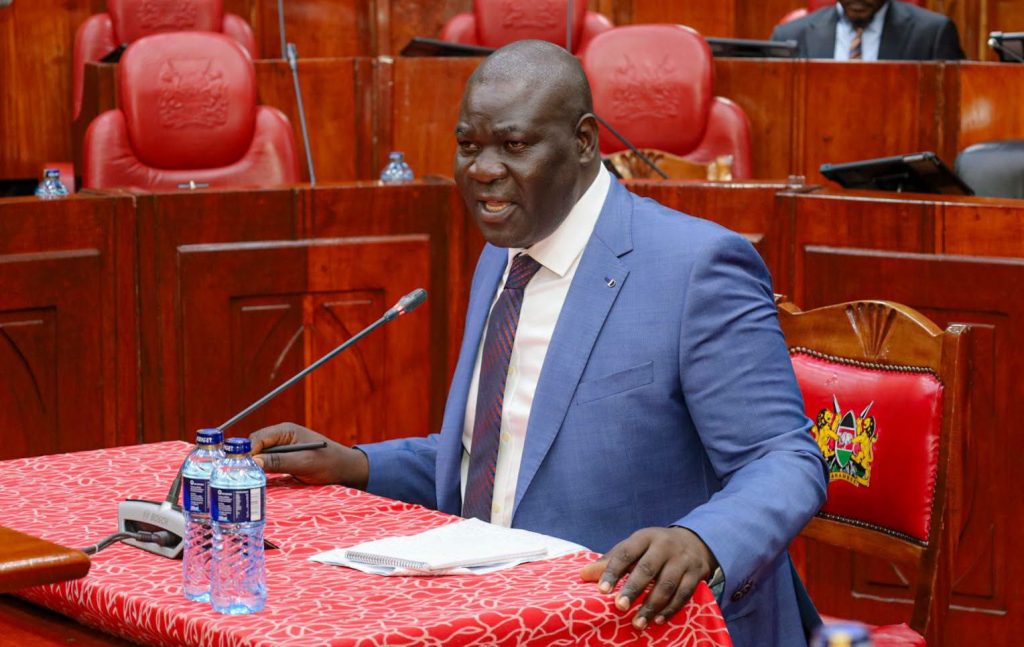
Independent Policing Oversight Authority (IPOA) chairperson nominee Dr Duncan Ojwang Oburu has pledged to defend the rights of Kenyans and safeguard the independence of the police oversight body if approved for the position.
Dr Ojwang told the National Assembly Departmental Committee on Administration and Internal Security during his approval hearing on Wednesday that he would “speak truth to power” while working with the National Police Service (NPS) to improve policing and restore public confidence.
“I believe I am courageous. I speak truth. Trust me with that responsibility. We will speak truth to power,” Dr Ojwang told the committee.
He said IPOA’s primary responsibility was to protect citizens and ensure police officers exercised their powers within the Constitution and the law.
“IPOA is the eye of Kenyans because Kenyans are the sovereign of this country,” he said.
The nominee said IPOA must remain independent when investigating police misconduct, reviewing police operations and handling complaints of abuse.
Dr Ojwang, however, said independence should not prevent IPOA from cooperating with the National Police Service.
He told the committee, chaired by Narok West MP Gabriel Tongoyo, that cooperation between IPOA and the Inspector-General of Police should not be interpreted as subordination.
He said IPOA should not take instructions from the police command when exercising its oversight mandate.
“When it comes to misconduct, reported misconduct, checking operations and investigation, IPOA’s judgment and independence in terms of its operation and judgment cannot allow it to take instruction from the IG,” he said.
According to the nominee, IPOA’s investigations require complete independence, while functions such as inspections, reforms and engagement with police authorities require cooperation.
He said striking the right balance would allow the authority to exercise effective civilian oversight while maintaining a constructive relationship with the National Police Service.
Dr Ojwang identified deaths in police custody and police brutality as among the issues requiring urgent attention if he is approved.
He said there should be no place safer for a Kenyan than a police station.
The nominee proposed the installation of functional closed-circuit television (CCTV) cameras in all police stations and the use of body cameras by police officers while on duty.
He argued that the technology would strengthen transparency and provide evidence when investigating allegations of police misconduct.
“Bad things happen when there is darkness or people cannot see what you are doing,” he said, emphasising the importance of CCTV footage in investigations.
Dr Ojwang also proposed greater use of technology to improve IPOA’s investigations and reduce delays in resolving complaints.
He called for the digitalisation of police records, including occurrence books, case files and firearms records.
He said reliance on manual records could create opportunities for tampering and undermine investigations.
The nominee also pledged to make IPOA more accessible to members of the public, particularly those who lodge complaints against police officers.
He said Kenyans should have confidence that the authority would listen to their concerns and take appropriate action.
Dr Ojwang said IPOA required additional resources and personnel to effectively discharge its oversight mandate.
He told MPs that the authority has an approved staff establishment of about 1,300 employees but currently operates with roughly 300, representing about a quarter of its required workforce.
“With more resources and boots on the ground, they can do better,” he said.
The nominee noted that IPOA is expected to oversee a National Police Service with more than 100,000 officers deployed across the country.
Dr Ojwang also backed proposals to expand IPOA’s oversight mandate to other State agencies whose officers are authorised to carry firearms.
He cited the Kenya Wildlife Service, Kenya Forest Service and prison services as institutions that could be brought under the authority’s oversight.
He argued that civilian oversight should apply to State institutions whose officers exercise coercive powers or carry firearms.
“It is long overdue,” he said of the proposed expansion.
However, he acknowledged that expanding IPOA’s mandate would require additional funding and personnel.
The nominee further supported reforms that would give IPOA powers to arrest suspects in cases under investigation, similar to powers exercised by other investigative agencies.
The committee is expected to consider Dr Ojwang’s submissions before making its recommendations on his nomination to the National Assembly.

