

Isabelle Adjani Siblings: Remembering Éric Adjani

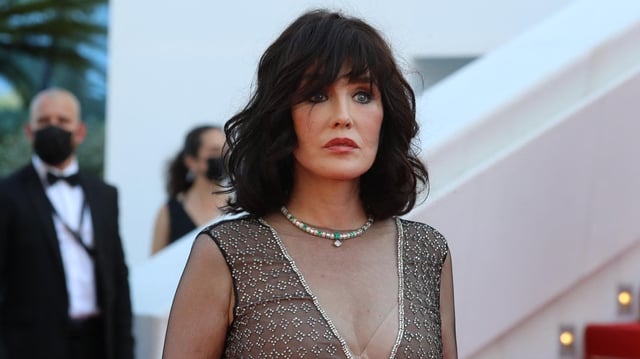
Actress Isabelle Adjani PHOTO/Reddit
Isabelle Yasmine Adjani, born on June 27, 1955, in the 17th arrondissement of Paris, France, is a renowned French actress and singer of Algerian and German descent.
Her father, Mohammed Cherif Adjani, was an Algerian Muslim from Constantine who served in the French Army during World War II, while her mother, Emma Augusta “Gusti” Schweinberger, was a German Catholic from Bavaria.
Adjani grew up bilingual, fluent in both French and German, in the working-class suburb of Gennevilliers, where her father worked in a garage.
From a young age, she displayed a natural affinity for performance, winning a school recitation contest at 12 that led her to amateur theater.
Siblings
Isabelle has one sibling, her younger brother Éric Adjani, who pursued a career as a photographer.
Born into the same immigrant family, Éric shared a close bond with Isabelle during their childhood in Gennevilliers, though he largely stayed out of the public eye compared to his sister’s stardom.
Tragically, Éric passed away on December 25, 2010, at the age of 53, leaving behind a daughter named Zoé Adjani.
Career
Adjani’s professional journey began remarkably early, with her screen debut at age 14 in the 1970 film Le Petit Bougnat, a charming coming-of-age story that hinted at her precocious talent.
She soon pivoted to theater, joining the prestigious Comédie-Française in 1972 at just 17, becoming one of its youngest members ever.
There, she earned acclaim for her nuanced portrayal of Agnès in Molière’s L’École des femmes, a role that showcased her command of classical French drama.
However, the allure of cinema proved irresistible, and she left the theater after two years to focus on film, a decision that propelled her into the spotlight.
Her breakthrough arrived in 1975 with François Truffaut’s The Story of Adèle H., where she embodied the obsessive, heartbroken daughter of Victor Hugo; the performance not only launched her internationally but also marked her as a master of psychological depth.
Also Read: Georg Steinhauser Siblings: Getting to Know Tobias

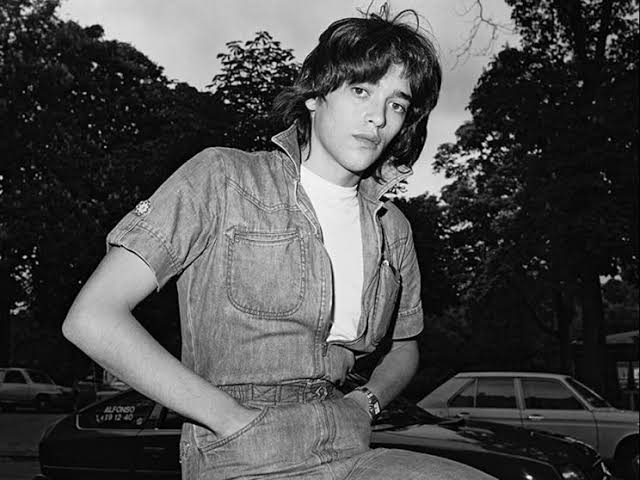
Throughout the late 1970s and 1980s, Adjani collaborated with visionary directors, delivering unforgettable turns in Roman Polanski’s paranoid thriller The Tenant (1976), Werner Herzog’s gothic horror Nosferatu the Vampyre (1979), and Walter Hill’s sleek neo-noir The Driver (1978).
The 1980s solidified her as a cinematic force, with her raw, visceral role in Andrzej Żuławski’s Possession (1981) capturing a woman’s descent into frenzy, followed by the vengeful rural saga One Deadly Summer (1983).
She ventured into music that same year, releasing the Serge Gainsbourg-penned album Pull Marine, blending her sultry voice with pop sensibilities.
In 1988, Adjani stepped behind the camera as co-producer for Camille Claudel, a biographical drama about the sculptor’s tormented affair with Auguste Rodin, which she also starred in opposite Gérard Depardieu.
The 1990s brought historical grandeur with Patrice Chéreau’s lavish Queen Margot (1994), where she portrayed the cunning queen amid religious wars.
After selective periods of hiatus—often to recharge her creative energies—Adjani returned with potent roles in The Day of the Skirt (2008), a tense school siege drama, and more recently in the family saga Sisters (2021), exploring Algerian immigrant legacies.
Accolades
Adjani holds the record for the most César Awards for Best Actress, with five wins: for her harrowing breakdown in Possession (1981), the fierce revenge tale One Deadly Summer (1983), the titular sculptress in Camille Claudel (1988), the scheming royal in Queen Margot (1994), and the embattled teacher in The Day of the Skirt (2009).
Her dual triumph at the 1981 Cannes Film Festival—Best Actress for both Possession and Quartet—remains a singular feat, the only time an actress has claimed the prize for two films in one year.
Adjani garnered two Academy Award nominations for Best Actress, first at age 20 for The Story of Adèle H. (1975), making her the youngest nominee in that category at the time, and again for Camille Claudel (1989), a distinction that made her the first French actress nominated twice for foreign-language performances.
Additional laurels include the Silver Bear for Best Actress at the Berlin International Film Festival for Camille Claudel, a Lumière Award for her lifetime body of work, and the Chevalier of the Légion d’honneur in 2010, recognizing her cultural impact.
In 2014, she was elevated to Commandeur of the Ordre des Arts et des Lettres, France’s highest artistic honor.

