


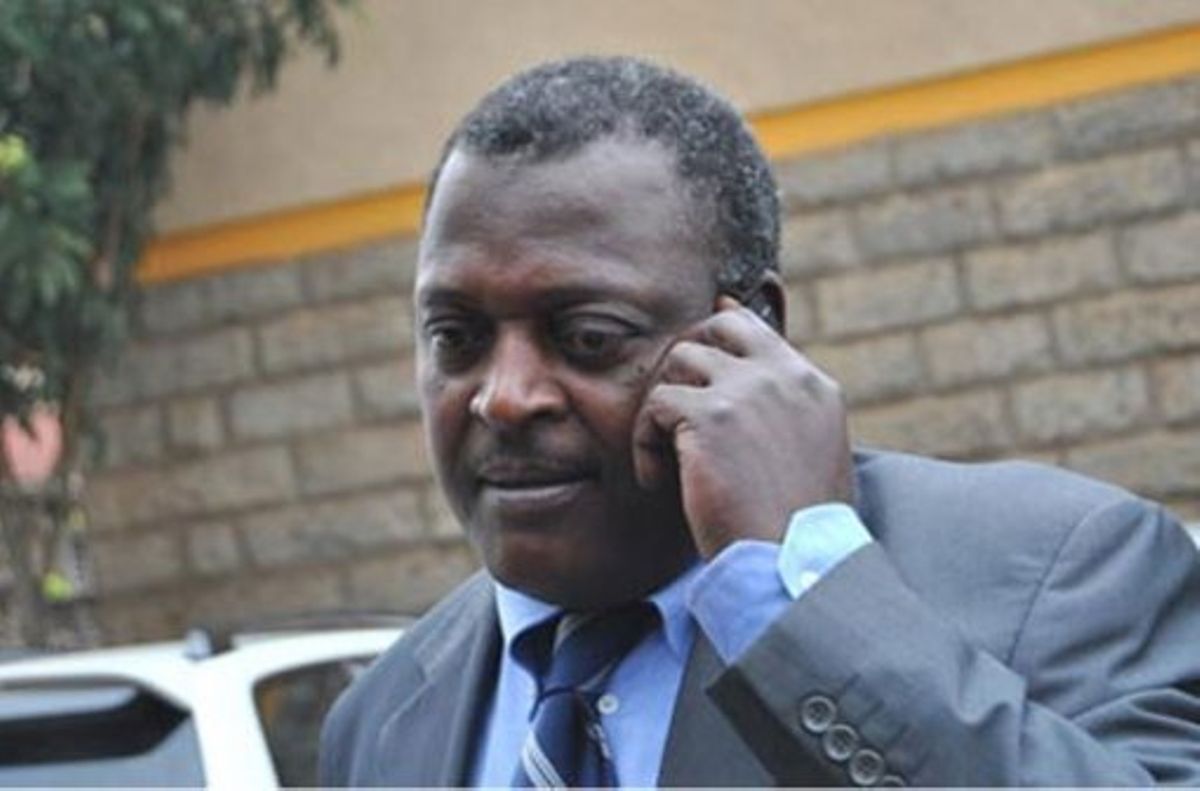
Former Lugari Member of Parliament Cyrus Jirongo will be buried at his Lumakanda home on Tuesday, December 30, 2025 his family m announced.
The burial arrangements were confirmed on Sunday by a funeral committee chaired by former Westlands MP Fred Gumo, which addressed the media following a consultative meeting.
Speaking on behalf of the committee, Senator Khaniri said the late Jirongo will be buried at his family homestead in Lumakanda, next to his parents.
“We have constituted a committee to coordinate the funeral arrangements for our brother,” Senator Khaniri said.
“We have agreed, tentatively, that the burial will take place on December 30, 2025 and that he will be laid to rest at his Lumakanda home beside his father and mother.”
Jirongo died in a road accident in the early hours of Saturday, December 13. He was driving to Nairobi from Naivasha when his vehicle was involved in a head-on collision with a Climax Coach bus along the Nairobi–Nakuru Highway.
Naivasha DCIO Isaac Kiama confirmed the incident, stating that the former legislator died on the spot at around 3 a.m.
Jirongo, a prominent political figure and businessman, served as Lugari MP and remained influential in national politics long after leaving elective office.
Jirongo paints the picture of a politician who survived Kenya’s political arena for decades, while simultaneously standing out as a flamboyant and wealthy businessman.
To his allies, he was boundlessly generous, sometimes to a fault. To many who lived through KANU’s final years in power, he became a symbol of some of the most glaring excesses of the Moi regime.
Jirongo rose rapidly through Kenya’s political ranks in 1992, emerging as the youthful force behind KANU’s formidable lobby group, Youth for KANU (YK ’92).
The movement’s mission was clear: mobilise the youth vote to secure victory for Kenya’s second president, Daniel Toroitich Arap Moi.
Former minister Franklin Bett recalled Jirongo’s blunt approach to politics.
“He was bold in saying things as they were. He would tell Mzee, ‘there we are not getting anything,’ and he would say it boldly,” Bett said.
Alongside other youthful powerbrokers such as Sam Nyamweya, Patrick Musumba, Gerald Bomett, Micah Kigen and William Ruto, Jirongo was tasked with delivering Moi’s victory in the 1992 elections. At the height of the campaign, he became the custodian of vast political resources, with large sums of cash reportedly moving with him, sometimes even in his own vehicle.
“Cyrus showed major signs of leadership. He is the one who brought out the understanding that politics is also business,” said Patrick Musumba, a YK ’92 politician.
Former minister Noah Wekesa recalled receiving financial support from Jirongo during the campaign period.
“He came and told me that he had some support for me, and he gave me Sh500,000. I was with Wafula Buke. I have a feeling he got more,” Wekesa said.
The newly introduced Sh500 note at the time quickly earned the nickname “Jirongo”, a reflection of how widely the currency circulated during the campaign period.
“This money was printed during the 1992 campaign period and it was called ‘Jirongo’ because he was the first person to distribute it,” said Kakamega deputy governor Ayub Savula.
Partly through this political machinery, Moi went on to win both the 1992 and 1997 elections. However, Jirongo’s political fortunes shifted in 2003 when he resigned from KANU after losing the Lugari parliamentary seat to Dr Enoch Kibunguchy.
“He later formed UDM together with President William Ruto, but the president left it to Kipruto Kirwa, and it also fizzled out,” Bett said.
Jirongo’s once close relationship with President Ruto later deteriorated, with political rivalry between the former allies playing out publicly
Email your news TIPS to Editor@Kahawatungu.com — this is our only official communication channel
