

John Major Siblings: A Closer Look at the Former Prime Minister’s Family Tree

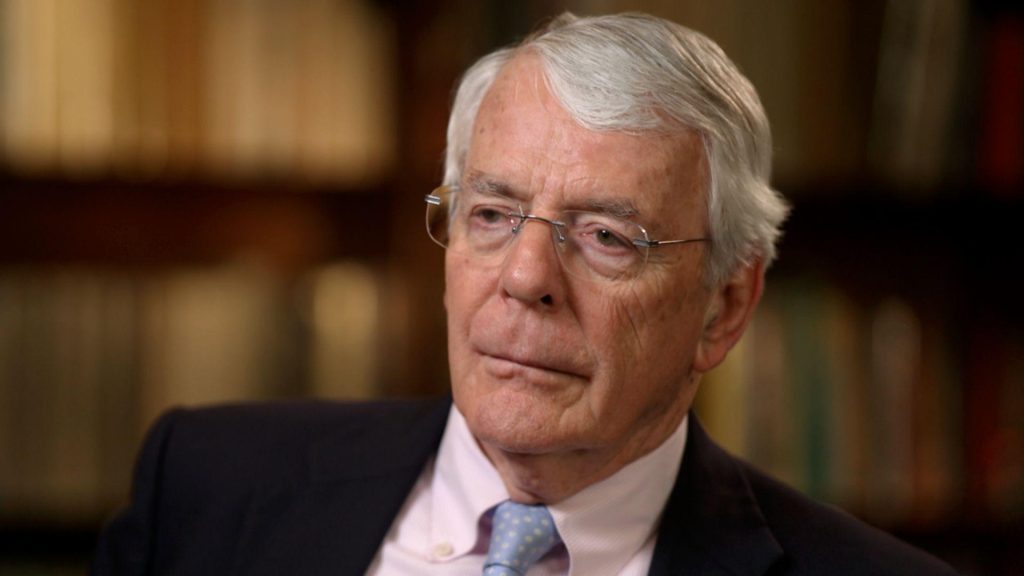
John Major PHOTO/BBC
Sir John Major is a British statesman and former politician who served as Prime Minister of the United Kingdom and Leader of the Conservative Party from November 1990 to May 1997.
Born John Roy Major on 29 March 1943 at St Helier Hospital in Carshalton, Surrey, he was the youngest child of Tom Major-Ball, a former music hall and circus performer who later ran a garden ornaments business, and Gwen Major, Coates, a former dancer.
His father’s advanced age at the time of his birth, Tom was in his early sixties, marked him as a late addition to the family.
Major grew up in relatively comfortable surroundings in Worcester Park before financial difficulties forced the family to move to more modest accommodation in Brixton.
He attended Rutlish School but left at sixteen with limited qualifications, later working in banking after a period of varied employment.
After leaving frontline politics he has remained active as a writer, commentator, and public figure, known for his measured style and commitment to public service.
Siblings
John has two older siblings from his parents’ marriage: his sister Patricia, known as Pat, who later took the married name Dessoy, and his brother Terry Major-Ball.
A third sibling, Thomas Aston, was born in June 1929 but died shortly after birth.
Patricia kept a relatively private life and died in 2017.
Terry, born in 1932, became better known to the public during his brother’s time in Downing Street.
He wrote a memoir titled Major Major: Memories of an Older Brother, appeared on television programmes, and was remembered for his loyalty, good humour, and colourful personality that contrasted with the more reserved public image of the Prime Minister.
Terry died of cancer in 2007.
After leaving office, Major learned of two half-siblings fathered by Tom Major-Ball outside his marriages.
One was Tom Moss, an opera singer born around the turn of the twentieth century who died in 1980; the family had known him for years simply as “Uncle Tom,” the landlord of their Brixton flat.
The other was Kathleen Lemon, born in 1923 as the result of an earlier relationship; she contacted Major only after his defeat in the 1997 general election, having kept her identity private during his time in power so as not to cause political difficulty.
Also Read: Ed Miliband Siblings: Meet David Wright Miliband

Career
Major’s political interest began early; as a teenager he watched debates in the House of Commons and joined the Young Conservatives.
He was elected to Lambeth Borough Council in 1968, serving until 1971 and chairing the housing committee.
After unsuccessful parliamentary attempts in 1974 he was elected Conservative Member of Parliament for Huntingdonshire (later Huntingdon) in the 1979 general election that brought Margaret Thatcher to power.
He advanced steadily through junior government posts, becoming an assistant whip and then a Treasury whip before serving as Under-Secretary and later Minister of State for Social Security.
In 1987 he entered the Cabinet as Chief Secretary to the Treasury.
In July 1989 Thatcher appointed him Foreign Secretary; three months later he became Chancellor of the Exchequer.
When Thatcher resigned in November 1990, Major won the Conservative leadership contest and succeeded her as Prime Minister.
His government oversaw Britain’s participation in the Gulf War, negotiated the Maastricht Treaty that created the European Union while securing opt-outs for the United Kingdom, replaced the controversial poll tax with the council tax, launched the Citizen’s Charter, and began the process that led to the Northern Ireland peace talks.
Economic difficulties, including the forced withdrawal of the pound from the European Exchange Rate Mechanism on Black Wednesday in 1992, and deepening party divisions over Europe marked his second term.
The Conservatives suffered a heavy defeat in the 1997 general election to Tony Blair’s Labour Party.
Major remained an MP until 2001, after which he withdrew from frontline politics while continuing to speak and write on public affairs.
Accolades
In recognition of his contribution to the Northern Ireland peace process, Major was appointed a Companion of Honour by Queen Elizabeth II in 1999.
On St George’s Day 2005 he was made a Knight Companion of the Most Noble Order of the Garter, the highest order of chivalry in Britain, and is thereafter styled Sir John Major.
He has received several international honours, including the Grand Cordon of the Order of the Rising Sun from Japan in 2012 and the King Abdulaziz Order of Merit.
Other distinctions include the Sir Winston Churchill Award and the George Bush Award for Excellence in Public Service.

