

Judiciary appeals for enhanced funding to strengthen justice delivery

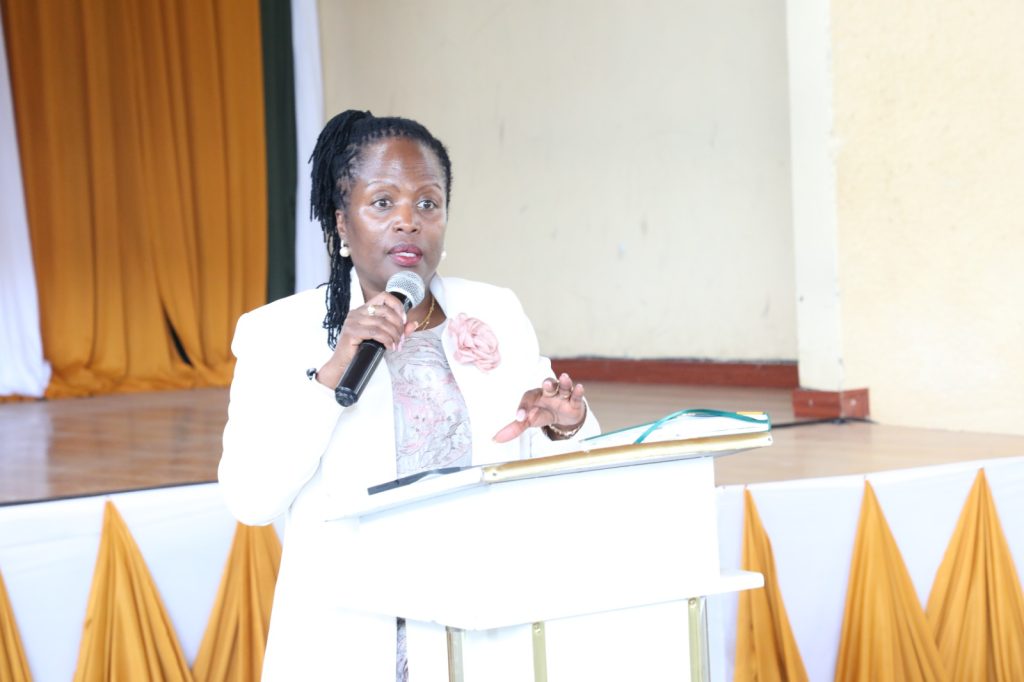
The Judiciary concluded its nationwide public budget hearings for the 2026/27 financial year in Makadara, Nairobi, with Chief Registrar Winfridah Mokaya making an urgent appeal for increased funding to strengthen justice delivery systems across the country.
Speaking at the Jericho Social Hall, the CRJ emphasised that public participation is not merely a constitutional requirement but a partnership between the people and the institution that exercises judicial authority on their behalf.
“Judicial authority is delegated by the people, and with that delegation comes an unqualified obligation to account for how resources entrusted to us are deployed. We therefore appear before you as stewards of a public trust ready to present our performance for the last financial year and the investment proposals for the year ahead,” she said.
Mokaya singled out security as a foundational pillar of judicial independence, warning that unsafe court environments hinder judges, staff, litigants, survivors of crime, children, and the general public from fully engaging in justice processes.
The CRJ further highlighted the pressing need to decongest urban courts, particularly in Nairobi, which handles nearly a quarter of Kenya’s total caseload. She noted that with a resident population of 5.4 million and 2.5 million daily commuters, Nairobi’s courts face heavy workloads, ranging from commercial disputes and traffic cases to family, children, and constitutional matters.
To ease these pressures, Mokaya pointed out that the Judiciary has prioritised completion of new court buildings in Kasarani, Mihango, Huruma, and continued investments in specialised courts, including the Gender Justice, Anti-Corruption, Children’s, and Small Claims Courts.
The Judiciary has proposed a budget of KSh.46 billion for FY 2026/27, equivalent to 0.7% of the national budget.
However, the indicative allocation of Sh29 billion leaves a shortfall of Sh17 billion. She noted that this this gap threatens key areas of justice delivery, including deployment of judicial officers, automation, infrastructure expansion, and handling of sensitive cases—particularly those involving children.
The CRJ reaffirmed Judiciary’s commitment to digital transformation through expansion of e-filing, digitised registries, and the Case Tracking System (CTS). Investments in alternative justice systems, mobile courts, and alternative dispute resolution (ADR) also remain top priorities.
“Our proposals are geared toward building a future-ready justice system,” Mokaya said, noting that improved funding would translate to faster case resolution, reduced backlogs, strengthened security, and better protection for vulnerable users.
Finance Directors from both the Judiciary and the Judicial Service Commission briefed the forum on key performance highlights and the proposed budget. Deputy Chief Registrar Paul Ndemo, along with Registrars and Directors, were also present to respond to questions from members of the public.
Then forum was attended by representatives from the County Commission, County Assembly, LSK, ODPP, Probation, NPS, Prisons, PWDs, children from borstal institution, religious institution among other stakeholders who shared views on enhancing access to justice.
Similar public participation hearings have already been held in Lodwar, Ol Kalou, Migori, and Chuka, marking the completion of the Judiciary’s nationwide budget consultation process for the 2026/27 financial year.
Meanwhile, the Chief Justice Martha Koome Monday swore in Michael Kingi Thoya as a Commissioner of the Salaries and Remuneration Commission (SRC).
She noted that with the role comes the responsibility of advancing Article 230 of the Constitution-ensuring a fiscally sustainable wage bill, attracting and retaining talent in the public sector, promoting productivity and performance through fair remuneration.
She added that as part of a governance-enhancing institution, the new Commissioner is called to uphold independence, transparency, impartiality and accountability in delivering SRC’s mandate.
Article 230 of the Constitution of Kenya 2010 establishes the Salaries and Remuneration Commission, comprising a Chairperson and 12 members drawn from various bodies.
The core mandate of the Commission is to set and regularly review the remuneration and benefits of all State officers and to advise the national and county governments on the remuneration and benefits of all public officers.
The Oath was administered by Nyaiyaki, Registrar Office of the Chief Registrar.

