

Kang’ata Signals Political Shift Ahead of 2027, Calls for Economic Policy Reset

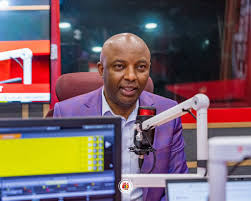
Kang’ata Signals Political Shift Ahead of 2027, Calls for Economic Policy Reset
Murang’a Governor Irungu Kang’ata has signalled a potential political realignment ahead of the 2027 General Election, announcing that he will not seek re-election on his current party’s ticket while calling for a shift in national policy toward production-driven growth.
In a carefully worded statement, Kang’ata expressed gratitude for his long-standing working relationship with President William Ruto, dating back to 2013 when he first entered Parliament as Kiharu MP.
He noted that their collaboration had continued through his tenure as Senator and Senate Majority Whip, and now as governor.
He accused UDA and its leadership of coercsion and intimidation to endorse programmes and policies that he is happy about.
However, the county chief acknowledged emerging differences with the Head of State, saying they were rooted in principle rather than personal conflict.
He cited concerns over political strategy, citizen engagement, and policy direction.
“Leadership must be anchored in persuasion, not pressure; in dialogue, not coercion,” Kang’ata said, warning that rising political tensions and confrontations risk undermining democratic values.
He cautioned that perceived intolerance in the political space could backfire by generating sympathy for those seen as targeted.
Kang’ata’s remarks come amid heightened political activity as leaders position themselves ahead of 2027, with internal contestations increasingly playing out within major parties.
On policy, the governor outlined a three-pronged economic agenda focused on manufacturing, education, and health.
He argued that Kenya must transition from a consumption-driven economy to one anchored on production, proposing lower energy costs, export-linked tax incentives, and the establishment of industrial zones to boost sectors such as agro-processing and textiles.
In education, he called for full funding of free day secondary schooling, estimating the cost at KSh 40 billion annually, alongside increased investment in teacher quality, technical training, and infrastructure.
He also emphasised the need to strengthen primary healthcare, ensure consistent supply of essential medicines, and expand insurance coverage sustainably, with a stronger focus on preventive care.
Despite signalling his intention to exit the party ticket, Kang’ata said he would remain loyal and continue working with the national government until the end of his term. He added that he would unveil his political platform at a later date.
The announcement is likely to fuel speculation about shifting alliances and emerging political formations as the country gradually enters the 2027 election cycle.