

KASIB, NSE Push for Tax Incentives to Boost Company Listings at NSE

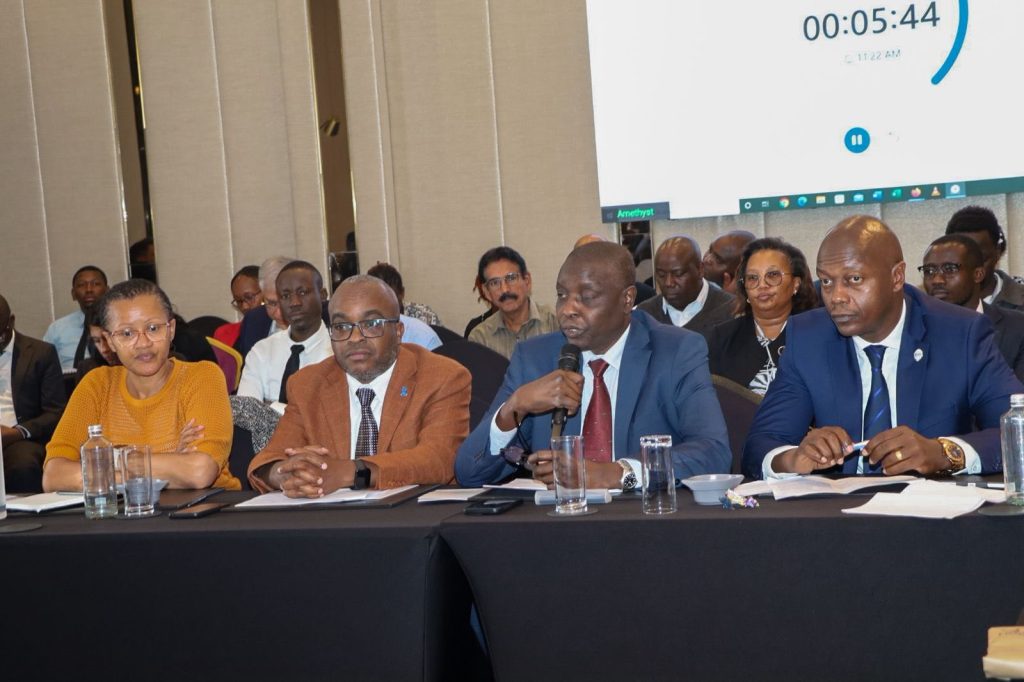
The Kenya Association of Stockbrokers and Investment Banks (KASIB), the Nairobi Securities Exchange (NSE), and other key capital market stakeholders have urged the National Assembly to consider introducing a preferential Corporate Income Tax regime to encourage more companies to list on the stock exchange.
In a joint presentation to the National Assembly Departmental Committee on Finance and National Planning during deliberations on the Finance Bill, 2026, the stakeholders said the proposal would foster a more equitable, inclusive, and competitive financial ecosystem.
The capital markets lobby stressed the need to incentivise public listings through corporate income tax relief, arguing that such a move would help address the prolonged listing drought at the NSE.
The stakeholders proposed the introduction of a preferential corporate income tax rate of 15 per cent for newly listed firms for a period of 10 years.
The proposal seeks to amend the Income Tax Act (Cap. 470) to reward companies that list at least 20 per cent of their issued share capital on the securities exchange.
“Listing on a public exchange imposes significant governance, compliance, disclosure and reporting obligations, which increase operational costs for issuers,” the stakeholders told the Committee.
“A reduced corporate tax rate would help offset these costs during the post-listing growth phase,” they added.
The lobby further noted that a similar preferential listing regime had previously existed in Kenya’s tax framework before being repealed in 2020.
“Hon. Chair, this provision was previously part of the tax laws. Though it may not have created a lot of impact because the investment climate then was different, the provision is now more relevant as the business environment is more favourable,” they told lawmakers.
According to the stakeholders, adopting the proposal would generate a wide range of economic benefits, including increased listings at the NSE, deeper capital markets, and higher transaction volumes.
They argued that the increased market activity would naturally boost government revenue through withholding taxes on dividends, while also creating jobs through business expansion financed via public capital markets.
Additionally, they noted that increased listings would spur growth in professional sectors such as legal, custodial, advisory, and brokerage services, ultimately generating more tax revenue for the government.
Welcoming the proposal, Committee Chairperson Kuria Kimani said any initiative with the potential to increase government revenue would be carefully considered.
“This is the first time we are receiving a proposal that would potentially result in additional revenue generation. We shall carefully look at the proposal to establish its expected impact,” Kimani said.
However, Committee Member David Mboni challenged the NSE to address concerns over bureaucratic hurdles facing firms seeking to list.
“A number of companies have complained of red tape when they want to list at the NSE. The challenge therefore goes beyond corporate tax incentives to how you handle companies interested in listing at the NSE,” Mboni noted.
In a separate proposal aimed at revitalising domestic investment, KASIB also pushed for reforms to the Stamp Duty Act (Cap. 480).
Currently, stock market transactions attract a fixed stamp duty of Sh2 for every Sh10,000 transacted.
However, market players argued that the flat structure disproportionately disadvantages small-scale retail investors.
KASIB proposed replacing the fixed fee with a uniform percentage-based structure of 0.02 per cent.
“Transitioning to a uniform percentage-based framework at 0.02 per cent would create a more equitable transaction cost structure across the market while simplifying administration and improving predictability for investors,” the stakeholders submitted.
According to the stakeholders, the proposal would simplify administration, improve investment predictability, and create a fair transaction cost framework across all investor categories.
The push for a percentage-based model, they said, had gained urgency following changes in market dynamics, particularly after the launch of the mobile-based Ziidi Trader platform by Safaricom and the NSE on February 10, 2026.
The stakeholders told the Committee that retail participation in stock trading had significantly increased since the launch of the digital platform.
“Hon. Members, the Ziidi Trader platform already accounts for a staggering 50 per cent of all trades executed at the exchange, while the average retail transaction size on the digital application stands at approximately Sh2,800,” they stated.
KASIB argued that the current fixed Sh2 charge creates disproportionately high trading costs for low-value transactions, discouraging small-scale and mobile-first investors.
The association warned that failure to reform the outdated structure could undermine efforts to promote financial inclusion.
Beyond capital markets reforms, stakeholders also urged the government to decentralise infrastructure financing.
They proposed expanding the legal definition of infrastructure bonds, which currently enjoy tax-free status, to include county governments, development finance institutions, and private entities.

