


Kenya has emerged as a relative winner under the latest reciprocal tariffs imposed by the United States, with the country securing a more favorable position compared to key competitors in the textile industry.
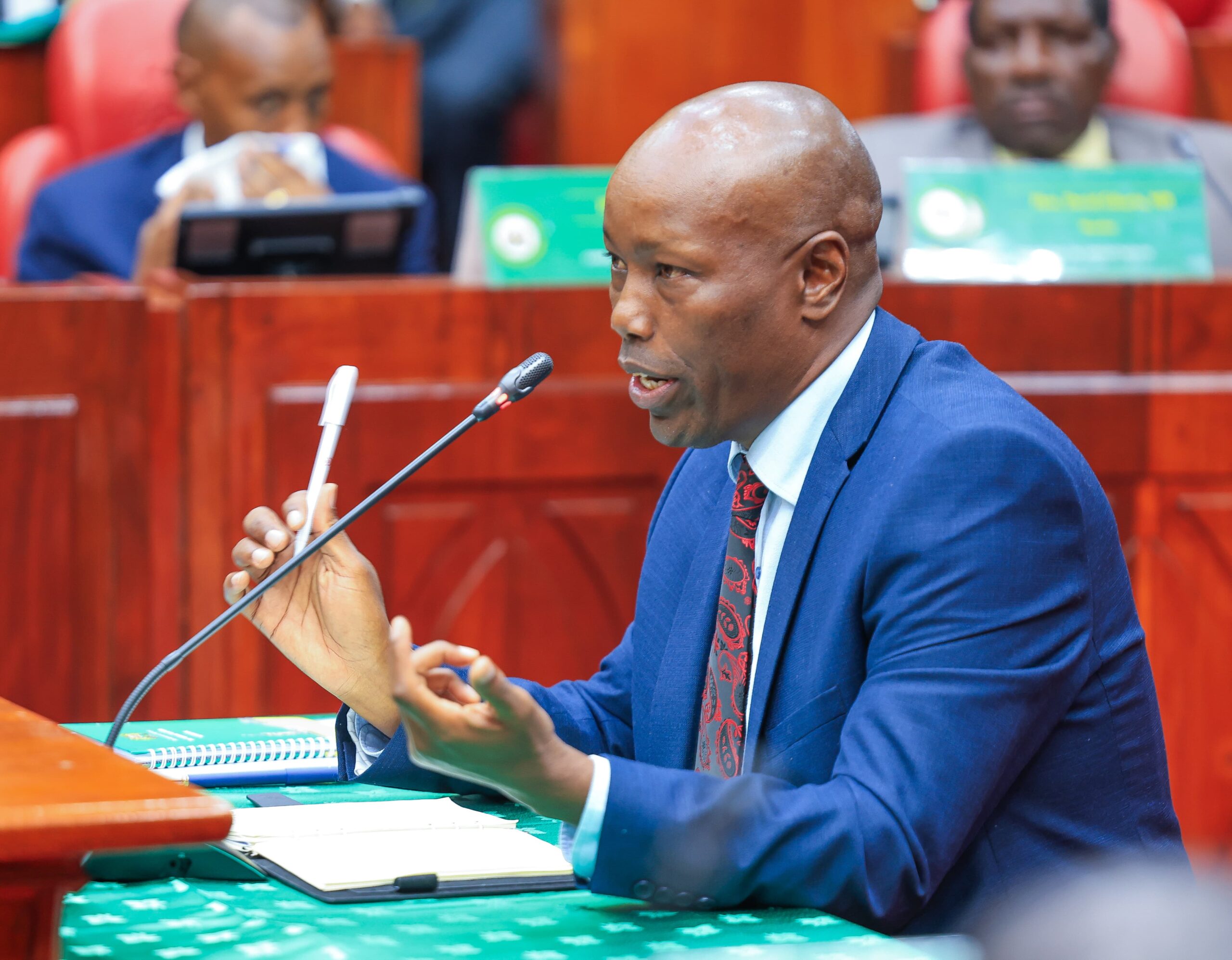
Trade and Industry Cabinet Secretary Lee Kinyanjui said on Thursday, April 3, 2025, that the new tariff structure presents both challenges and opportunities for Kenya. He noted that while Kenyan exports to the U.S. will now face a 10% tariff, this is significantly lower than the rates imposed on competitors such as Vietnam (46%), Sri Lanka (44%), Bangladesh (37%), China (34%), Pakistan (29%), and India (26%).
“The new tariff policy by the United States presents both challenges and opportunities for Kenya. While our exports to the U.S. will now face a 10% tariff, this is still significantly lower than what our competitors are being charged,” said Kinyanjui.
Kenya’s lower tariff rate provides a competitive edge, particularly in the textile sector, where other nations will now find it more expensive to export their products to the U.S. The Trade CS further highlighted the potential for Kenya to expand its manufacturing sector by producing goods that are now costlier from countries facing higher tariffs.
“There is a great opportunity to diversify our exports beyond traditional products. Kenya can explore new avenues in processing and manufacturing to take advantage of the tariff disparities,” he added.
The government is also positioning itself to support exporters by strengthening trade policies. Kinyanjui said his ministry, in collaboration with the Ministry of Foreign and Diaspora Affairs, is working on strategies to enhance Kenya’s exports to global markets.
However, the new tariffs also present challenges, particularly in the form of increased export costs. Several African nations are among those affected by sweeping tariffs imposed by U.S. President Donald Trump on trading partners worldwide.
Trump has implemented a minimum 10% tariff on all imports to the U.S., alongside additional “reciprocal tariffs” for 20 African countries. South Africa, for example, faces a 30% tariff, while Lesotho has been hit with 50%, Madagascar 47%, Mauritius 40%, and Botswana 37%. Nigerian exports will be subject to a 14% tariff.
Kenya, along with Ghana, Ethiopia, Tanzania, Uganda, Senegal, and Liberia, falls within the baseline 10% tariff category. Trump justified the move as retaliation against countries he claims have imposed unfair trade policies on the U.S.
During an announcement at the White House, Trump said the U.S. had been exploited by foreign nations for decades.
“Our taxpayers have been ripped off for more than 50 years, but it is not going to happen anymore,” he declared, describing the move as “our declaration of economic independence.” He presented a list of countries he accused of imposing high tariffs on U.S. goods or engaging in policies that undermine American economic interests.
South Africa was named among the “worst offenders,” alongside China, Japan, and the European Union, and is set to face even steeper U.S. tariff rates. Trump claimed that South Africa charges a 60% tariff on American imports and vowed to impose a “discounted” 30% tariff in response.
“They have got some bad things going on in South Africa,” Trump stated. “We are paying them billions of dollars, and we cut the funding because a lot of bad things are happening there.”
In response, the South African presidency condemned the tariffs as “punitive” and warned that they could hinder trade and economic cooperation.
The White House also released a list of nearly 100 countries facing new tariff rates, referring to April 5 as “liberation day” for American businesses. Additionally, the U.S. imposed a 25% tariff on all foreign-made automobiles, a move expected to impact African nations that rely heavily on imports from Japan, Germany, and China.
The tariffs come at a time when many African nations are already facing economic strain due to cuts in U.S. foreign aid. Trump froze U.S. assistance programs upon returning to office, significantly affecting health and humanitarian efforts in vulnerable nations.
Economists warn that the new tariffs signal a shift in U.S.-Africa relations, marking a departure from previous open trade policies and potentially altering long-standing economic partnerships.
Email your news TIPS to Editor@Kahawatungu.com — this is our only official communication channel
