


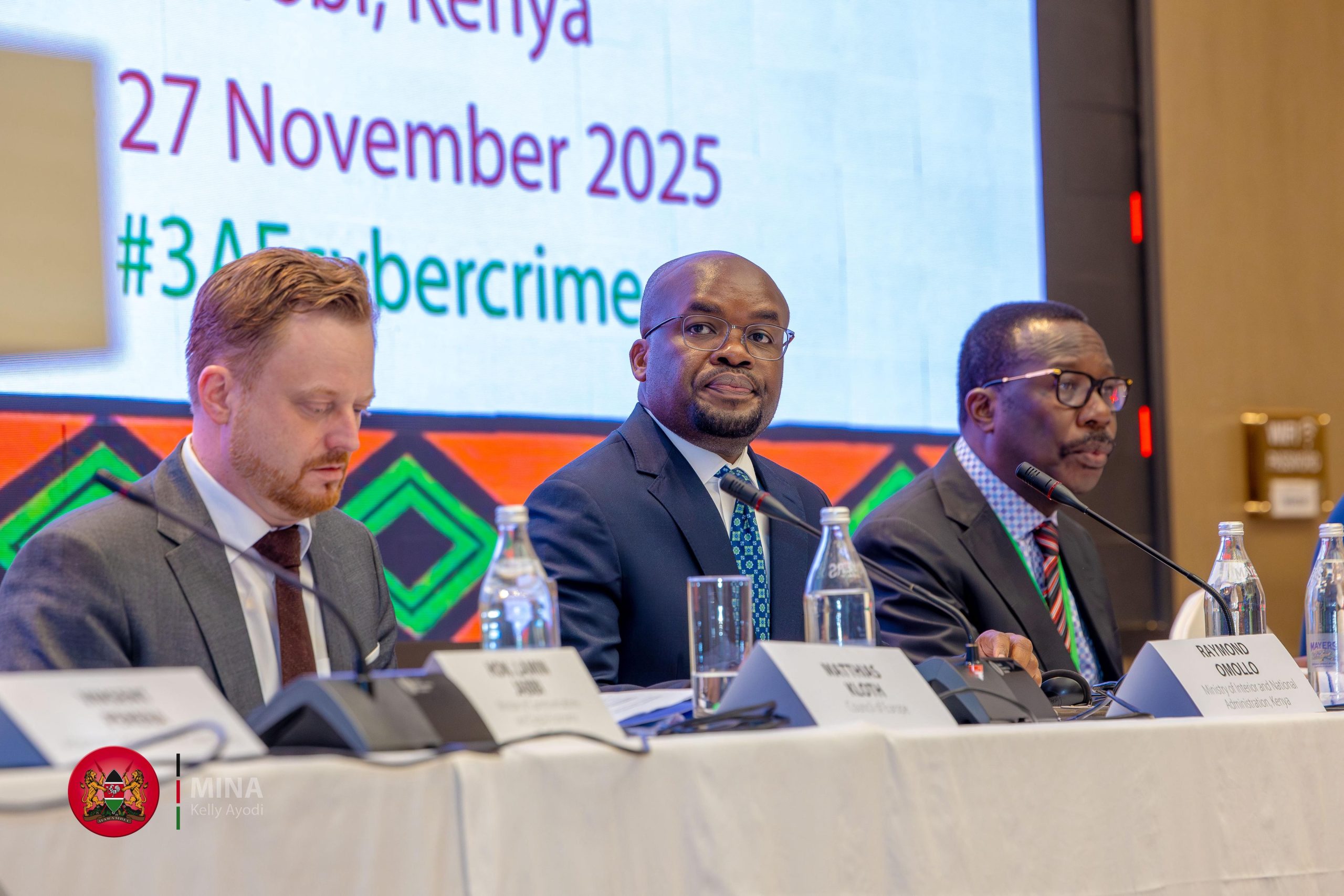
Kenya has sounded the alarm over the surge of harmful anonymity online, warning that it is rapidly becoming one of the most serious barriers to accountability and justice across Africa.
Principal Secretary for Internal Security and National Administration Dr. Raymond Omollo said harmful anonymity has enabled a vast marketplace for cybercrime where stolen personal data for identification and access is openly traded,child exploitation material distribution rings thrive, while more advanced actors sell malware, ransomware kits, and hacking tools that can target States, individuals and corporations.
“INTERPOL uncovered a Kenyan cybercrime operation that siphoned off Sh1.1 billion (approximately $8.5 million USD) through banking fraud between September and October 2024. While our officers cracked a case of online credit card fraud linked to losses of USD 8.6 million. In 2021, the 10 most harmful child sexual abuse material (CSAM) sites on the dark web had over 3,000,000 registered accounts,” he said.
Beyond digital crime, harmful anonymity continues to facilitate recruitment into organised criminal and extremist networks, money laundering schemes, smuggling rings, human trafficking operations, and radical ideologies as it shields perpetrators. It has enabled markets for weapons, drugs, counterfeit pharmaceuticals, and sophisticated surveillance tools, directly threatening public safety through dark web channels.
Speaking in Nairobi during the opening of the Third African Forum on Cybercrime and Electronic Evidence, Dr. Omollo reiterated that Kenya continues to strongly advocate for unobservability, which will help law-abiding users remain private and protected while online and ensure that abuse of anonymity does not shield criminals against detection, investigation and prosecution.
“As we strengthen our defenses, we must confront the growing challenge of anonymity within the cyberspace. Across Africa, anonymity continues to impede investigations, frustrate accountability, and complicate the presentation of digital material before the courts of law” he said.
Omollo emphasised the need to explore innovative but rights-respecting solutions – such as secure digital identity systems that protect privacy without allowing harmful anonymity.
When properly designed, Dr. Omollo noted that, such systems can preserve user safety while enabling lawful tracing of malicious activity without compromising civil liberties and fundamental human rights.
He further prescribed capacity and capabilities building, noting that as Africa strengthens its digital foundations, collaboration and partnerships are critical in building the technical capacity of law enforcement agencies, ensuring they have modern forensic tools and specialised skills to investigate cybercrimes effectively and preserve the integrity of digital investigations.
“Prosecutors are often required to submit certified evidence and rely on expert testimony to establish its authenticity and reliability. Yet persistent challenges including secure storage, chain-of-custody procedures, and the lack of harmonised frameworks across jurisdictions, continue to hinder successful prosecution.”
Dr. Omollo said the issue of jurisdiction is particularly challenging, explaining that cybercrime rarely respects national boundaries and that when offenders operate across borders, timely cooperation becomes essential. He added that strengthening mutual legal assistance, ensuring due process, and protecting the fair-trial rights of suspects must remain central to their efforts.
On his part, Justice (Dr.) Smokin Wanjala of the Supreme Court of Kenya underscored the importance of strengthening judicial preparedness to match the pace of digital crime.
He noted that many of the complexities surrounding electronic evidence are not covered in traditional legal training, making continuous and collaborative learning indispensable.
“Unless judges are properly equipped, they are unlikely to render justice in the manner expected because of the complexity of the crimes we are dealing with. Our training is not done in silos; it is multi-sectoral.”
“We train together with prosecutors and investigators so that the investigation, prosecution, and adjudication of a cybercrime is seamless,” he said.
Kenya continues to appeal to the Council of Europe and the European Union to deepen collaboration with African states.
Omollo reaffirmed that cooperation under frameworks such as the Budapest Convention remains vital to ensuring that African countries can access timely electronic evidence while respecting human rights and international law.
Head of Operations at the Cybercrime Programme Office of the Council of Europe Virgil Spiridon echoed this commitment, emphasising the scale of global collaboration required to confront evolving cyber threats.
He noted that African countries must continue voicing their challenges and capacity needs, especially in strengthening criminal justice responses.
“We engage with countries not only in capacity building, but also in legislation. We start with the legislation. The Budapest Convention remains the main international instrument for legislative standards on cybercrime, and it works perfectly with the newly signed UN Convention.”
Spiridon further recognised Kenya’s leadership role.
“Why is this forum organised in Kenya? Because of the commitment, the experience, and the leading role Kenya plays in fighting against cybercrime.”
President Ruto had recently assented to amendments to the Computer Misuse and Cybercrimes Act and that the Virtual Asset Service Providers Act, 2025, regulates cryptocurrency activities under strict oversight.
Internationally, Kenya is aligning with the Budapest Convention and has signed new cooperation agreements with European and other global partners.
These measures reinforce the country’s determination to protect critical information infrastructure and keep its laws up to date with innovation and emerging threats within the digital space.
Email your news TIPS to Editor@Kahawatungu.com — this is our only official communication channel
