

Kenya to introduce new university funding model to end student financing challenges, says Ogamba

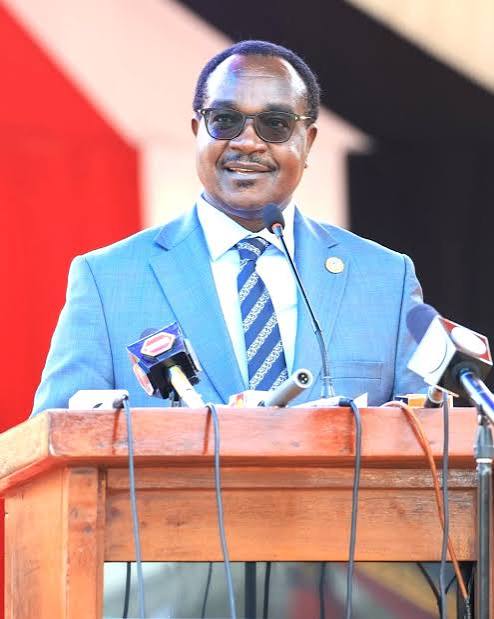
Education Cabinet Secretary Migos Ogamba
The government is preparing to overhaul Kenya’s university financing system with a new funding model that will guarantee financial support to every student admitted through the Kenya Universities and Colleges Central Placement Service (KUCCPS), Education Cabinet Secretary Migos Ogamba has announced.
Speaking on Friday at Kisii University during the opening of an international Kiswahili conference, Ogamba said the proposed model would shift the focus from assessing parents’ financial capacity to funding students based on the careers they are pursuing.
“The new model is funding the learner or the student and what the student will become, not the parent,” Ogamba said.
He said the government had already prepared a University Students Funding Bill that would establish a legal framework for mobilising resources from the private sector and development partners to create a sustainable financing pool for university students.
Under the proposed system, every student placed by KUCCPS would be eligible to apply for funding regardless of their family’s economic status or the cost of their academic programme.
The announcement comes amid growing concerns over the affordability of higher education and the financial sustainability of public universities.
The current funding system, which relies on the Means Testing Instrument (MTI), has faced criticism from students and parents, particularly those enrolled in costly programmes such as medicine, engineering and other science-based courses.
Ogamba said the previous differentiated unit cost model was intended to finance about 80 per cent of the cost of university programmes. However, inadequate government allocations meant institutions received only between 37 and 40 per cent of the required funding for many years, leaving universities heavily indebted.
He said accumulated debts across public universities had reached nearly Sh67 billion by 2022.
The Cabinet Secretary said the proposed model would treat university education as a long-term national investment rather than merely a social support programme.
He noted that the private sector had expressed willingness to support the initiative, viewing investment in students as investment in Kenya’s future workforce.
“If we look at it as funding a doctor, funding a lawyer, funding an engineer or funding a teacher, then it becomes a bankable and fundable investment,” he said.
Under the proposal, students would receive financial support throughout their studies and begin repaying the funds one year after securing employment.
Ogamba said the arrangement would also eliminate delays in disbursing funds by ensuring financing is available when students report to university.
He expressed confidence that the new framework would improve loan recovery rates. Current government-supported financing schemes record repayment rates of between 70 and 75 per cent, but the proposed legislation includes measures aimed at increasing recoveries to about 85 per cent.
According to the CS, achieving higher repayment rates would make the fund financially sustainable and enable it to support future generations of university students.
He assured students preparing to join universities this year that they should continue with the existing funding arrangements, saying the transition to the new model would only begin once Parliament passes the proposed legislation.
“If the Bill comes before September, we take it up before September. If it comes after, we take it up after that,” Ogamba said.
He added that the government would provide a transition period to ensure no student is disadvantaged during the implementation of the new funding system.
Ogamba spoke on the sidelines of the international Kiswahili conference at Kisii University, which has brought together scholars, researchers and policymakers from several countries to explore how technology can accelerate the growth of Kiswahili and strengthen its presence in the digital age.