

Keroka–Ibacho–Kiamokama Road boosts Manduku’s re-election bid

Keroka–Ibacho–Kiamokama Road boosts Manduku’s re-election bid
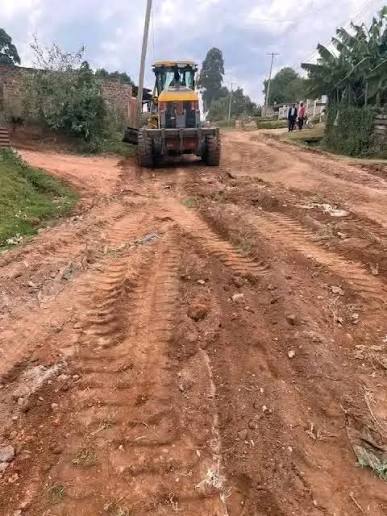
At Ekerubo in Nyaribari Masaba, along the Keroka–Ibacho–Kiamokama corridor, the changing landscape is difficult to miss.
Ongoing road construction has injected fresh optimism into an area whose residents have for years complained about poor connectivity, particularly during the rainy season.
But it is not only the road that is changing.
A multimillion-shilling national affordable housing project taking shape at the shopping centre has added to the sense of an area preparing for a new chapter. Residents hope improved infrastructure will attract businesses, raise property values and open up previously neglected rural settlements.
For Nyaribari Masaba MP Dr Daniel Manduku, the road has also acquired unmistakable political significance as he prepares for what is expected to be a competitive 2027 re-election battle.
The Kenya Rural Roads Authority (KeRRA) has listed the Keroka–Ibacho–Kiamokama road for upgrading to bitumen standard under tender RWC 937.
Residents along the route say they are already beginning to feel the difference.
Ekerubo: ‘The road can change everything’
At Ekerubo, resident Tom Onsombi described the project as a long-awaited opening for an area that has traditionally been disadvantaged by poor roads.
“For many years, we watched vehicles struggle here whenever the rains came. Now we are beginning to see the kind of development we have been waiting for. The road can change everything,” he told Kahawatungu.
Mary Kerubo, another resident, pointed to the housing construction near the road, saying improved infrastructure was already changing perceptions about the area.
“People are now willing to invest here because they can see that the road is coming. When you improve a road, you improve the value of everything around it — homes, businesses and land,” she said.
But residents are warning that the benefits of the road should not stop at the roadside.
Their next major demand is electricity connectivity to individual homes.
“We appreciate the road, but we also want electricity. It should not be that power lines pass near our homes while families remain without connections. Development must reach the homestead,” said Vincent Osiemo.
Ibacho: ‘We want more than a road’
Further towards Ibacho, residents are viewing the project largely through its potential impact on farming and trade.
Poor roads have historically increased transport costs and made it difficult for farmers to move produce to markets.
Rael Kemunto, a banana farmer, said better connectivity could improve agricultural returns.
“When the road is bad, transporters charge us more and sometimes produce gets to the market late. With a good road, we expect transport to become easier and our farmers to get better prices,” she told Kahawatungu.
John Onsabwa, a trader at Ibacho, said the project could also stimulate new businesses.
“A good road brings people. When people come, businesses grow. We expect more shops, more transport and more investment here,” he said.
But the electricity question quickly enters the conversation.
Ombuna Areri, a young artisan, said reliable power would enable residents to establish businesses rather than depend entirely on formal employment.
“With electricity, somebody can start a salon, welding business, cybercafé, shop or other small enterprise without having to move to town,” he said.
Moraa Kebaso urged Manduku and other leaders to focus on the less visible aspects of rural development.
“The road is important because everybody can see it. But there are other projects that may not be as visible but are equally important. Electricity to homes should now be given serious attention,” she said.
Kiamokama: A potential economic lifeline
At Kiamokama, residents see the road as a potential economic lifeline.
The area serves a largely agricultural population, with farming and small businesses forming an important part of the local economy. Residents believe improved connectivity could turn Kiamokama into a more vibrant trading centre.
“Kiamokama has always had potential. What we have lacked is proper connectivity. If this road is completed well, we expect more traders and investors to come here,” said Tom Mogire.
Joseph Ondieki said the project could make a difference to families travelling to hospitals, schools and markets.
“It is not just about vehicles. Our children travel through these roads, farmers use them, patients use them and traders depend on them. When the road improves, everybody benefits,” he said.
Yet even here, the call for electricity is growing louder.
“We don’t want the development to stop at the tarmac. We want electricity extended to the homes, especially those that are still far from the trading centres,” Ondieki added.
“If electricity comes together with the road, then we can truly say our area is developing. Our children can study at night and people can start businesses from their homes.”
Development narrative ahead of 2027
The visible road works are giving Manduku an important development narrative ahead of the 2027 elections.
For an incumbent MP, major infrastructure projects provide something tangible to take to voters, particularly in rural constituencies where roads remain among the most immediate development demands.
But the praise from residents is not unconditional.
Their message is that the road must be completed properly and that development must spread beyond the main corridor.
At Ekerubo, the housing construction has raised expectations that improved infrastructure will trigger wider investment.
At Ibacho, farmers want better roads complemented by electricity and other services.
And at Kiamokama, residents want the improved road to translate into stronger trade and better opportunities for young people.
One resident summed up the mood:
“We are not against giving credit where it is deserved. If the road is completed, people will appreciate it. But we will also ask what comes next because development cannot end with one project.”
That may be the most important political message emerging from the corridor.
The road has given Manduku a visible development achievement to campaign on. But residents are already setting the next test: electricity, last-mile connectivity and development that reaches the rural homestead.
The Keroka–Ibacho–Kiamokama project was included by KeRRA in its 2026 programme for upgrading to bitumen standard, meaning the road’s transformation is part of a formal national road development process rather than simply a local political pledge.
As 2027 approaches, however, its political meaning will increasingly be determined by the people living along it.
From Ekerubo to Ibacho and Kiamokama, residents appear to be saying the same thing:
Give us the road — but don’t leave our homes in the dark.

