

Kibera Town Centre Scales Up Digital Learning With Support From Safaricom Foundation

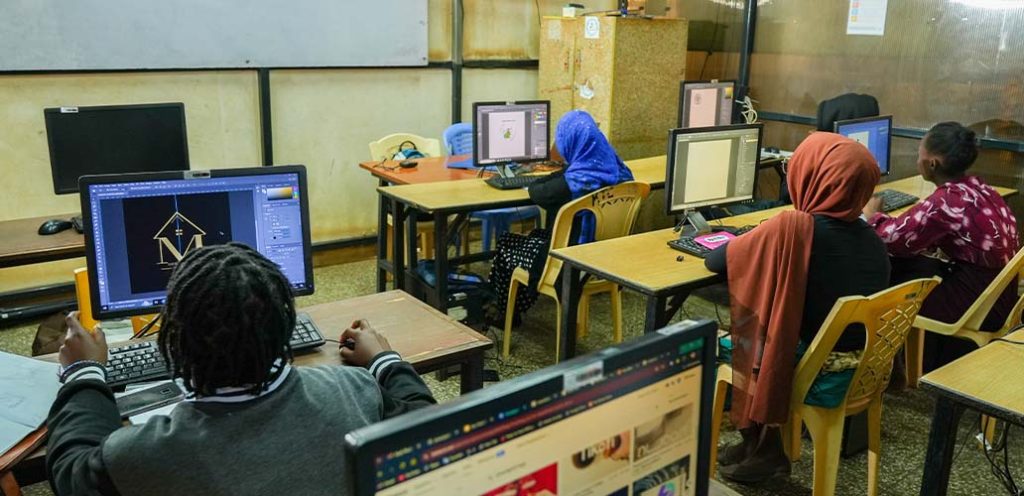
Access to education remains one of the biggest challenges for residents of Kenya’s informal settlements, despite constitutional guarantees. In areas such as Kibera, limited resources, scarce digital infrastructure, and economic hardship continue to hinder learning opportunities for young people and adults.
It is this gap that inspired Human Needs Project (HNP) co-founders Connie Nielsen and David Warner to establish the Kibera Town Centre in 2014.
Nielsen—an actress who spent almost a year in Kibera while filming a movie—and Warner, a US-based construction executive, set out to build a community-run hub that delivers basic services and long-term empowerment programmes under one roof.
The centre, managed entirely by Kibera residents, offers integrated solutions ranging from clean water and sanitation to training, credit access, and green energy initiatives. Its goal is to create the infrastructure that allows underserved communities to pursue education, employment, and economic mobility.
A major breakthrough came in 2021 when the Safaricom Foundation, through its Ndoto Zetu initiative, donated 21 refurbished computers—an upgrade that transformed HNP’s adult learning programme.
According to Peter Muthaura, the organisation’s Director of Strategic Partnerships, the new equipment expanded the training curriculum beyond basic digital literacy to include coding, graphic design, and web development.
Since launching its skills programmes in 2015, HNP has trained more than 6,000 young people, with roughly 4,000 securing employment through partnerships that link graduates to contract work and short-term job opportunities.
The Kibera Town Centre continues to serve as a model for community-driven development and technology-enabled empowerment in informal settlements.
Watch the video to learn more about HNP’s work:
