


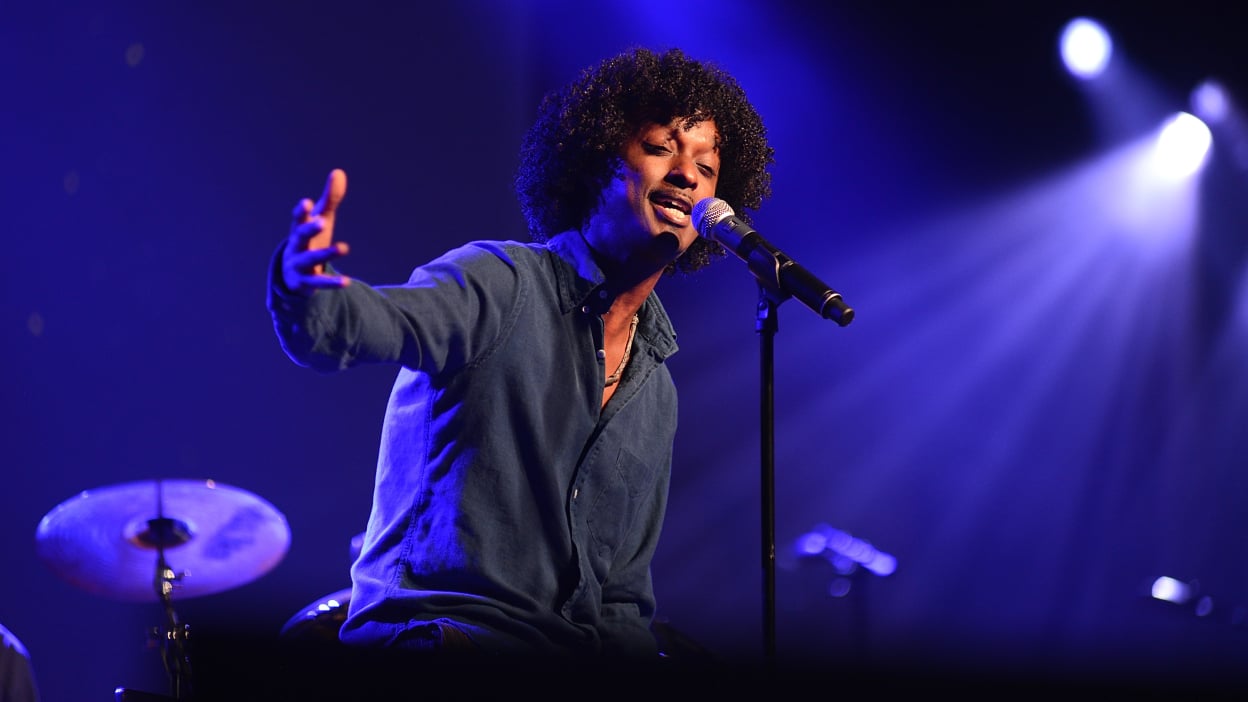
Keinan Abdi Warsame, known by his stage name K’naan, is a Somali-Canadian rapper, singer-songwriter, poet, and filmmaker born on April 16, 1978, in Mogadishu, Somalia.
His name, meaning “traveler” in Somali, reflects his life’s journey from a war-torn homeland to international recognition.
Raised in an artistic family, with his grandfather a celebrated poet and his aunt Magool a renowned singer, K’naan was immersed in poetry and music from a young age.
His early years in Mogadishu were marked by the outbreak of the Somali Civil War in 1991, which profoundly shaped his perspective and artistry.
At 13, he fled Somalia with his family, first to New York City and then to Toronto, Canada, where he honed his craft, blending hip-hop with Somali and world music influences.
Siblings
K’naan grew up alongside two siblings, an older brother, Liban, and a younger sister, Sagal.
The siblings shared a tumultuous childhood in Mogadishu, where they faced the horrors of the civil war.
At the age of 12, K’naan witnessed the shooting of three friends and narrowly escaped death himself when he mistook a grenade for a potato and threw it away just before it detonated.
These traumatic events prompted their mother to seek a visa to reunite the family with their father, Abdi, who had left earlier to work as a taxi driver in New York City.
In 1991, K’naan, his mother, Liban, and Sagal fled Somalia, initially settling in New York for six months before relocating to Toronto’s Rexdale neighborhood, a community with a significant Somali population.
Career
K’naan’s career began to take shape in Toronto, where he taught himself English by phonetically imitating hip-hop records sent by his father from New York.
Influenced by artists like Nas and Rakim, he started writing poetry and rapping, performing at open-mic nights and contributing poems to Somali websites.
His breakthrough came in 1999 when he delivered a spoken-word performance at the United Nations High Commissioner for Refugees, criticizing the UN’s failed peacekeeping efforts in Somalia.
Also Read: Sadie Sink Siblings: Meet the Siblings Squad Behind the American Actress
This bold act caught the attention of Senegalese singer Youssou N’Dour, who invited K’naan to contribute to his 2001 album Building Bridges, leading to global touring opportunities.
In 2005, K’naan released his debut album, The Dusty Foot Philosopher, which fused hip-hop with African instrumentation and earned critical acclaim for tracks like “Soobax,” a direct challenge to Somali warlords.
His 2009 album, Troubadour, propelled him to international fame with the single “Wavin’ Flag,” chosen as Coca-Cola’s promotional anthem for the 2010 FIFA World Cup.
The song’s uplifting message resonated worldwide, becoming a global hit.
K’naan continued to release music, including the 2012 album Country, God or the Girl, and expanded into filmmaking, directing his debut feature Mother Mother in 2024, which premiered at the Toronto International Film Festival.
Throughout his career, he has collaborated with artists like Nelly Furtado, Mos Def, and Damian Marley, and his music has been featured in video games like FIFA 06 and Madden NFL 09.
Accolades
K’naan’s debut album, The Dusty Foot Philosopher, won the 2006 Juno Award for Rap Recording of the Year and was nominated for the Polaris Music Prize.
In 2010, he secured two Juno Awards for Troubadour: Artist of the Year and Songwriter of the Year, with the album also shortlisted for the Polaris Music Prize.
The global success of “Wavin’ Flag” garnered him the 2010 MOBO Award for African Artist of the Year.
As a Grammy Award-winning artist, K’naan’s work has been recognized for its lyrical depth and cultural impact.
His filmmaking debut, Mother Mother, earned him the FIPRESCI Prize, highlighting his versatility as a storyteller.
Beyond awards, K’naan’s philanthropic efforts, including raising awareness for the 2011 East African drought alongside Bono and supporting Canadian legislation for African medical aid, underscore his commitment to social change, further cementing his legacy as an artist and activist.
Email your news TIPS to Editor@Kahawatungu.com — this is our only official communication channel
