

KTDA scouts US, Georgia tea markets as farmers grapple with mixed bonus earnings

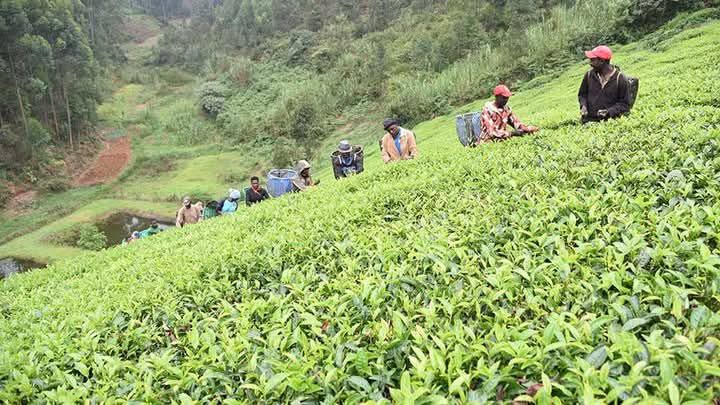
The Kenya Tea Development Agency (KTDA) is exploring new international markets, including the United States and Georgia, in a fresh push to improve future earnings for tea farmers amid mixed bonus payouts across the Gusii region.
The move is aimed at diversifying export destinations, expanding the customer base for Kenyan tea and reducing reliance on traditional markets affected by geopolitical and economic uncertainties.
Kisii’s Zone 11 representative to the KTDA national board, Omweno Ombasa, said the instability in some established markets, particularly Iran, had affected earnings and underscored the need to identify new buyers.
“Instability in our traditional markets like Iran caused a dent in earnings, and this has forced us to open our eyes and explore new markets,” Omweno told journalists at Mogonga in Bomachoge Borabu.
He said expanding the market base could create opportunities for stronger demand and better prices, ultimately improving the bonuses paid to farmers in subsequent seasons.
However, some growers remain dissatisfied with their latest payouts, arguing that the earnings are insufficient to cover rising production costs.
“The bonus we have received is still too low compared with the cost of producing tea. Fertiliser, labour and transport costs have gone up, yet our earnings have not improved enough to make tea farming worthwhile,” said Gesare Ombuna, a farmer from Nyamache in Bobasi.
George Mogire said farmers wanted tangible improvements in green-leaf prices and bonus payments rather than assurances about future market opportunities.
“We welcome the search for new markets in the United States and Georgia, but farmers want to see the benefits reflected in their bonus payments. We cannot continue spending more on our farms only to receive disappointing returns at the end of the year,” he said.
Orina Kebuse, a farmer from Kiamokama, called on KTDA to address the unofficial sale of green leaf to factories operating outside the agency’s management structure.
Omweno acknowledged the concerns over reduced bonus payments but maintained that the latest earnings represented an improvement in some respects compared with the previous bonus season.
“Yes, there is murmuring that the latest bonus earnings have disappointed farmers, but equally, they represent an improvement compared with the previous bonus season in some respects,” he said.
He noted that even tea-growing zones traditionally associated with higher earnings had experienced lower-than-expected payouts, reflecting the pressures facing the sector.
Omweno attributed part of the challenge to declining green-leaf deliveries to factories, warning that reduced volumes could continue to weigh on farmers’ earnings unless production and deliveries improved.
He explained that factories processing larger quantities of green leaf were better positioned to spread fixed operational costs across higher volumes, improving efficiency and potentially increasing the funds available for farmers.
Conversely, factories receiving lower volumes faced greater pressure on their operating costs, limiting the amount available for bonus payments.
The director also warned that the diversion of green leaf to factories outside KTDA’s management structure, including Mara Tea Factory, could undermine the performance of KTDA-managed factories and affect the earnings of farmers supplying them.
He cautioned that unless deliveries improved, gains from sector reforms and efforts to expand export markets could be eroded, leaving farmers struggling to achieve the higher returns they expect.
New markets offer opportunities, but no immediate guarantee
KTDA’s search for additional export destinations comes as the agency seeks to broaden its reach beyond established buyers, including Pakistan.
Omweno said the strategy was intended to widen the market for Kenyan tea, diversify export destinations and create opportunities for stronger demand and better prices.
However, expanding into new markets may not immediately translate into higher bonuses. Farmers’ earnings also depend on the prices fetched at auctions and through other sales channels, sales volumes, production and processing costs, and the quantity of green leaf delivered to individual factories.
Omweno said reforms introduced in the tea sector had helped improve monthly payments to farmers and expand marketing opportunities.
He argued that sustaining those gains would require higher production, efficient factory operations and access to better-paying markets.
Gusii factories record varying bonus rates
The latest bonus declarations for the 2025/2026 season illustrate the disparities in earnings among factories in the Gusii region.
Reported rates show Nyankoba Tea Factory leading at Sh30 per kilogramme, followed by Kebirigo at Sh19. Sanganyi and Gianchore declared Sh18 each, while Nyamache and Tombe offered Sh16 per kilogramme.
Kiamokama declared Sh15, while Ogembo recorded Sh14 per kilogramme.
The figures highlight differences in factory performance and the resulting payouts to farmers supplying different processing facilities.
The latest declarations also come against the backdrop of varying bonus rates in the 2024/2025 season, when reported payouts in Kisii and Nyamira ranged from Sh10 to Sh32 per kilogramme.
During that period, Kiamokama declared Sh10 per kilogramme, Itumbe Sh11, Nyansiongo Sh12 and Kebirigo Sh13.
The comparisons show that the movement in bonus earnings has not been uniform across factories. Assessing the latest performance therefore requires comparing each factory’s current declaration with its own previous payout.
Historical figures also illustrate why farmers continue to expect stronger returns. In 2023, Omweno announced that farmers supplying Nyamache and Itumbe factories would receive Sh30 per kilogramme, up from Sh20 the previous year.
Ogembo and Eberege rose to Sh25 from Sh19, while Kiamokama and Rianyamwamu increased to Sh24.70 from Sh20.50.
Although these earlier payouts provide a benchmark for farmers’ expectations, comparisons across financial years must account for changes in tea prices, production costs, sales volumes and factory performance.
For growers in Kisii and the wider Gusii region, the challenge now is to increase green-leaf deliveries, maintain quality and improve factory efficiency while ensuring that the search for new buyers in the United States and Georgia translates into better returns in subsequent bonus seasons.

