

Kwale plane crash victims need DNA sampling for identification, officials say

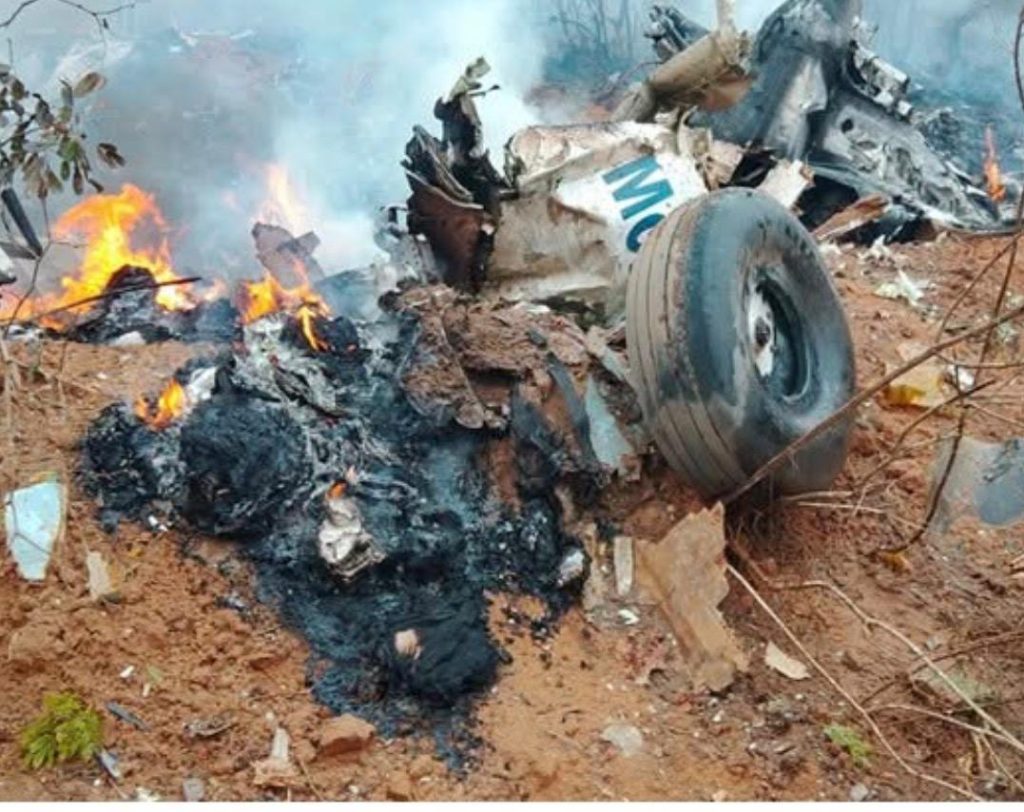
The families of the 11 victims of the Kwale plane crash will have to submit their DNA samples to help in identifying them.
A multi agency team finished the recovery exercise of the bodies from the Tsimba area, Kwale County on Thursday October 30, 2025 and moved the remains to the Coast General Hospital Mortuary pending the procedures.
The accident happened on October 28, 2025 moments after the light aircraft had taken off from the Diani airport headed for Maasai Mara with the 11 on board. All the 11 died in the crash.
A team of investigators from the air accident investigations revisted the scene on Thursday and with the help of an excavator managed to retrieve more bodies that had been buried as a result of the aircraft’s strong ground impact.
The body parts were put into four body bags bringing the number of bags so far to 24.
Officials from the ambassies of German and Hungary in Nairobi were in the area to help in the processes.
The pilot was identified as Geoffrey Mutai, a former police pilot. He was an experienced pilot who had operated in hard areas like Somalia, his colleagues said.
Preliminary findings show the pilot turned right on take off from Ukunda, which was a mistake.
“He should have done a left turn into the sea and that would have cleared the terrain. The plane was on full power and the impact shows it hit the hill and burst into flames,” said an expert.
The area was rainy and visibility was poor.
Another expert argued the pilot may have underestimated the height of the hill and had full fuel in his plane.
The official explained pilot went on Controlled Flight into Terrain, which is a tragic aviation accident where an airworthy aircraft is unintentionally flown into the ground, water, or an obstacle while under pilot control.
This often happens due to a loss of situational awareness, especially in bad weather, and can also be caused by factors like spatial disorientation, visual illusions, or distraction.
To prevent CFIT, modern aircraft use systems like the Terrain Awareness and Warning System (TAWS), which provides alerts to pilots.
According to a flight manifest, the two Germans were identified as Sabine Bayer Heleue, Petrouske Gudau Ilse while the Hungarians were identified as Bea Sullos, Gyula Sullos, Gyulane Sullos, Danna Verona, Gyula Zimany Sullos, Gergely Gyorgy Varga, Gergely Worgyme and Iren Racz.
Gyula Süllős, head of the boxing department at Hungarian sports club Vasas SC, and his family were among the victims of the plane crash in Kenya.
Gyula Süllős, his two children, his wife, and the family’s babysitter all died in the accident.
The eight Hungarian victims had been traveling together, including the department head’s mother, sister, and brother-in-law.
The Germans were to head to Olkiombo Airstrip in Maasai Mara while the Hungarians were to head to Kichwa Tembo in the same park.
Among the possible theories as the cause of crash was bad weather, officials said.
Kenyan aviation authorities have since launched a joint investigation with representatives from Hungary, Germany, and the aircraft manufacturer to establish the cause of the accident, officials said.
Witnesses and local officials reported that heavy rain and poor visibility blanketed parts of Kwale County at the time of the crash at about 8:30 am.
The aircraft is said to have gone down in a forested, hilly area of Tsimba Golini, roughly 10 kilometers inland from the coast.
Transport Cabinet Secretary Davies Chirchir said in accordance with the provisions of Annex 13 to the Convention on International Civil Aviation Organization (ICAO), investigators from the Aircraft Accident Investigation Department (AAID) have been deployed to the accident site to commence a comprehensive on-site investigation into the circumstances surrounding this tragic event.
“Tragically, all 11 occupants on board the aircraft were found to have suffered fatal injuries. The aircraft was destroyed by the impact and the ensuing fire,” he said.
The wreckage was located several hours later, confirming that the aircraft was “completely destroyed on impact.”
Cessna’s Grand Caravan, which was involved has long been a workhorse of African aviation, valued for its versatility and reliability.
With a cruise speed of about 180 knots (333 km/h) and a range of 1,200 kilometres, it is built for low-cost, short-haul missions, from bush airstrips to bustling airports.
According to a statement from the airline, the aircraft — registration number 5Y-CCA — was on a scheduled flight from Diani Airport to Kichwa Tembo in the Maasai Mara when the accident occurred.
Aviation experts say the aircraft type has an impressive safety record globally, with most incidents attributed to weather and operational factors rather than mechanical failure.
It is also one of the few aircraft types certified to operate safely in remote regions with minimal infrastructure.

