

KWS in mass wildlife translocation from Kedong Ranch to contain conflict

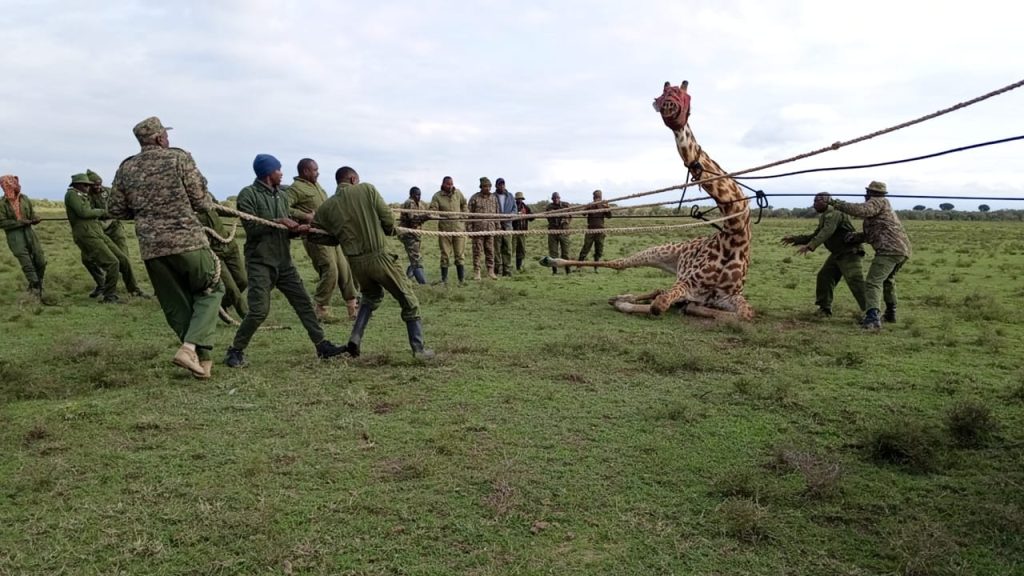
In response to the massive ongoing land subdivision at Kedong Ranch, the Kenya Wildlife Service (KWS), in conjunction with The Safari Collection, is conducting a large-scale capture and translocation exercise of wildlife species from the ranch to safer conservation areas.
The urgent intervention follows a series of high-level stakeholder meetings held at Kedong Ranch after concerns emerged over the rapid parceling and sale of land to private developers.
Kedong Ranch, a privately owned property by shareholders, located in Naivasha sub-county and lies strategically between Mt. Longonot National Park on the eastern side and Hell’s Gate National Park to the south, stretching toward Suswa and Kajiado County.
For decades, the ranch has served as a critical migratory corridor and habitat for a wide range of wildlife.
Once characterized by expansive open plains, Kedong Ranch is now undergoing rapid transformation.
Land parcels ranging from as small as 1/8 of an acre to as large as 100 acres are being subdivided and sold for development.
The land use change has resulted in the proliferation of fences, homes, and other infrastructure, blocking migratory routes and placing local wildlife populations at risk of decimation.
Wild grazers including Thomson’s gazelles, Grant’s gazelles, elands, impalas, hartebeests, and wildebeests are among the species severely affected.
These animals, once dependent on the open landscape and cattle troughs for water, now face dwindling access to essential resources.
Additionally, access routes to Lake Naivasha have been blocked by buildings and impermeable fencing, further straining the survival of these species.
A rapid field assessment conducted on August 30, 2024, along the Longonot section of the ranch confirmed the gravity of the situation.
Led by the Mt. Longonot National Park warden, the survey involved both on-road and off-road patrols to establish wildlife population numbers, observe threats, and assess habitat conditions.
Findings revealed that Kedong Ranch remains an active wildlife dispersal zone connecting two major national parks.
However, extensive fencing and uncontrolled development has already rendered large portions of the land inaccessible to wildlife. Many species now face isolation in fragmented patches, raising concerns over possible inbreeding, starvation, and eventual local extinction.
To mitigate the crisis, KWS is currently undertaking a mass wildlife capture and translocation operation in the area.
Most of the affected animals are being moved to Nairobi National Park, where they will help strengthen herbivore populations and sustain predator species such as lions. This is part of a broader plan to redistribute animal populations from increasingly unviable habitats to more secure conservation areas.
During this exercise, the Giraffe Conservation Foundation with the help of the Safari Collection is also fitting select ungulate species (giraffes) with GPS collars to study their movement patterns and help define critical habitats for future protection.
The fate of thousands of animals now hinges on how quickly and effectively stakeholders act.
KWS said Saturday they are on the ground coordinating operations, but long-term solutions will require collaboration across public and private sectors.
As the land rush continues, the challenge will be balancing human development with wildlife conservation.

