

Lech Wałęsa Siblings: Meet the Siblings Squad Behind the Polish Politician

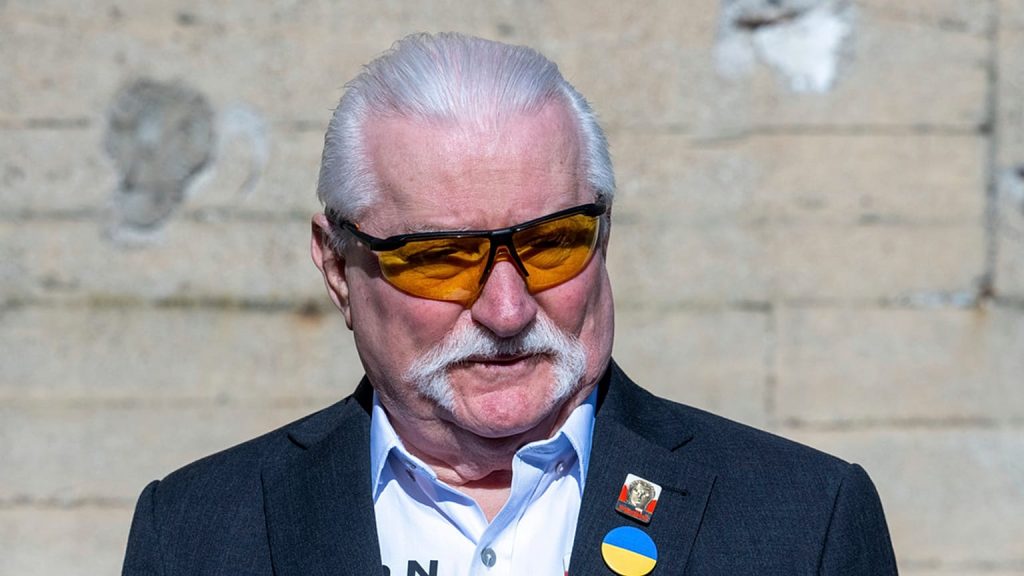
Lech Wałęsa PHOTO/Euro News
Lech Wałęsa was born on 29 September 1943 in Popowo, near Włocławek, in German-occupied Poland.
He is a Polish labour activist, trade-union leader, politician and statesman who co-founded and led the Solidarity movement, the first independent trade union in a communist country, and later served as President of Poland from 1990 to 1995.
He is the son of Bolesław Wałęsa, a carpenter who died shortly after the Second World War as a result of wartime forced labour, and Feliksa Wałęsa.
After his father’s death his mother remarried her brother-in-law, Stanisław Wałęsa.
Wałęsa trained as an electrician, worked at the Lenin Shipyard in Gdańsk from 1967, and in 1969 married Danuta Gołoś.
Siblings
Lech has three older full siblings from his parents’ marriage: namely Izabela (1934–2012), Edward (born 1937) and Stanisław (born 1939).
After his mother’s remarriage he gained three younger half-brothers: Tadeusz (born 1946), Zygmunt (born 1948) and Wojciech (1951–1988).
The family grew up in modest circumstances in rural Poland, and Wałęsa has generally maintained limited public contact with his siblings in adult life.
Career
After completing primary and vocational schooling, Wałęsa worked as a car mechanic and completed compulsory military service before taking a job as an electrician at the Lenin Shipyard in Gdańsk in 1967.
He took part in the 1970 protests against food-price rises and later became active in independent trade-union organising.
Also Read: Queen Silvia of Sweden Siblings: Getting to Know the Sommerlath Siblings
Dismissed from the shipyard in 1976 for his activism, he continued underground organising and co-founded the Free Trade Unions of the Coast.
In August 1980 he climbed over the shipyard fence to join striking workers, was elected head of the Inter-Enterprise Strike Committee, and negotiated the Gdańsk Agreement that legalised independent trade unions.
He became the leader of Solidarity, which rapidly grew to more than ten million members.
After martial law was imposed in December 1981 he was interned and Solidarity was banned, yet he remained the symbolic head of the opposition.
In 1989 he played a central role in the Round Table talks that led to partially free elections and the end of communist rule in Poland.
In December 1990 he was elected President of Poland in the country’s first popular presidential election, serving until 1995.
Accolades
Wałęsa was awarded the Nobel Peace Prize in 1983 for his non-violent struggle for free trade unions and human rights; his wife Danuta accepted the prize on his behalf in Oslo.
He was named Time magazine’s Person of the Year in 1981 and later included among Time’s 100 most important people of the twentieth century.
He has received the United States Presidential Medal of Freedom, the Knight Grand Cross of the Order of the Bath from the United Kingdom, the Grand Cross of the Legion of Honour from France, and numerous other high state decorations from countries around the world.
He holds more than forty honorary doctorates from universities including Harvard and Columbia, as well as many civic and human-rights awards.

