

Lester B. Pearson Siblings: Getting to Know Marmaduke and Vaughan Whitier Pearson

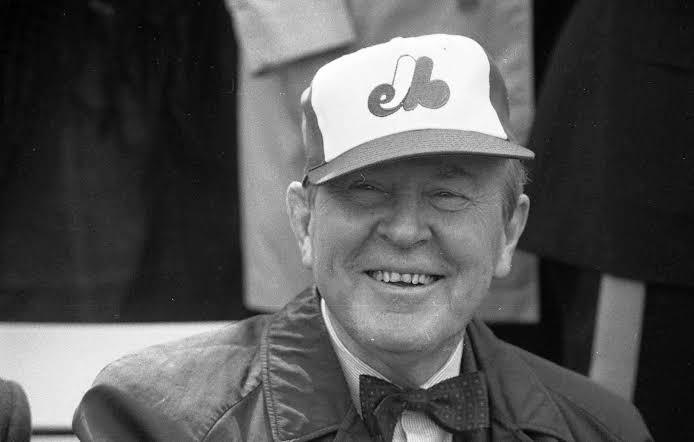
Lester B. Pearson PHOTO/Wikipedia
Lester Bowles Pearson, commonly known as Mike Pearson, was a Canadian statesman, diplomat, scholar, and politician who served as the 14th prime minister of Canada from 1963 to 1968.
Born on April 23, 1897, in Newtonbrook, Ontario (now part of Toronto), he was the son of Edwin Arthur Pearson, a Methodist minister, and Annie Sarah Bowles.
Pearson grew up in a close-knit family that moved frequently due to his father’s ministerial postings across southern Ontario.
After a distinguished career in diplomacy and politics, he died of cancer on December 27, 1972, in Ottawa at the age of 75.
Siblings
Lester was the second of three sons born to Edwin Arthur Pearson and Annie Sarah Bowles.
His older brother was Marmaduke Pearson, often called Duke, and his younger brother was Vaughan Whitier Pearson.
Marmaduke left university at age 18 to enlist and fight in Europe during the First World War.
Vaughan also served overseas in the conflict.
Lester himself enlisted in 1915 with a University of Toronto hospital unit and later transferred to the Royal Flying Corps.
Career
Pearson’s career spanned military service, academia, diplomacy, and high-level politics.
After serving in the Canadian Army Medical Corps and the Royal Flying Corps during the First World War, he completed his education at the University of Toronto and later studied at St John’s College, Oxford.
He taught history at the University of Toronto in the 1920s before joining the Department of External Affairs in 1928.
Also Read: Edward Heath Siblings: All About John Heath

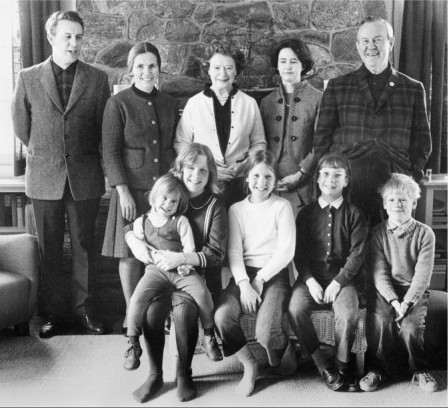
His diplomatic posts included service in London and Washington, where he rose to become Canadian ambassador to the United States from 1945 to 1946.
He then served as under-secretary of state for external affairs and entered elected politics in 1948 as secretary of state for external affairs under Prime Ministers William Lyon Mackenzie King and Louis St. Laurent.
Pearson played key roles in the founding of NATO, chaired the NATO Council, and served as president of the United Nations General Assembly from 1952 to 1953.
He led Canada’s efforts during the Suez Crisis of 1956 by proposing the creation of a United Nations Emergency Force, the first major UN peacekeeping mission.
After the Liberal Party’s defeat in 1957, he became party leader in 1958 and leader of the Official Opposition.
He won the 1963 federal election and formed two successive minority governments as prime minister until 1968.
During his tenure he advanced major domestic initiatives including the Canada Pension Plan, the foundation of universal medicare, the Canada Student Loans program, the Auto Pact with the United States, and the adoption of the Maple Leaf flag.
He also established the Royal Commission on Bilingualism and Biculturalism, which helped shape Canada’s official bilingualism policies.
Accolades
Pearson’s most prominent recognition came in 1957 when he was awarded the Nobel Peace Prize for his role in resolving the Suez Crisis through the creation of a United Nations peacekeeping force.
The Nobel Committee praised his efforts as having “saved the world.”
He was named a Companion of the Order of Canada in 1968 and received the Order of Merit in 1971.
Additional honours included being named Canadian Newsmaker of the Year multiple times by the Canadian Press, various honorary doctorates from universities including Oxford, Toronto, McGill, and Harvard, and induction into institutions such as the Canadian Baseball Hall of Fame reflecting his lifelong interest in sports.

