

Louis Johnson Siblings: Meet George “Lightnin’ Licks” Johnson and Joseph “Tommy” Johnson


Louis Johnson PHOTO/Guardian
Louis E. Johnson, affectionately known as “Thunder Thumbs,” was a pioneering American bassist whose innovative slap technique revolutionized funk, R&B, and pop music during the 1970s and 1980s.
Born on April 13, 1955, in Los Angeles, California, Johnson grew up in a musically inclined family that nurtured his early passion for the instrument.
He rose to prominence as one half of the iconic duo The Brothers Johnson, alongside his brother George, delivering infectious grooves that defined an era.
Beyond his band work, Johnson’s session contributions graced some of the biggest albums in music history, cementing his status as one of the most recorded bassists of his generation.
Tragically, he passed away on May 21, 2015, at the age of 60, leaving behind a profound influence on bass players worldwide.
Siblings
Louis’ older brother, George “Lightnin’ Licks” Johnson, born on May 17, 1953, became his lifelong collaborator and the guitarist-vocalist in The Brothers Johnson, forming the core of the band’s signature sound.
Another older brother, Joseph “Tommy” Johnson, born on May 12, 1951, contributed as a skilled percussionist, joining Louis and George in their early high school group, Johnson Three Plus One, which also included their cousin Alex Weir on guitar.
Career
Johnson’s career ignited in the vibrant Los Angeles music scene of the early 1970s, where he and George honed their skills backing legendary acts like Bobby Womack and The Supremes before joining Billy Preston’s band in 1972.
Also Read: Phil Everly Siblings: Get to Know Isaac Donald Everly

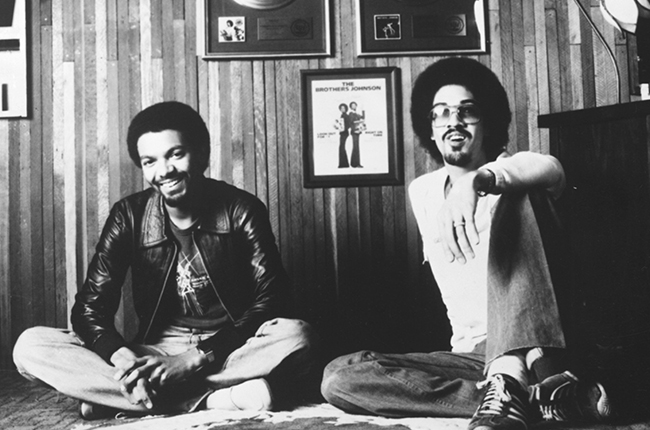
The brothers officially launched The Brothers Johnson in 1975 under the guidance of producer Quincy Jones, signing with A&M Records and unleashing a string of hits that blended funk grooves with soulful melodies.
Albums like Look Out for #1 (1976) spawned smashes such as “I’ll Be Good to You” and “Get the Funk Out Ma Face,” while Right on Time (1977) delivered the psychedelic soul staple “Strawberry Letter 23.”
As a session maestro, Johnson’s thunderous lines propelled Michael Jackson’s landmark records, including the bass-driven pulse of “Billie Jean” on Thriller (1982), as well as tracks from Off the Wall (1979) and Dangerous (1991).
His versatility shone through collaborations with George Benson on Give Me the Night (1980), Herb Alpert’s Grammy-winning Rise (1979), and Quincy Jones’ The Dude (1981), amassing over 2,200 recording credits.
In 1981, Johnson ventured into solo territory with the gospel-infused album Passage, featuring his then-wife Valerie and bandmate Richard Heath, though his heart remained in the collaborative funk realm that made him a studio staple.
Accolades
Louis was ranked number 38 on Bass Player magazine’s prestigious list of “The 100 Greatest Bass Players of All Time,” a testament to his melodic innovation and rhythmic propulsion that echoed influences from James Jamerson and Larry Graham.
As an early endorser of the Leo Fender Music Man Stingray bass, Johnson helped popularize the instrument among funk enthusiasts.
His contributions to Grammy-winning projects, such as Herb Alpert’s Rise, and iconic tracks like Michael Jackson’s “Don’t Stop ‘Til You Get Enough” underscored his role in shaping pop’s golden age.
Often hailed as the “King of Slap Bass,” Johnson’s legacy endures through his influence on generations of musicians, from session pros to modern funk revivalists.

