

Louvre museum director resigns months after high-profile heist

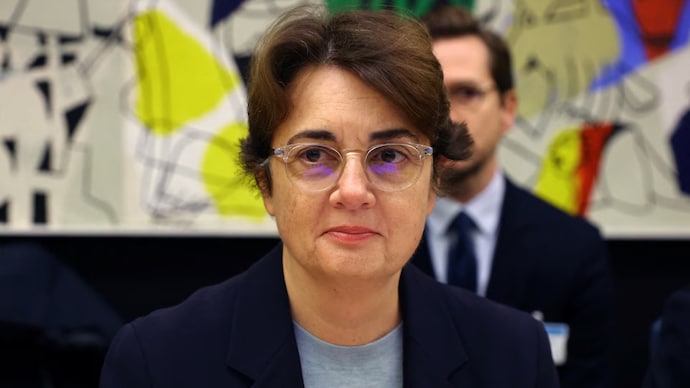
The director of the Louvre in Paris has resigned, months after the high-profile theft of France’s crown jewels from one of the world’s most visited museums.
Laurence des Cars submitted her resignation to President Emmanel Macron, who praised her decision at a time when museum needed “calm and a strong new impetus to successfully carry out major projects involving security, and modernisation”.
On the morning of 19 October last year, thieves used a stolen vehicle-mounted mechanical lift to gain access to the museum from a balcony close to the River Seine.
The four main suspects have been arrested, but the eight prized pieces of jewellery, worth an estimated 88m euros (£76m, $104m) have not been recovered.
They include a diamond and an emerald necklace Emperor Napoleon gave to his wife.
As the thieves fled, they dropped a 19th-Century diamond-studded crown belonging to Empress Eugenie, which was damaged.
Early this month, the Louvre released the first image of the damaged crown since the raid, saying it was “nearly intact” and could be fully restored.
The Louvre is home to priceless works of art including Leonardo da Vinci’s Mona Lisa.
Days after the raid, Des Cars admitted that CCTV around the Louvre’s perimeter was weak and “aging” – with the only camera monitoring the exterior wall of the Louvre where the thieves broke in pointing away from the balcony that led to Gallery of Apollo housing the jewels.
Despite the museum’s huge volume of visitors – more than 8.7 million a year – investment in security has been slow and she highlighted the budget challenges big institutions face.
Des Cars, who became director of the Louvre in 2021, said she wanted to double the number of CCTV cameras.
A parliamentary inquiry into the failures is under way.
Its findings are due out in May, but a preliminary report released last week spoke of “systemic failures” which enabled the break-in.
Since then, the museum has also been beset by a suspected ticket fraud scheme, as well as being hit by a water leak.
By BBC News

