

LSK condemns sexual harassment in legal profession, calls for law reform and criminal prosecution

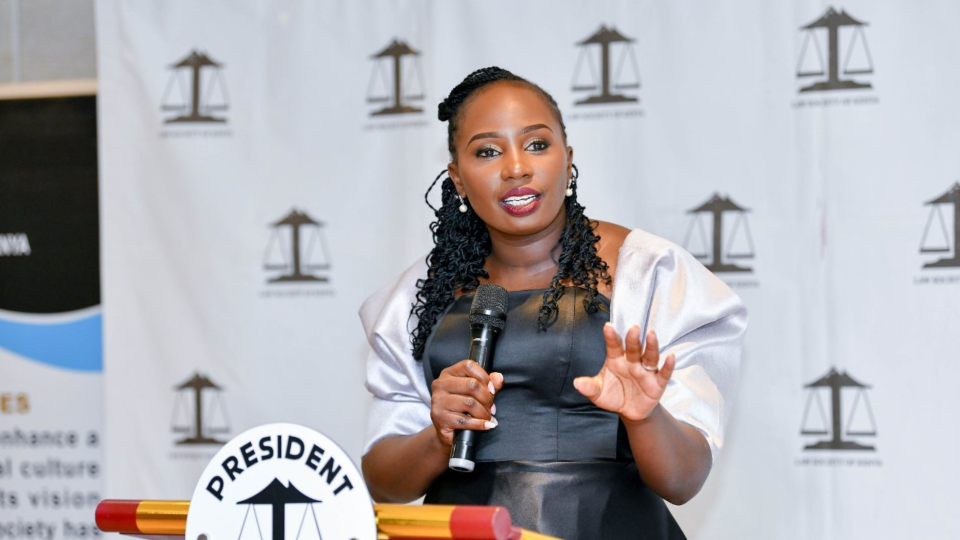
The Law Society of Kenya (LSK) condemned a surge in reported cases of sexual harassment within the legal profession, warning that the alleged abuse of junior advocates, pupils, interns, and associates by senior colleagues represents both professional misconduct and criminal behaviour.
In a statement issued by LSK President Faith Odhiambo, the Society said it had taken note of numerous complaints circulating on social media platforms, many of which involve junior and vulnerable members of the profession working in law firms, non-governmental organisations, and other legal institutions.
“The allegations point to a worrying abuse of power by senior members of the profession and offend the ethical standards of legal practice,” Odhiambo said, adding that proven perpetrators would be liable to disciplinary sanctions as well as criminal prosecution.
LSK reaffirmed its zero-tolerance stance on sexual harassment, noting that its Sexual Harassment and Anti-Bullying Policy (SHABP), adopted at the 2019 Annual General Meeting, provides a comprehensive framework for prevention, reporting, and redress.
The policy applies to all categories of staff without exception, including pupils, interns, contract staff, and students attached to law firms or the Society.
The Society emphasized that the policy covers misconduct occurring both within and outside the workplace, including during client meetings, business travel, firm or Society-sanctioned social events, and electronic communications.
According to LSK, complaints of sexual harassment may be lodged with either the Advocates Complaints Commission (ACC) or the Advocates Disciplinary Tribunal (DT), both of which operate independently of the Society’s Council.
The Council does not review, ratify, or interfere with complaints or decisions before the disciplinary bodies, the statement said.
LSK confirmed that the Advocates Disciplinary Tribunal is fully constituted and chaired by Senior Counsel Taib Ali Taib, and is competent to hear complaints under the Advocates Act.
However, the Society expressed concern over a recent DT decision delivered on 27 November 2025, in which the Tribunal declined jurisdiction over a complaint against an advocate who had been adversely mentioned in allegations involving 22 colleagues.
The DT held that sexual harassment is a criminal offence best addressed through criminal prosecution.
While terming the decision “regrettable,” LSK said it had exposed gaps in the legal framework governing professional discipline, prompting the need for legislative reform. The Society said it intends to push for amendments to the Advocates Act, particularly Section 60, to clearly define sexual harassment as disgraceful or dishonourable conduct incompatible with the status of an advocate.
LSK emphasized that sexual harassment transcends professional misconduct and is a serious criminal offence under the Sexual Offences Act. It called for perpetrators to be arrested, prosecuted, and punished in accordance with the law to deter recurrence.
The Society urged victims to pursue complaints through both internal disciplinary mechanisms and criminal justice channels, noting that the two processes are complementary. LSK, through its Gender Committee, pledged continued support to victims who choose either or both avenues.
To strengthen enforcement of the SHABP, LSK said it has intensified awareness and sensitization initiatives, including webinars, informational materials, Legal Awareness Week outreach, data collection surveys, and branch-level engagements.
The Gender Committee has also recommended the adoption of a model sexual harassment policy by all law firms and legal departments as part of annual practicing certificate renewal requirements.
LSK announced plans to collaborate with the Advocates Benevolent Association to provide free counselling services to victims through registered therapists.
It will also work with FIDA-Kenya to support investigations and engage the Witness Protection Agency to safeguard vulnerable complainants.
“The Law Society of Kenya remains steadfast in safeguarding the dignity, welfare, and professional integrity of all its members,” Odhiambo said, adding that addressing sexual harassment requires collective responsibility across the profession.
She warned that sexual harassment undermines the right to work freely and safely and brings disrepute to the legal profession, calling on all advocates to actively protect professional spaces from abuse and criminal conduct.

