

Maangi dismisses opposition’s one-term push, defends Ruto’s development agenda

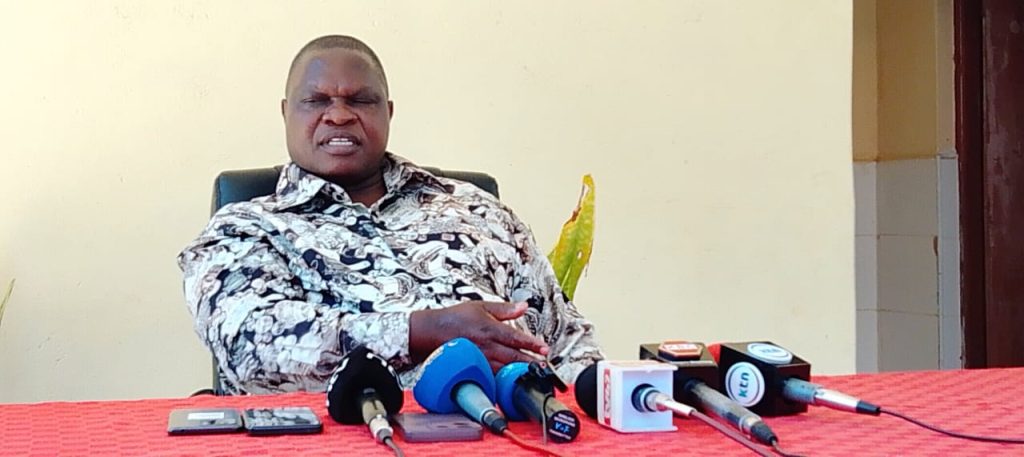
Kenyan Ambassador to Belgium Joash Maangi has dismissed opposition calls for President William Ruto to serve only one term, describing the campaign as “pure hogwash” and warning that frequent changes in government could undermine Kenya’s long-term development plans.
Maangi, a former Kisii Deputy Governor, said Kenyans should give the Ruto administration sufficient time to implement major development programmes rather than replacing governments before long-term projects are completed.
“There is this clarion call that most opposition politicians have specialised in saying — one term, one term, one term. Nothing can be more misleading than that call,” Maangi said.
“It is pure hogwash.”
Speaking to journalists during a media breakfast at his Ogembo residence on Tuesday, Maangi mounted a strong defence of the Ruto administration, citing infrastructure, housing, trade, aviation and the digital economy among areas where he said the Government was making progress.
He warned that Kenya could lose billions of shillings invested in long-term projects if successive administrations abandoned programmes initiated by their predecessors.
“If a new president comes in and disregards ongoing projects, we will be wasting money,” he said.
Maangi called for political and policy continuity, arguing that major national projects should be protected through legislation to ensure they survive changes in political leadership.
He cited roads, the Standard Gauge Railway (SGR), border posts, aviation infrastructure, oil infrastructure, affordable housing and the digital economy as programmes that could have a transformative impact if sustained over the long term.
“Kisii is one of the counties that has immensely benefited from this government in terms of development,” he said.
The ambassador said the Government was also laying the groundwork for increased regional trade through infrastructure investments, including the planned expansion of the SGR towards western Kenya and its eventual connection to Uganda and other countries in the region.
“The amount of volume, the increase in trade activities that that SGR is going to bring to this region is enormous,” he said.
Maangi also defended the Government’s road development programme, saying improved highways would reduce travel times and transport costs while unlocking economic opportunities.
He recalled that motorists once travelled from Nairobi to Kisii in about three-and-a-half hours, arguing that restoring efficient road transport would save thousands of man-hours and stimulate commerce.
On regional trade, Maangi cited one-stop border posts and increased use of electronic systems as measures that could reduce delays and lower the cost of doing business.
He also pointed to the movement of petroleum products through the Kisumu-Eldoret-Uganda corridor as an opportunity for Kenya to strengthen its position as a regional trade hub.
Maangi said Kenya should reclaim its position as one of Africa’s leading aviation hubs, arguing that a stronger aviation industry would boost tourism, trade and business travel.
He further defended the Government’s digital economy agenda, saying Kenya’s data protection framework and proposed digital partnership with the European Union could attract European companies and create jobs through business process outsourcing and other technology-related services.
The ambassador also backed Ruto’s affordable housing programme, saying it could help address the growth of informal settlements in urban areas while easing pressure on agricultural land in densely populated counties such as Kisii.
He argued that increasingly fragmented rural parcels should be preserved for productive agriculture rather than continued residential subdivision.
“The idea was to achieve two goals — eliminate slums from urban areas completely and, in rural areas where we have serious challenges because of subdivision of land, allow agricultural land to be used for agriculture,” he said.
Maangi said the Government’s development agenda should be assessed on its long-term impact rather than short-term political considerations.
He expressed optimism that Kenya could significantly expand its economy and compete with Africa’s leading economies by 2032 if current investments were sustained.
“If Kenya continues with what the President has put in place, by 2032 we will be competing with the top countries in Africa,” he said.
Maangi challenged Ruto’s critics to explain why they would oppose what he described as long-term investments aimed at transforming the country.

