

Magena Boys’ begins difficult journey back from the ashes

For years, Magena Boys’ High School in Bomachoge Borabu, Kisii County, quietly built a reputation for posting respectable examination results despite the challenges facing the institution.
Then, on February 26, disaster struck.
A devastating night fire swept through all five dormitories, reducing years of investment to twisted metal, ashes and rubble and plunging the school into one of its darkest chapters.
For an institution accustomed to overcoming adversity, the inferno represented a painful reset.
“Everything changed that night. We lost facilities that had taken years to put together, and suddenly we had to start thinking about how to rebuild almost from scratch,” said Parents Teachers Association chairman Nelson Kenge.
Months later, the debris remains a stark reminder of the scale of the destruction.
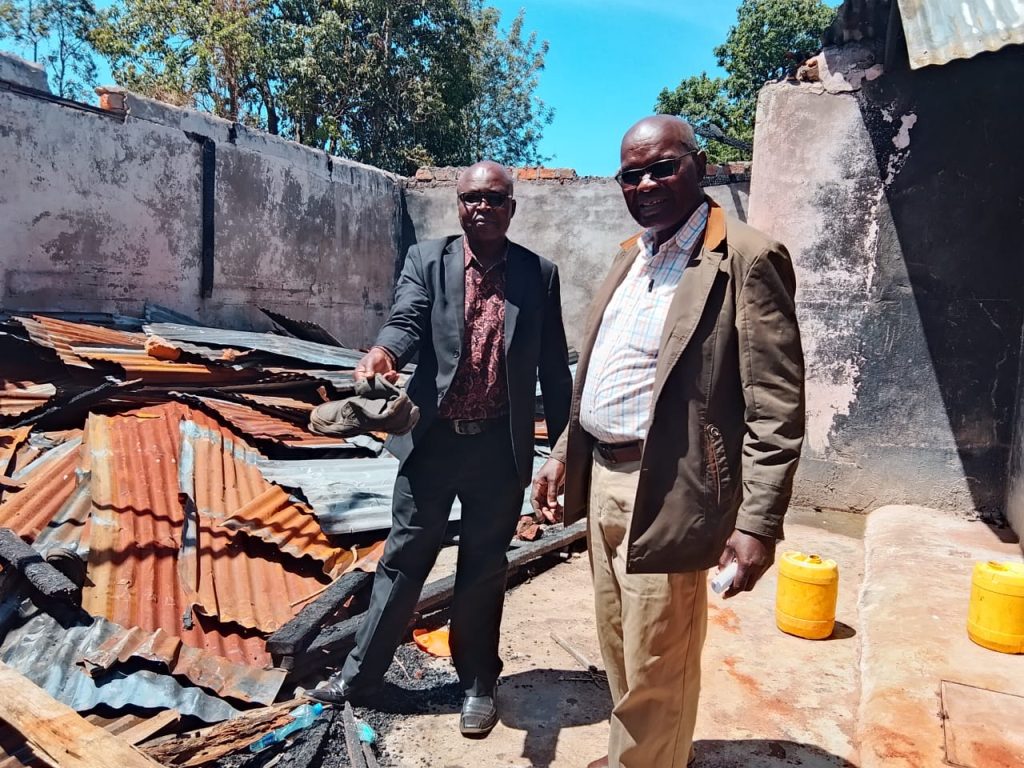
Sheets of iron lie crumpled on the ground like discarded paper. Skeletal bed frames protrude from the rubble, while remnants of mattresses, books, uniforms and students’ personal belongings remain scattered among piles of ash.
The flames may have died, but the wounds they left behind are yet to heal.
Walking through the ruins, it is difficult to imagine that the site was once filled with laughter, whispered conversations and youthful dreams.
The dormitories were more than buildings.
They were bedrooms, meeting places and refuges where students rested after long days in classrooms. It was here that boys revised for examinations, shared jokes, forged friendships and planned futures that seemed far beyond the school gates.
In one devastating night, those ordinary moments became memories.
For the students, the loss was deeply personal.
On Tuesday, members of the school board led by chairman Henry Omuga took journalists through the painstaking journey the institution has undertaken to restore normal learning and rebuild the confidence of students, teachers and parents.
The five destroyed dormitories wiped out years of investment and left the school facing a reconstruction bill estimated at Sh50 million.
Omuga said the immediate priority was to restore a safe and dignified environment for the students.
“What is urgently needed is to rebuild and restore a safe and dignified learning environment for our learners,” he said.
The board is now seeking support from the national and county governments, elected leaders, former students, parents, well-wishers and development partners.
It has particularly appealed to Education Cabinet Secretary Migos Ogamba to visit the school and consider emergency infrastructure support.
“The damage is beyond what the school and parents can shoulder alone. We need government support to reconstruct the destroyed facilities,” Omuga said.
The challenge could become even greater as the school prepares to accommodate increased enrolment.
Omuga said Magena Boys had already been allocated about 310 Grade 10 students, with the numbers expected to rise as the Competency-Based Education system expands.
“With the charred structures, the challenge remains enormous,” he said.
But the fire is not the school’s only challenge.
Board finance chief Laban Ondari said inadequate toilet facilities, water shortages and the absence of a perimeter fence had compounded the institution’s problems.
“The urgency is finances. We cannot rise again without help. We sincerely need support,” Ondari said.
The board has also appealed to Kisii Governor Simba Arati, Kisii Woman Representative Doris Aburi and Bomachoge Borabu MP Obadiah Barongo to help mobilise resources for the reconstruction.
“This is the time for our leaders to come together and act,” Kenge said. “Every month we delay reconstruction is another month our students continue to bear the consequences of the fire.”
Kenge said the scale of destruction remained difficult to comprehend.
“There was nothing that was left, as you can see. The school is actually using classrooms to house the boys at the moment. This was a big dent, not just for the school but also for the parents, because everything went up in smoke,” he said.
He expressed disappointment that some local political leaders had yet to visit the school or offer meaningful assistance.
Ondari estimated the losses at Sh50 million on the lower side, saying the amount would help reconstruct the dormitories and replace essential boarding facilities destroyed in the fire.
He said ordinary school contributions could not shoulder such a financial burden.
“We have done what we can as a school community, but this is beyond the capacity of parents and the school. We need a government-backed intervention,” he said.
Ondari said the school community had remained resilient but warned that resilience alone could not rebuild the destroyed facilities.
“We cannot rebuild five dormitories through goodwill alone. We need resources, and we need them urgently. We are asking our leaders to come to the school, see the damage for themselves and help us put a clear reconstruction plan into action,” he said.
For now, classrooms have been turned into temporary accommodation as the school struggles to maintain normal operations.
The reconstruction, therefore, is about more than putting up new walls and roofs.
It is about restoring the confidence of students who lost their familiar surroundings, rebuilding a sense of normality and giving the boys a safe place to sleep, study and dream again.
As Magena Boys begins its difficult journey back from the ashes, the charred remains of the dormitories stand as a grim reminder of what was lost.
But beneath the ruins lies another story — that of a school determined to rise again, provided the support it needs arrives before the scars become permanent.