

Maïwenn Siblings: Meet the Siblings Squad Behind the French Actress


Actress Maïwenn PHOTO/Independent
Maïwenn Aurélia Nedjma Le Besco was born on April 17, 1976, in Les Lilas, Seine-Saint-Denis, France.
Of mixed Breton, Vietnamese, French, and Algerian descent, her heritage reflects a rich cultural tapestry—her maternal grandfather was Algerian, and her father, Patrick Le Besco, carries French and Vietnamese ancestry.
Raised in a family of artists, Maïwenn was pushed into acting at a young age by her mother, Catherine Belkhodja, an actress and journalist of Kabyle descent.
This early immersion in the entertainment industry, often against her wishes, shaped her complex relationship with fame and family, themes she later explored in her one-woman shows Le Pois Chiche (The Chickpea) and I’m an Actress.
Maïwenn’s personal life, including her marriage to director Luc Besson at 16 and her later estrangement from her family, has also influenced her semi-autobiographical films.
Siblings
Maïwenn grew up with four siblings, two full siblings and two half-siblings, all of whom have ties to the creative arts, though their relationships with Maïwenn are strained.
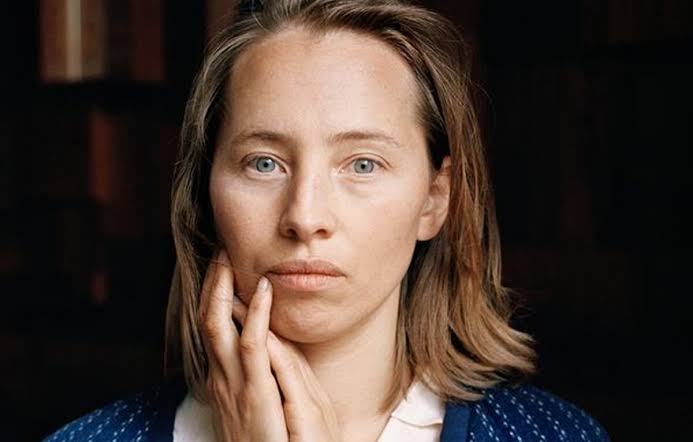
Born in 1982, Isild is an award-winning French actress, director, and screenwriter.
She gained recognition for roles in films like Sade (2000) and Girls Can’t Swim (2000) and has directed works such as Charly (2007).
Like Maïwenn, Isild was introduced to acting early by their mother, appearing in films as a teenager.
Jowan, less prominent in the public eye, is a filmmaker and actor. He has directed short films and worked in various capacities in the French film industry.
Details about his career and personal life are scarce, reflecting his lower profile compared to his sisters.
His involvement in cinema continues the family’s artistic legacy, though his estrangement from Maïwenn suggests limited collaboration or connection.
Léonor, a half-sister from one of Maïwenn’s parents’ other relationships, has maintained a private life, and little is known about her professional endeavors.
Her connection to the family’s artistic circle appears minimal, and her estrangement from Maïwenn aligns with the broader family dynamic.
Kolia, Maïwenn’s half-brother, is also relatively private. Like Léonor, he has not pursued a high-profile career in the public eye, and information about his life is limited.
The estrangement from Maïwenn underscores the fractured family ties that have persisted into adulthood.
Also Read: Nathan Lane Siblings: All About Robert and Daniel Lane Jr.

Maïwenn’s difficult childhood, marked by her parents’ divorce and alleged physical and verbal abuse from both her father and mother, contributed to her strained relationships with her siblings.
She has publicly described her mother as “a poison” and credits her early independence—often caring for her younger siblings—as a formative experience.
Career
Maïwenn’s career spans acting, directing, and screenwriting, with a trajectory that began as a child actress and evolved into one of France’s most provocative filmmakers.
Pushed into acting by her mother, she debuted at age five in L’Année prochaine… si tout va bien (1981) and gained notice at seven as the child version of Isabelle Adjani’s character in One Deadly Summer (1983).
Her early roles included appearances in La Famille Ramdam and Lacenaire (1990).
At 15, she met Luc Besson, whom she married at 16, and appeared in his films Léon: The Professional (1994, as Ouin-Ouin) and The Fifth Element (1997, as the alien Diva Plavalaguna), the latter being her most internationally recognized role as an actress.
After her divorce from Besson in 1997, Maïwenn returned to France, performing a stand-up comedy show that drew on her tumultuous upbringing.
This marked a turning point, leading to her directorial debut with the short film I’m an Actrice (2004), starring her daughter Shanna Besson.
Her first feature, Pardonnez-moi (2006), a semi-autobiographical drama about family dysfunction, earned critical acclaim and signaled her shift to directing.
She followed with Le Bal des Actrices (2009), a mockumentary-style film, and Polisse (2011), a gritty social drama about a child protection unit that won the Jury Prize at Cannes.
Her later works, including Mon Roi (2015), DNA (2020), and Jeanne du Barry (2023), showcase her fascination with personal narratives and mise en abyme (stories within stories).
Jeanne du Barry, starring Johnny Depp, opened the 2023 Cannes Film Festival and achieved significant box-office success in France.
Maïwenn’s filmmaking is known for its raw emotional intensity and autobiographical elements, often blurring the line between reality and fiction.
Her acting roles have continued alongside her directing, including in High Tension (2003) and All Inclusive (2019), though directing remains her primary focus.
Her controversial public persona, including her anti-#MeToo stance and an incident involving spitting on journalist Edwy Plenel, has kept her in the headlines, amplifying her reputation as an unapologetic artist.

