

Man killed in Hippo attack near Ewaso Nyiro River

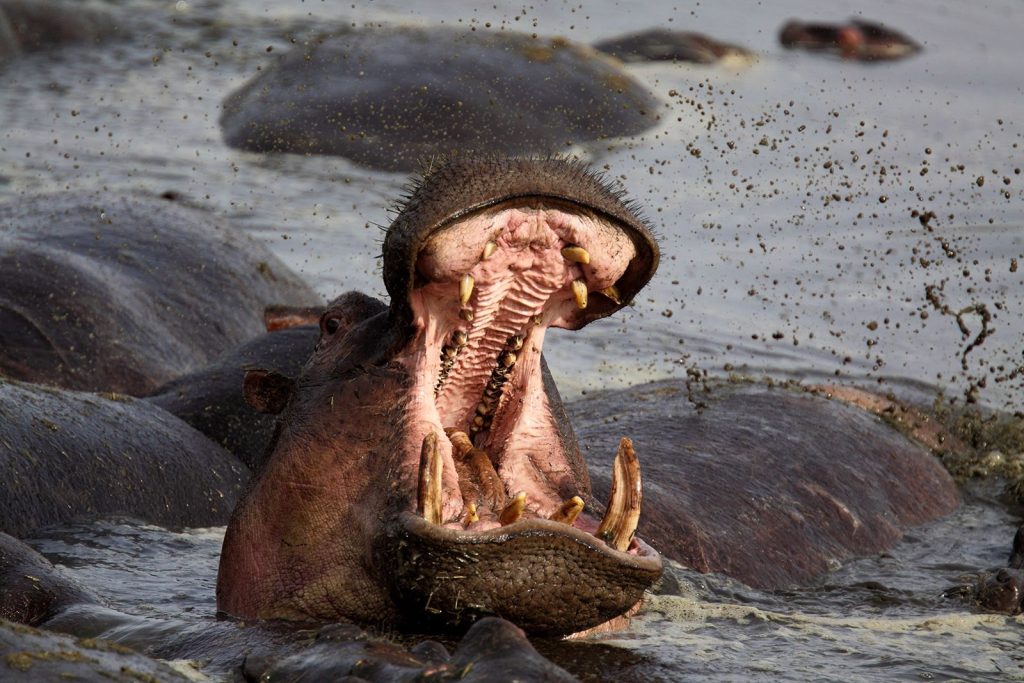
A middle-aged man was killed by a hippopotamus in Nyahururu, Laikipia County, in a tragic human-wildlife conflict incident.
The body of the unidentified man, estimated to be about 40 years old, was discovered on Tuesday morning near the Ewaso Nyiro River in Manguo Sub-location, police said.
According to police, the incident was reported at Nyahururu Police Station by Assistant Chief Samuel Chege at around 10:45 a.m., prompting a joint response by officers and rangers from the Kenya Wildlife Service.
Upon visiting the scene, authorities found the lifeless body lying on the ground with visible injuries on both the upper and lower limbs. Preliminary assessments indicate the injuries were consistent with an attack by a hippopotamus.
Investigators also noted that the area appeared heavily disturbed, with clear hippopotamus footprints reinforcing suspicions of a wildlife encounter.
The scene was processed and documented by crime scene personnel before the body was moved to Nyahururu Referral Hospital mortuary, where it awaits identification and a post-mortem examination.
Human-wildlife conflict cases involving hippos are not uncommon in areas bordering rivers and water bodies, with officials urging residents to exercise caution, especially when accessing such areas.
Authorities have launched investigations into the incident as efforts to identify the deceased continue.
The police said they will know more after the identification of the man and autopsy.
Police advised the family to file a compensation claim.
In May 2025, Kenya introduced the third phase of its Human–Wildlife Conflict Compensation Programme, an initiative aimed at addressing these incidents and supporting affected families.
During its launch at Meru National Park, President William Ruto unveiled the innovative Wildlife Conservation Card, a new tool designed to help fund conservation efforts.
“Compensation is justice, but prevention is progress,” Ruto said, emphasizing the need for long-term solutions that benefit both people and wildlife.
“Through the Conservation Card, fencing, and communityâled tourism, we are turning conflict into opportunity,” he added.
Developed in partnership with KCB Bank, the Wildlife Conservation Card is available in three tiers—Platinum (Elephant), Gold (Lion), and Silver (Cheetah).
A portion of every transaction made with the card (Sh10, Sh5, and Sh3, respectively) goes directly to the Wildlife Conservation Trust Fund.
The initiative aims to enable Kenyans and international supporters to contribute to wildlife conservation while fostering economic benefits for local communities.
With this new approach, Kenya hopes to build a future where humans and wildlife can coexist more safely and sustainably.

