

Man killed in suspected elephant attack in Narok

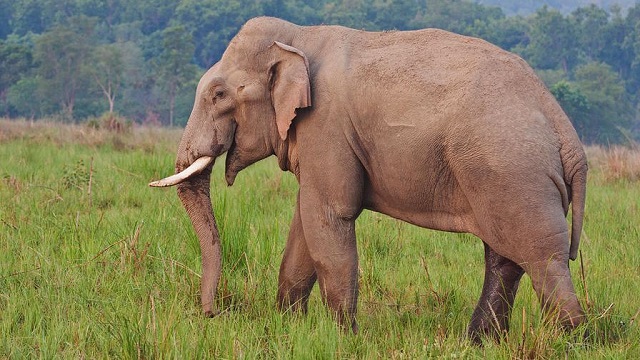
A 54-year-old man died following a suspected elephant attack in Trans Mara South Sub-County, Narok County.
According to police, the incident was reported on June 30, 2026, after a resident of Pusanki Village alerted authorities that his relative had been found dead near a river close to Pusanki Primary School.
A multi-agency team comprising officers from the National Police Service and the Kenya Wildlife Service (KWS) visited the scene and found the body of the deceased lying on the ground with injuries to both legs and a swollen head.
The deceased was identified as Narasha Charles Ole Kuntai, 54.
Preliminary investigations indicate that he was attacked by an elephant early that morning while walking home from a shopping centre. Investigators also recovered a torn Maasai shuka at the scene, which is believed to indicate a struggle with the wild animal.
The scene was processed before the body was moved to Trans Mara West Sub-County Hospital mortuary in Kilgoris, where it is awaiting a post-mortem examination.
Authorities are continuing with investigations into the fatal human-wildlife conflict incident.
Police advised the family to file a compensation claim.
In May 2025, Kenya introduced the third phase of its Human–Wildlife Conflict Compensation Programme, an initiative aimed at addressing these incidents and supporting affected families.
During its launch at Meru National Park, President William Ruto unveiled the innovative Wildlife Conservation Card, a new tool designed to help fund conservation efforts.
“Compensation is justice, but prevention is progress,” Ruto said, emphasizing the need for long-term solutions that benefit both people and wildlife.
“Through the Conservation Card, fencing, and communityâled tourism, we are turning conflict into opportunity,” he added.
Developed in partnership with KCB Bank, the Wildlife Conservation Card is available in three tiers—Platinum (Elephant), Gold (Lion), and Silver (Cheetah).
A portion of every transaction made with the card (Sh10, Sh5, and Sh3, respectively) goes directly to the Wildlife Conservation Trust Fund.
The initiative aims to enable Kenyans and international supporters to contribute to wildlife conservation while fostering economic benefits for local communities.
With this new approach, Kenya hopes to build a future where humans and wildlife can coexist more safely and sustainably.

