

Margaret Thatcher Siblings: Getting to Know Muriel Cullen

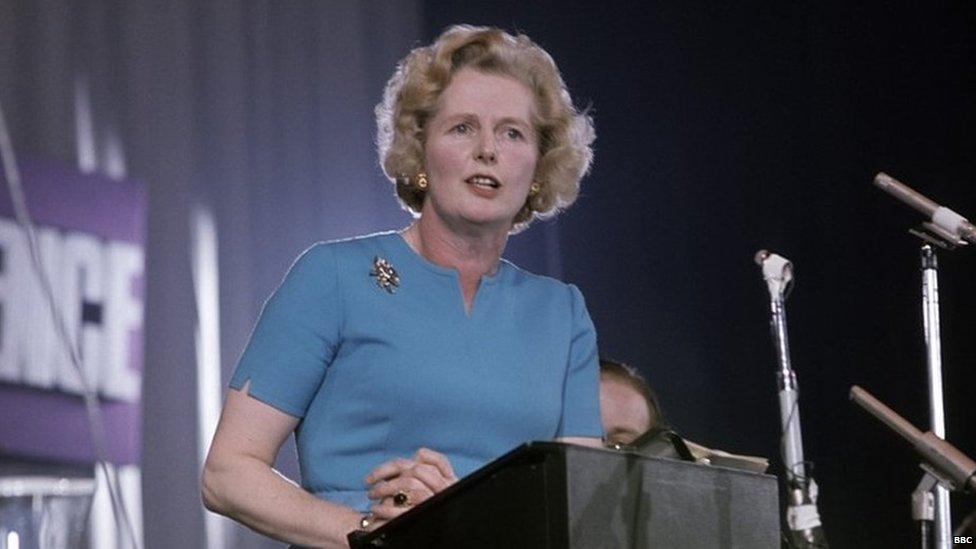
Margaret Thatcher PHOTO/BBC
Margaret Hilda Thatcher, born Margaret Hilda Roberts on 13 October 1925 in Grantham, Lincolnshire, England, was a British Conservative Party politician who became the first woman to serve as Prime Minister of the United Kingdom.
She held the office from 1979 to 1990, making her the longest continuously serving British prime minister of the twentieth century.
The daughter of Alfred Roberts, a grocer and local alderman who later became mayor of Grantham, and Beatrice Ethel Stephenson, a seamstress, she grew up above the family grocery shop in a Methodist household that emphasized hard work, thrift, and self-reliance.
Thatcher studied chemistry at Somerville College, Oxford, graduating in 1947, and later qualified as a barrister specializing in tax law.
She married businessman Denis Thatcher in 1951, and the couple had twin children, Mark and Carol, in 1953.
Known as the Iron Lady for her resolute style and staunch anti-communism, she died on 8 April 2013 in London at the age of 87 after suffering a stroke.
Siblings
Margaret had only one sibling, an older sister named Muriel Cullen.
Born in 1921, four years before Margaret, Muriel shared the same modest upbringing in Grantham and attended the same school, Kesteven and Grantham Girls’ School.
Unlike her more ambitious younger sister, Muriel trained as a physiotherapist at the Royal Orthopaedic Hospital in Birmingham and preferred a private life away from public attention.
She married farmer Billy Cullen, who had initially dated Margaret before transferring his affections to Muriel after Margaret introduced them at a Conservative dance.
The couple settled on a farm near Harwich in Essex, where they built up a substantial 900-acre property over more than two decades, and Muriel raised their three children.
Muriel avoided the limelight and rarely gave interviews, once wryly describing herself to a waiting reporter as “the short, dumpy one.”
She died in December 2004 at the age of 83 after a long illness, an event that deeply affected Margaret, who described the loss as irreplaceable.
Career
After graduating from Oxford, Thatcher worked as a research chemist for several years while reading for the bar in her spare time.
Also Read: Nemanja Gudelj Siblings: All About Dragiša and Vanja Gudelj
She first stood as a Conservative parliamentary candidate in the unwinnable seat of Dartford in the 1950 and 1951 general elections, gaining valuable experience and meeting her future husband.
Following her marriage and the birth of her twins, she qualified as a barrister in 1954 and practiced law until winning the safe Conservative seat of Finchley in north London in the 1959 general election.
She held the seat until 1992.
In government she served as Parliamentary Secretary at the Ministry of Pensions and National Insurance from 1961 to 1964.
After the Conservatives returned to opposition she held various shadow posts, becoming Education Secretary in Edward Heath’s government from 1970 to 1974.
In 1975 she successfully challenged Heath for the leadership of the Conservative Party, becoming the first woman to lead a major Western political party and Leader of the Opposition.
She led the Conservatives to victory in the 1979 general election and formed her first government.
As Prime Minister she pursued free-market reforms that became known as Thatcherism, including privatization of major state-owned industries such as British Telecom, British Gas and British Airways, curbing the power of trade unions, and promoting home ownership through the right-to-buy scheme for council tenants.
She also oversaw the successful recovery of the Falkland Islands after Argentina’s invasion in 1982, won landslide re-elections in 1983 and 1987, and maintained a close alliance with United States President Ronald Reagan during the final years of the Cold War.
Internal party divisions over Europe and the poll tax led to her resignation in November 1990.
She remained an MP until 1992, when she was elevated to the House of Lords as Baroness Thatcher of Kesteven.
Accolades
Thatcher received numerous honors reflecting her political achievements and international stature.
In 1990, following her resignation as Prime Minister, her husband Denis was created a baronet, and she herself was made a life peer as Baroness Thatcher in 1992.
In 1995 she was appointed a Lady Companion of the Order of the Garter, the highest order of chivalry in the United Kingdom.
She was awarded the Presidential Medal of Freedom by the United States, one of that country’s highest civilian honors.
The Soviet press originally coined the nickname Iron Lady in a critical context, yet she embraced it as a badge of her determination.
She was the first living former British prime minister to have a statue placed in the Houses of Parliament.
Two volumes of her memoirs, The Downing Street Years and The Path to Power, further cemented her place in political literature.

