

Mario Monti Siblings: All About Claudia Monti

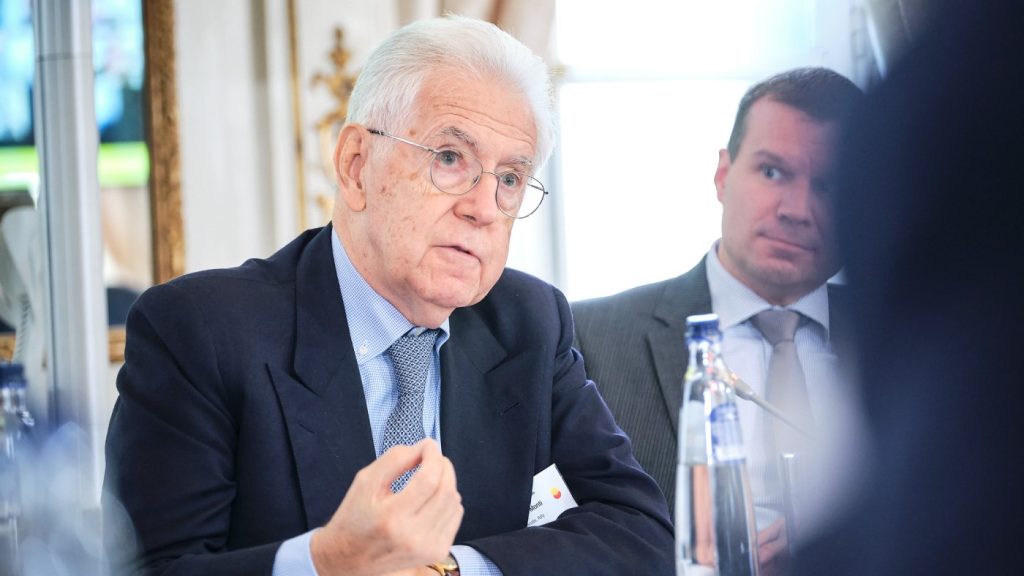
Mario Monti PHOTO/Friends of Europe
Mario Monti is an Italian economist, academic, and politician born on 19 March 1943 in Varese, Lombardy.
He rose to national and international prominence through his work in economics, European institutions, and Italian government.
Appointed a life senator in 2011 by President Giorgio Napolitano, he served as Prime Minister of Italy from November 2011 to April 2013, leading a technocratic government during the country’s sovereign debt crisis.
Earlier, he spent nearly a decade as a European Commissioner.
Known for his reserved demeanor, rigorous approach to economic policy, and strong Europeanist outlook, Monti has long been associated with free-market principles, competition policy, and institutional reform.
Siblings
Mario is the second child of banker Giovanni Battista Monti, known as Giovanni Monti (1900–1990), and Lavinia Capra.
His only sibling is an older sister named Claudia, the firstborn of the family.
Claudia studied languages at Bocconi University in Milan, and Mario chose to enroll in economics at the same institution in part to remain close to her during their university years.
Family photographs from the 1940s and 1950s show Mario as a young boy with his mother Lavinia and sister Claudia, as well as later images of the children with both parents during a trip to Zermatt, Switzerland, around 1953.
Career
Monti graduated in economics from Bocconi University in Milan in 1965 and pursued postgraduate studies at Yale University under the guidance of future Nobel laureate James Tobin.
Also Read: Mariano Rajoy Siblings: Meet the Siblings Squad Behind the Spanish Politician
He began his academic career teaching at the University of Trento and then at the University of Turin from 1970 onward.
In 1985 he returned to Bocconi as a professor of political economy, later becoming rector of the university from 1989 to 1994 and its president from 1994 until 2022.
In 1995 he entered European public service as Commissioner for the Internal Market, Financial Services, Customs and Taxation in the Santer Commission.
From 1999 to 2004, under the Prodi Commission, he served as Commissioner for Competition.
In that role he gained international attention for blocking the proposed merger between General Electric and Honeywell and for pursuing a major antitrust case against Microsoft, which resulted in a substantial fine.
After leaving the Commission he founded the Brussels-based economic think tank Bruegel and served as its first president.
He also held advisory positions with institutions such as Goldman Sachs and remained active in European policy debates.
In November 2011, amid Italy’s debt crisis and the resignation of Silvio Berlusconi, Monti was appointed Prime Minister.
His technocratic cabinet implemented austerity measures, pension reform, and labour-market changes aimed at restoring market confidence and keeping Italy in the eurozone.
He resigned in December 2012 but remained in office until a new government was formed in April 2013.
Briefly he led the centrist Civic Choice party before returning to a more independent role as a life senator.
Accolades
In Italy Monti was appointed Commander of the Order of Merit of the Italian Republic in 1992 and later elevated to Knight Grand Cross of the same order in 2004.
In 2015 Japan awarded him the Grand Cordon of the Order of the Rising Sun, presented personally by the Emperor.
He has also been recognised for his contributions to economic policy and European integration, including the Global Economy Prize from the Kiel Institute in 2016.

