

Marsabit leaders raise alarm over humanitarian crisis as Ethiopia clashes displace thousands

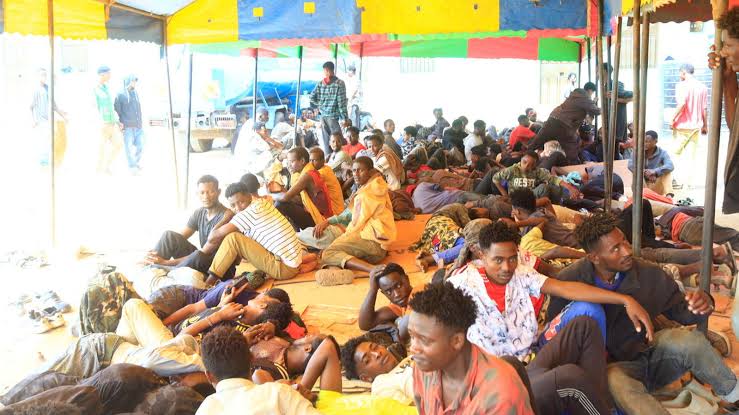
A section of Marsabit leaders have appealed to the government and international humanitarian agencies to urgently intervene as escalating ethnic clashes in Ethiopia drive thousands of people across the border into Kenya, straining resources and disrupting trade.
The leaders said more than 14,000 people had been displaced in the Moyale border region since fighting between Oromo and Somali communities intensified, forcing families to flee their homes in search of safety.
Speaking during a press conference in Nairobi on Sunday, the leaders, led by Moyale MP Guyo Wago Jaldesa and Saku MP Dido Ali Rasso, urged President William Ruto to engage regional authorities and help restore calm along the Kenya-Ethiopia border.
Rasso said the fighting had triggered an influx of civilians seeking refuge in Kenya, putting additional pressure on local infrastructure and already limited resources.
“We are deeply concerned about the ongoing conflict on the Ethiopian side of the border in Moyale. The situation is deeply concerning, and we hope for a swift, peaceful end to the hostility,” Rasso said.
The leaders noted that women and children were among the most affected, with many arriving in Kenya with few belongings and requiring emergency food, shelter and other basic necessities.
They appealed to the international community to increase humanitarian assistance and support government efforts to provide relief to displaced families.
The leaders also cautioned residents against targeting innocent Ethiopian nationals living or working in Kenya, emphasising that civilians should not be blamed for the conflict across the border.
“We strongly appeal to our local community members not to harm innocent civilians who live or work in our region. They have no involvement in the conflict taking place across the border,” they said.
They further urged communities in Marsabit, Wajir and Mandera counties to maintain peaceful coexistence and called on security agencies to guarantee the safety of civilians and facilitate safe passage where necessary.
The Kenya Red Cross Society (KRCS) has launched an emergency response to assist families arriving in Moyale after fleeing the renewed violence in Ethiopia.
The organisation said its staff and volunteers were responding to the evolving humanitarian needs of displaced families crossing into Marsabit County.
“Our priority is to make sure every family arriving in Moyale is safe, sheltered and treated with dignity,” KRCS Secretary General Ahmed Idris said.
The humanitarian response comes amid growing concerns over shortages of food, clean water and sanitation facilities on the Kenyan side of the border.
Marsabit County Commissioner Stanley Kamande, during a visit to Moyale to assess the security situation and conditions facing displaced families, said approximately 15,000 refugees were living in camps, while another 20,000 had integrated into local communities.
Kamande commended humanitarian organisations and local residents for providing food, water and other emergency assistance but warned that significant needs remained unmet.
He said displaced families urgently required blankets, tents, mosquito nets and improved sanitation facilities, adding that cold nights and inadequate toilets were worsening their living conditions.
The county commissioner appealed to humanitarian partners to scale up assistance as the conflict continued.
Meanwhile, Moyale Sub-County Administrator Dida Golicha said the Marsabit County Government had distributed food supplies, including rice and beans, to support affected families.
The fighting has also disrupted commercial activities along the Kenya-Ethiopia border, with trucks unable to transport goods in either direction.
Several businesses near the Kenyan side of the One-Stop Border Post have reportedly closed amid fears of stray bullets and uncertainty over the security situation.
The disruption threatens livelihoods in Moyale, where cross-border trade supports businesses, transport operators and communities on both sides of the frontier.
The conflict reportedly escalated about two weeks ago following the alleged raising of the Somali Regional State flag in Ethiopia, triggering clashes involving forces and groups associated with the Oromia and Somali regional states.
The leaders said restoring security was essential not only to protect civilians but also to reopen trade routes and prevent further deterioration of the humanitarian situation.
They called for urgent diplomatic engagement, increased humanitarian assistance and coordinated security measures to protect displaced families and residents living along the border.

