

Merle Haggard Net Worth

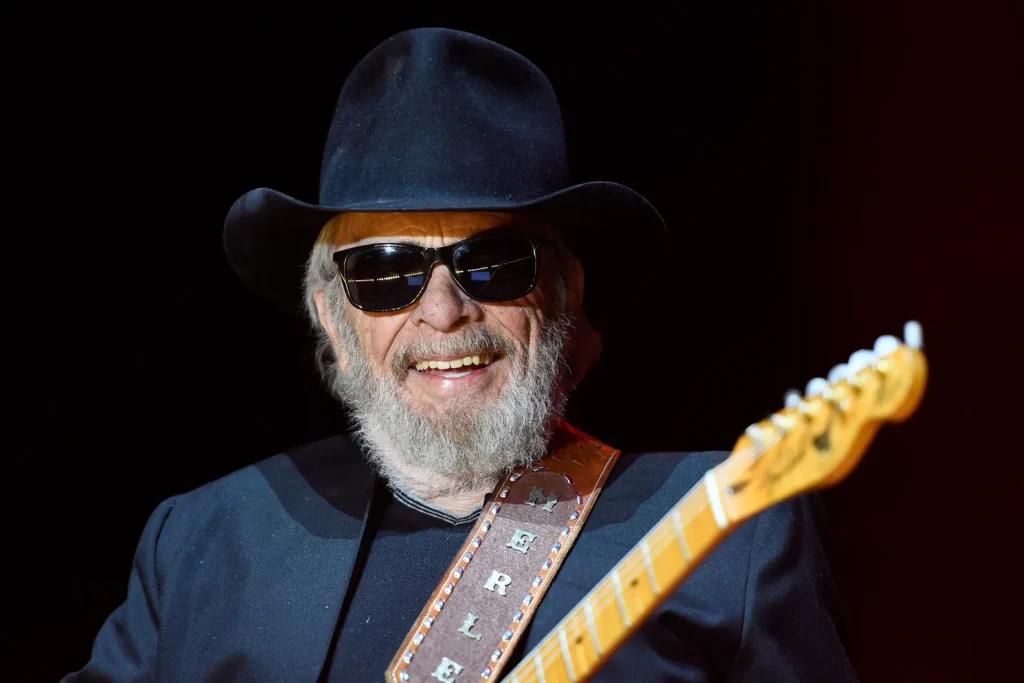
Merle Haggard had an estimated net worth of $5 million at the time of his death in 2016. The American country singer, songwriter and musician built his fortune through a career that spanned more than five decades and produced dozens of chart-topping songs.
Known by the nickname “The Hag,” Haggard became one of the most influential figures in country music. Alongside Buck Owens and his band, The Strangers, he helped develop the Bakersfield sound, a style that combined traditional country music with electric guitar, steel guitar and a harder, less polished edge.
Haggard’s biggest hits included “Mama Tried,” “Okie from Muskogee,” “The Fightin’ Side of Me,” “Sing a Sad Song,” “The Legend of Bonnie and Clyde,” “Hungry Eyes,” “Cherokee Maiden” and “Pancho and Lefty.”
During his career, Haggard recorded dozens of albums and scored 38 No. 1 country hits. He also received numerous awards, including multiple Academy of Country Music and Country Music Association honors, a Grammy Lifetime Achievement Award and a Kennedy Center Honor.
Despite his enormous success, Haggard experienced serious financial problems later in life. His multiple marriages, child support and spousal support obligations contributed to his financial difficulties, and he filed for Chapter 11 bankruptcy in 1992.
| Merle Haggard Net Worth | $5 Million |
| Date of Birth | April 6, 1937 |
| Place of Birth | Oildale, California |
Early Life
Merle Ronald Haggard was born on April 6, 1937, in Oildale, California, to Flossie Mae and James Francis Haggard.
His parents had moved from Oklahoma to California during the Great Depression. His father found work with the Santa Fe Railroad and converted an old railroad boxcar into a home for the family.
Haggard’s father died from a brain hemorrhage in 1946 when Merle was nine years old.
Music became an important part of Haggard’s life at an early age. His older brother gave him a guitar when he was 12, and he began learning to play.
He was influenced by country legends including Bob Wills, Lefty Frizzell and Hank Williams.
Haggard’s childhood was also marked by repeated encounters with the law. He committed several minor offenses and spent time in juvenile detention.
His troubles continued into his teenage years, and much of his youth was spent moving between detention centers and getting into trouble.
Time in Prison
Haggard’s criminal activities eventually led to more serious consequences.
In 1957, he attempted to rob a Bakersfield roadhouse and was arrested. He was initially held in a Bakersfield jail but attempted to escape.
Following the escape attempt, he was transferred to San Quentin State Prison.
Haggard entered San Quentin in 1958 and remained there until his release in 1960.
His time in prison became a major turning point in his life.
While incarcerated, he earned a high school equivalency diploma, worked in the prison textile plant and performed with a country music band.
He also attended a legendary performance by Johnny Cash at San Quentin. The experience left a lasting impression on him.
After his release, Haggard focused more seriously on building a career in music.
The Rise of the Bakersfield Sound
Following his release from prison, Haggard worked for his brother’s electrical contracting business while performing music.
He became involved with the growing Bakersfield country music scene.
The Bakersfield sound developed partly as a reaction to the heavily produced Nashville sound that dominated mainstream country music at the time.
The style relied more heavily on electric guitars, steel guitar, prominent rhythm sections and a rougher vocal approach.
Haggard became one of its most important figures, alongside Buck Owens.
His association with Wynn Stewart also played a crucial role in his breakthrough.
Haggard recorded Stewart’s song “Sing a Sad Song,” which became a national hit in 1964.
The success changed his career and established him as a major country recording artist.
Major Music Success
Haggard’s career accelerated during the second half of the 1960s.
His 1967 album Branded Man became both a critical and commercial success.
He followed it with a series of major hits, including “Mama Tried,” “The Legend of Bonnie and Clyde,” “Hungry Eyes” and “Sing Me Back Home.”
In 1969, Haggard released “Okie from Muskogee.”
The song became one of his most recognizable recordings and spent several weeks at No. 1 on the country charts.
Songs such as “Okie from Muskogee” and “The Fightin’ Side of Me” became closely associated with the political and cultural mood of the United States during the late 1960s and early 1970s.
Haggard’s ability to combine storytelling with social commentary helped distinguish him from many of his contemporaries.
Career in the 1970s and 1980s
Haggard remained one of country music’s biggest stars throughout the 1970s.
He appeared on the cover of TIME magazine in 1974 and continued producing successful albums and singles.
His songwriting remained central to his career, while his recordings and live performances generated substantial income.
Haggard also became associated with the broader outlaw country movement, which gave artists greater creative independence and challenged the established Nashville music industry.
During the early 1980s, he continued producing top-10 country hits.
However, his personal life and financial situation became increasingly difficult.
Financial Problems and Bankruptcy
Despite his success, Haggard experienced major financial difficulties later in his career.
He was married five times and had several children. His various marriages and obligations involving spousal and child support placed significant pressure on his finances.
By the early 1990s, his financial problems had become severe.
Haggard filed for Chapter 11 bankruptcy in 1992.
The bankruptcy resulted in the restructuring and loss of some of his assets. His large California property was also reduced substantially as part of the financial restructuring.
The financial problems affected his career for several years, but Haggard eventually rebuilt his professional standing.
His experience also demonstrated that commercial success in the music industry does not always translate into lasting personal wealth.
Career Comeback
Haggard experienced a renewed period of success during the 2000s.
He continued releasing music and performing for audiences while younger country artists increasingly recognized his influence.
His extensive catalog remained commercially valuable, while his reputation as a songwriter and pioneer of the Bakersfield sound continued to grow.
Haggard’s later career also included collaborations with other major country artists.
He remained productive almost until the end of his life.

Awards and Recognition
Haggard received numerous awards during his career.
He was inducted into the Nashville Songwriters Hall of Fame in 1977.
In 1994, he was inducted into the Country Music Hall of Fame, one of the highest honors available to a country music artist.
He was also inducted into the Oklahoma Music Hall of Fame in 1997.
In 2006, Haggard received a Grammy Lifetime Achievement Award in recognition of his contribution to music.
That same year, he was honored as a BMI Icon.
In 2010, he received a Kennedy Center Honor, recognizing his lifetime contribution to American culture and the arts.
Personal Life
Haggard was married five times.
He married Leona Hobbs in 1956, and they had four children before divorcing in 1964.
In 1965, he married country singer Bonnie Owens. Owens played an important role in Haggard’s early career and helped raise his children from his first marriage.
Although they divorced in 1978, Haggard and Owens remained close, and she continued performing with him as a backing vocalist for years.
Haggard later married Leona Williams in 1978. Their marriage ended in 1983.
In 1985, he married Debbie Parret. They divorced in 1991.
Haggard married Theresa Ann Lane in 1993. They had two children, Jenessa and Ben.
Health Problems and Death
Haggard faced several serious health problems during his final years.
In 2008, he was diagnosed with lung cancer and underwent surgery to remove part of his lungs.
He continued performing after recovering from the procedure.
In late 2015, Haggard was treated for pneumonia and postponed several concerts.
His health deteriorated again in early 2016, leading to hospitalization and further canceled performances.
On April 6, 2016, Haggard died from complications of pneumonia at his home in Palo Cedro, California.
He died on his 79th birthday.
His death marked the end of one of the most influential careers in American country music.
California Ranch
For much of his later life, Haggard lived on a large property in Palo Cedro, California.
The property once covered close to 1,000 acres but was reduced to approximately 200 acres during his bankruptcy restructuring in the 1990s.
The ranch remained his home during his final decades.
The property became part of the story of Haggard’s financial struggles, particularly after he was forced to restructure his assets during bankruptcy.
Also Read: Willie Nelson Net Worth

